Choosing the wrong security label leads to two disasters: a ruined product surface or a seal that peels off without leaving a trace. A security manager must understand the mechanics of adhesive transfer to prevent these failures.
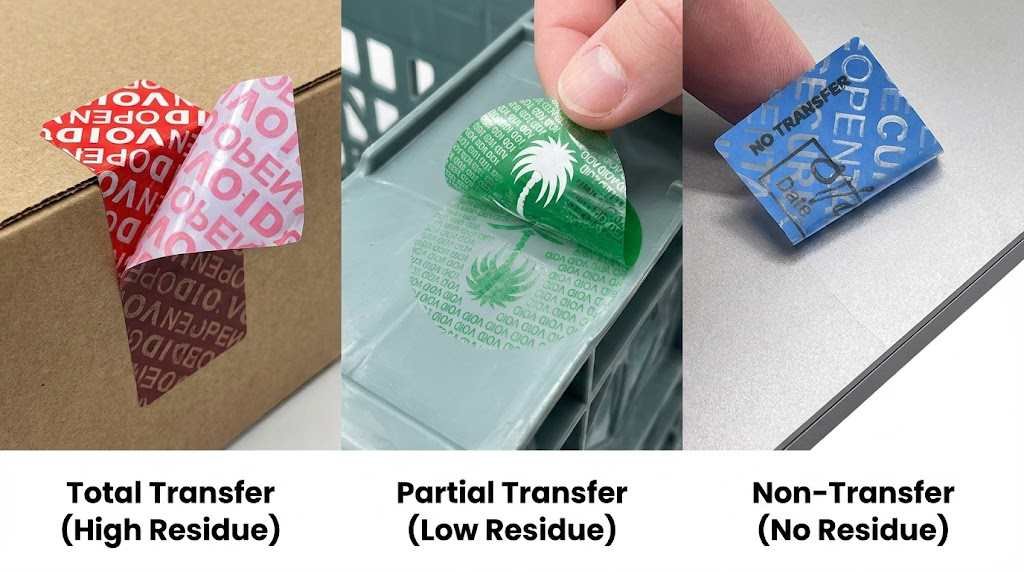
There are three distinct types of tamper-evident void labels, defined by the residue they leave behind: Total Transfer (leaves a complete message), Partial Transfer (leaves a split message), and Non-Transfer (leaves zero residue). Your choice depends entirely on the surface material you are sealing.
The core conflict in our industry is balancing "undeniable evidence" with "surface cleanliness." I often see clients struggling because they prioritize the look of the label over the physics of the application. They want a label that sticks like concrete but peels off like a Post-it note. That is physically impossible without the right technology. The interaction between the viscoelastic adhesive residue and the product's surface energy determines your success. You must match the label type to the material—whether it is porous cardboard, glossy plastic, or high-value glass—to ensure the security message triggers correctly without causing damage to the asset.
Total Transfer VOID Labels: Maximum Security for Rough Surfaces like Cardboard?
Do you need to secure a rough, fibrous shipping carton where a standard label might fall off? Flimsy stickers will fail here, allowing theft to occur without anyone noticing.
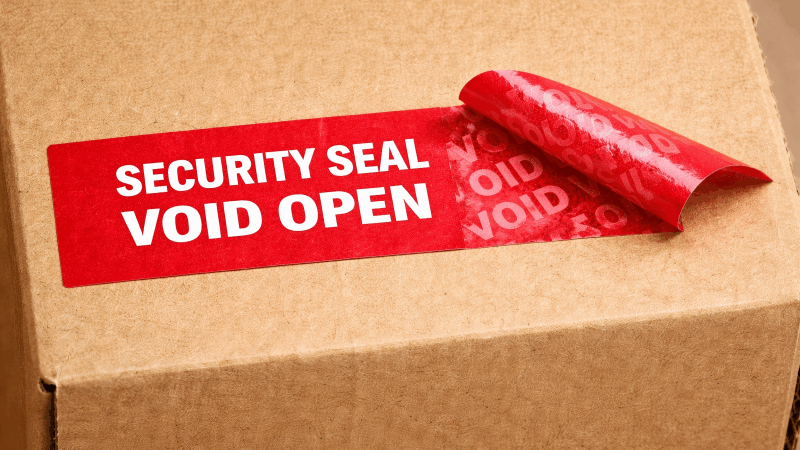
Total Transfer labels are designed to separate completely from the film carrier, leaving the entire adhesive layer and the "VOID" message behind on the application surface. This creates a permanent, high-contrast indicator of tampering that is practically impossible to remove.
Mechanism: The Mechanical Lock
Total Transfer adhesives are chemically thicker and softer. This allows the glue to flow deep into the porous fibers of corrugated fiberboard or wood, creating a physical "anchor" rather than just a surface bond. According to Packaging World, ensuring this adhesive penetration is critical to preventing "dry peeling" in logistics environments.
Best Application: One-Way Logistics
This is the "nuclear option" for security. The result is messy, permanent, and obvious. It is perfect for logistics packaging where the priority is evidence, not aesthetics. If a thief attempts to lift the label, they cannot hide the damage. The solid layer of residue acts as a permanent scar on the packaging, signaling immediate rejection at the receiving dock.
Partial Transfer VOID Labels: The Standard Choice for Glossy Packaging and PE Bags?
How do you secure a shiny retail box or a plastic courier bag without the label slipping or the residue looking like a mistake? A balance is required between adhesion and readability.
Partial Transfer labels provide a semi-residue effect. When peeled, the "VOID" message splits: part of the adhesive stays on the product surface, and the rest remains on the label carrier, providing dual evidence of opening.
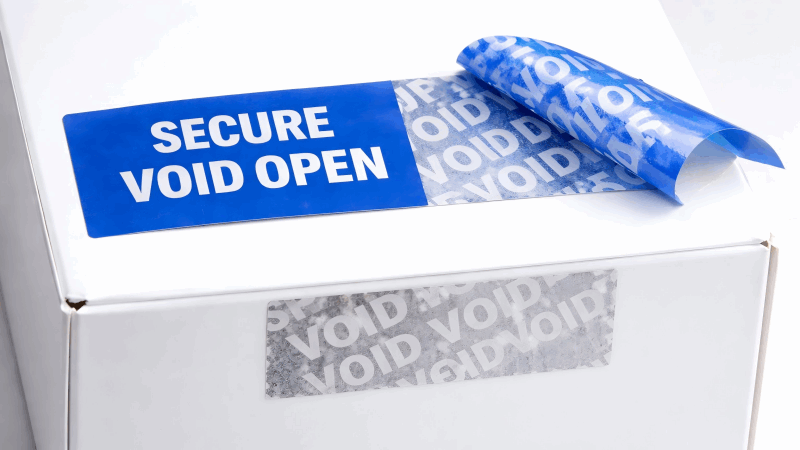
Mechanism: Controlled Fracture
The adhesive layer is engineered to split precisely. Upon removal, the cohesive strength of the glue breaks in the middle. This ensures that the "VOID" message is clearly readable on both the package and the peeled label. As noted in Label & Narrow Web, this controlled fracture technology is the industry standard for pharmaceutical and retail security packaging where legibility is paramount.
Best Application: Coated Retail Boxes
This is the "Hybrid Solution" for most B2B needs. It works flawlessly on coated paper, duty-free shop bags, and smooth polyethylene (PE) mailers. It offers the widest tolerance range: strong enough to stop pilferage, but consistent enough to look professional. If you are unsure of your exact surface energy, Partial Transfer is the safest universal choice.
Non-Transfer VOID Labels: Securing High-Value Goods Without the Messy Residue?
How can you seal a luxury car door, an aircraft hatch, or a forensic evidence glass door without leaving a sticky mess that requires industrial solvents to clean?
Non-Transfer labels reveal the "VOID" message only on the label itself when peeled, leaving the application surface perfectly clean and completely free of any sticky adhesive residue.
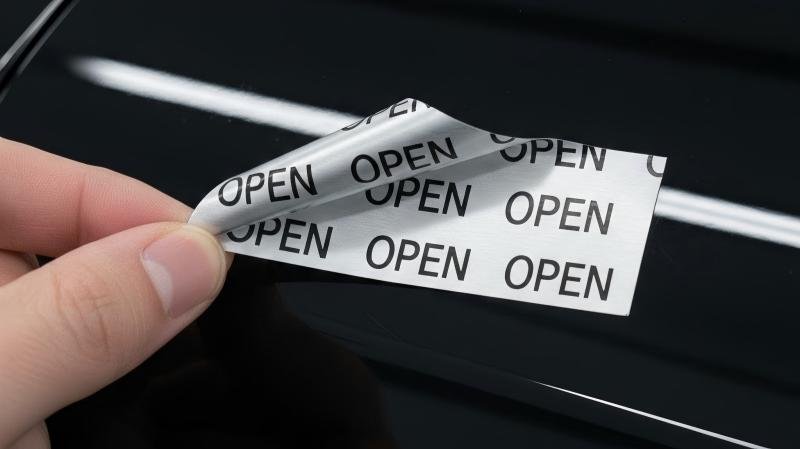
Mechanism: High Cohesion Bond
This technology defies the norm: high adhesion, zero residue. The adhesive is formulated to stick to itself stronger than it sticks to the surface. However, this relies on High Surface Energy. The surface must be hard, smooth, and clean (like glass or metal) for the chemistry to work. This makes them ideal for asset tracking applications where reusable assets cannot be marred by glue.
Best Application: Zero-Damage Assets
This is non-negotiable for high-value items like luxury vehicles, IT servers, or aircraft doors. You cannot leave glue on a rented car or a camera lens. The Zero Transfer label acts as a temporary lock. It proves access without punishing the user with a cleanup bill. Note: It will fail on dusty or porous surfaces.
Beyond Standard "VOID": Customizing Hidden Messages for Brand Security?
Generic "VOID" messages are effective, but sophisticated counterfeiters can sometimes replicate them, putting your brand's unique identity and reputation at risk.
Customizing the hidden message with brand names, logos, or specific warning text adds a layer of authentication that is significantly harder for criminals to copy.
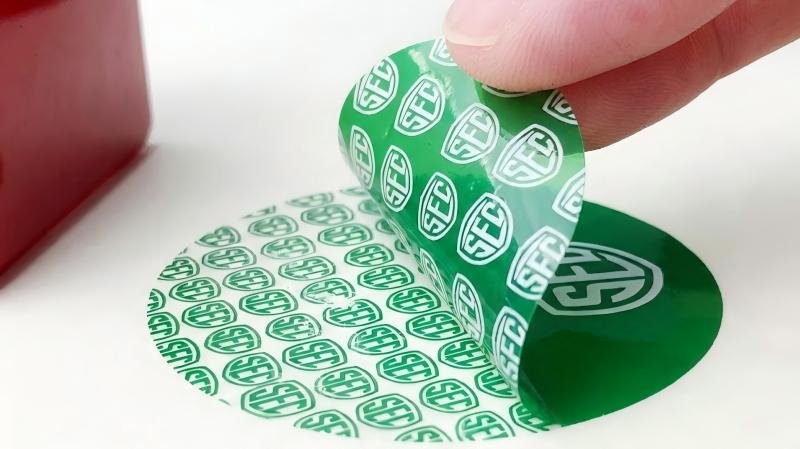
Raising the Barrier to Entry
Generic "VOID" materials are available on the open market. Custom residue is not. By embedding your logo or "GENUINE" into the adhesive layer, you force counterfeiters to manufacture custom plates. According to Security Document World, proprietary visual features are essential for modern brand protection strategies.
Branding as Verification
This turns a simple seal into a certificate of authenticity. When a customer peels the seal and sees your brand name left on the box, trust increases immediately. It confirms the package origin in a way that a generic red tape never can.
Matching the Label to the Surface: A Technical Guide to Adhesive Compatibility?
The most expensive security label in the world will fail if the chemistry between the adhesive and the application surface is ignored.
Successful sealing requires matching the label's transfer type to the surface energy of the packaging, ensuring the adhesive triggers the void message rather than just peeling off.
Quick Selection Matrix
Don't guess. Use this logic to match your material to the correct residue type:
| Surface Material | Surface Energy | Recommended Label Type | Why? |
|---|---|---|---|
| Cardboard / Paper | Low / Porous | Total Transfer | Adhesive anchors into fibers. |
| Coated Paper / PE | Medium / Smooth | Partial Transfer | Best balance of grip and readability. |
| Glass / Metal / Auto | High / Smooth | Non-Transfer | Strong bond, zero clean-up. |
| Painted Wood | Rough / Porous | Total Transfer | Only high-residue fills the texture gaps. |
The "Compatibility" Rule
Using Non-Transfer on cardboard is the most common failure I see. The adhesive cannot grip the dust, so the label falls off intact. Using Total Transfer on glass causes operational delays due to cleaning. Always start with the surface material, not the label price.
Conclusion
The correct void label balances security evidence with surface cleanliness. Total Transfer locks onto rough cardboard, Partial Transfer secures retail packaging, and Non-Transfer protects high-value surfaces without residue.
Secure Your Packaging with ProtegoSeal's Expertise
Don't let a mismatch between adhesive and surface compromise your security. At ProtegoSeal, we specialize in customizing all three types of void labels to match your specific application conditions. Whether you need a residue-free seal for luxury glass or a permanent lock for shipping cartons, we have the precise solution. Contact us today to request a compatibility test kit.