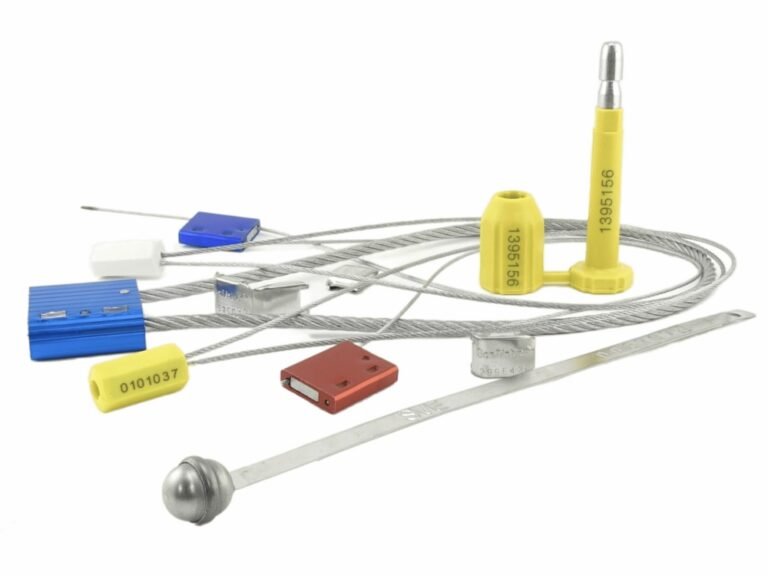
You used the wrong seal, and now your high-value shipment is gone, or your container is rejected at the border. This simple mistake has just cost you thousands in lost goods and client trust.
Choosing the right truck seal is a dynamic balancing act. You must assess your cargo's value, your route's risk, and your truck's design to select the perfect seal, ensuring maximum security at the most effective cost.
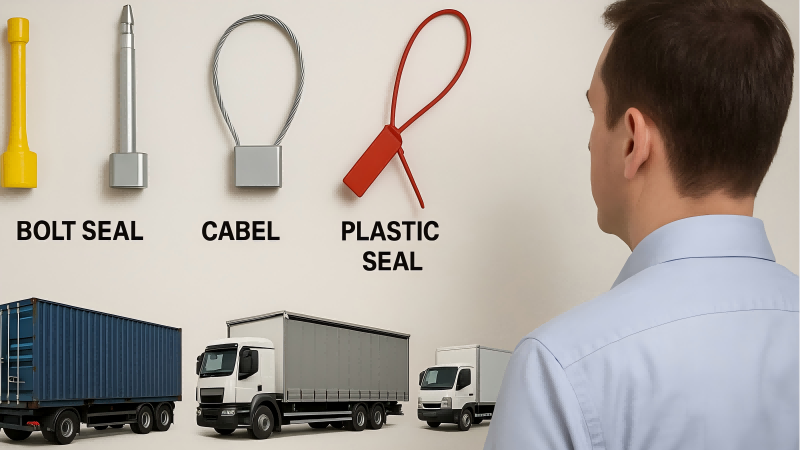
I've seen it countless times: a client picks the cheapest seal available, only to pay for it tenfold later with a stolen shipment. Choosing a truck seal isn't like picking a product off a shelf; it's making a "risk investment" in your cargo and your reputation. You are essentially using the lowest possible cost to buy the highest possible level of "certainty" for that specific journey. This isn't a simple multiple-choice question. It is a comprehensive decision that requires a dynamic balance between cost, risk, and real-world operations. This guide will walk you through that decision-making process step by step, just as I would with my own clients.
Step 1: Assess Your Cargo - How Security Needs Differ for High-Value vs. General Goods?
You're sealing two trucks, one with sand and one with pharmaceuticals. Does it make sense to use the same basic plastic seal on both and hope for the best?
That's a risky gamble. The security you need for a pallet of electronics is vastly different from what's required for bulk raw materials. A one-size-fits-all approach is a critical failure that can lead to significant financial loss.
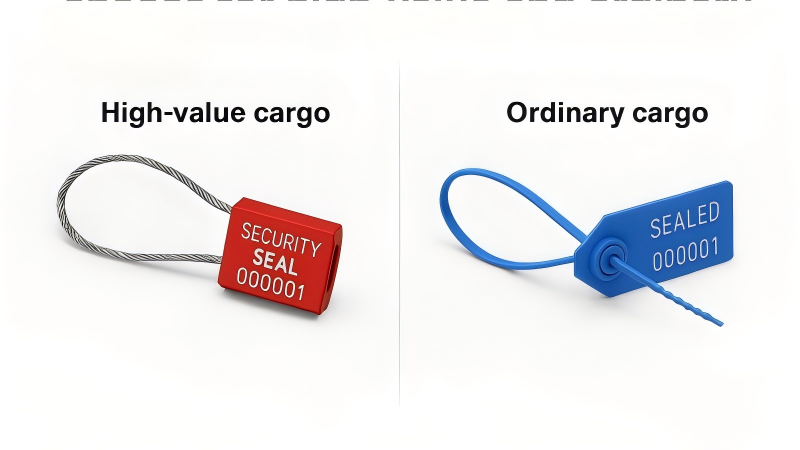
The very first question I ask any client is, "What are you protecting?" The answer determines the entire security strategy. Your cargo's value isn't just its dollar amount; it's also about its desirability to thieves and its vulnerability. This process is a core part of supply chain risk management.
Assessing Cargo Value and Risk
- High-Value Goods (e.g., Electronics, Pharmaceuticals, Luxury Items): This is cargo that is both expensive and easy for thieves to resell. Your goal here is barrier security. You need a seal that is physically difficult to remove, providing a strong deterrent and delaying any theft attempt. This demands a high-security bolt seal or a heavy-duty cable seal. Using a plastic seal here is like putting a screen door on a bank vault.
- General Goods (e.g., Raw Materials, FMCG, Textiles): This cargo is less of a target for professional thieves. Your goal here is tamper evidence. You need to know if someone accessed the cargo. A simple, uniquely numbered plastic pull-tight seal or a medium-duty cable seal is often perfect. It won't stop a determined thief with bolt cutters, but it will provide immediate, undeniable proof that the chain of custody was broken.
Matching Seals to Your Route: Short-Haul Local Delivery vs. Long-Haul Cross-Border Freight
You use the same seal for a 30-mile local delivery as you do for a 2,000-mile cross-border trip. This is inefficient and leaves your long-haul cargo dangerously exposed.
Different routes present wildly different risks. A long, unsupervised journey with multiple stops or border crossings requires a much higher level of security than a short, direct trip in a familiar area.
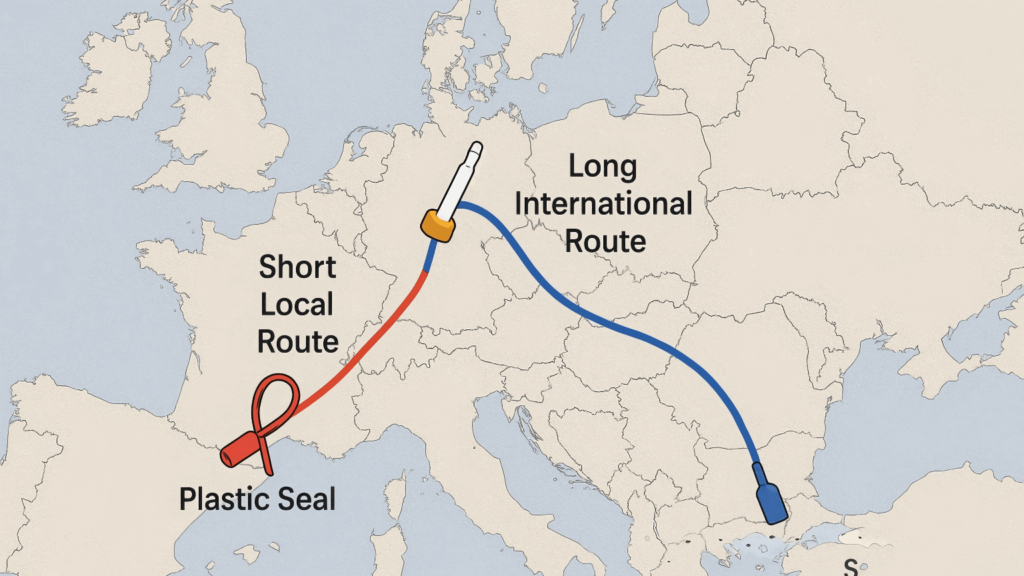
After assessing what you're shipping, the next question is where it's going. The longer and more complex the journey, the more opportunities for theft and tampering arise. You have to adapt your security to the environment.
Short-Haul vs. Long-Haul Security Strategies
| Route Type | Primary Risks | Recommended Seal Strategy |
|---|---|---|
| Short-Haul Local Delivery | Opportunistic theft at stops, driver error. Low exposure time. | Indicative Seals (Plastic Pull-Tight): The goal is tamper evidence. A uniquely numbered plastic seal is cost-effective and tells you if a door was opened. It's a quick, clear signal for simple logistics. |
| Long-Haul Domestic | Planned theft during overnight stops, driver collusion. Higher exposure time. | Security Seals (Cable Seals): A 3-5mm steel cable seal offers a higher level of security. It requires tools to remove, deterring anything but a planned attack, making it ideal for multi-day trips. |
| Cross-Border Freight | Customs inspections, organized crime, long waits at borders. Highest exposure time. | High-Security Seals (Bolt Seals): This is non-negotiable. Many customs authorities, including CBP in the US, mandate the use of ISO 17712 "H" rated seals. A bolt seal is your compliance key and your best defense. |
I once had a client who lost an entire truckload of coffee on a route through a high-risk area. They were using a basic plastic seal. After switching to numbered cable seals and implementing a strict logging procedure, the thefts stopped completely.
What Seal Types Are Required for Different Trucks (Containers, Box Trucks, Curtain-Siders)?
You have a fleet of containers, box trucks, and curtain-siders. Can you simply use the same cable seal on all of them and expect it to work?
Not effectively. The physical design of the truck's locking mechanism dictates which seal will fit properly and provide real security. An ill-fitting seal is often no better than having no seal at all.
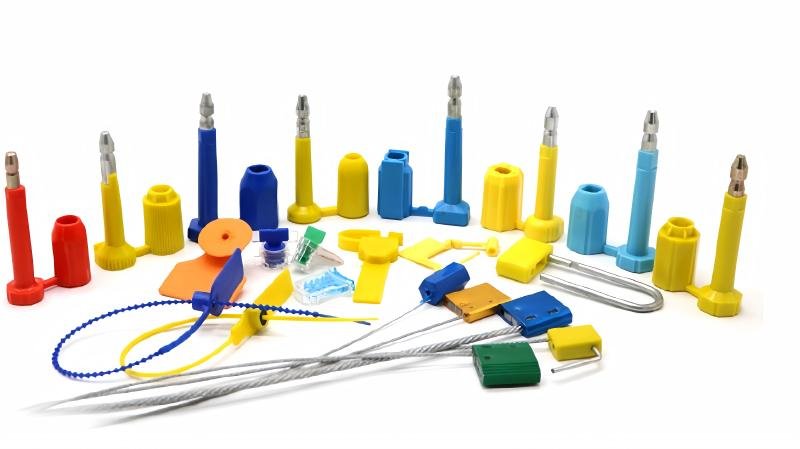
This is one of the most common mistakes I see. A buyer orders 10,000 bolt seals, only to find they don't fit the roll-up doors on their city delivery trucks. Practical application is key. The seal must integrate perfectly with the hardware it's meant to secure.
Matching Seals to Truck Locking Hardware
- Shipping Containers / Dry Vans: These have standardized double doors with cam-lock handles. This is the ideal application for a heavy-duty Bolt Seal. The pin goes through the keeper, and the locking body clicks on, creating a rigid, high-strength barrier.
- Box Trucks with Roll-Up Doors: These doors often have a simple latch with a small hasp. A bolt seal won't fit. The best choice is a versatile Cable Seal. The flexible steel cable can be threaded through any alignment of hasps and latches, cinched tight for a secure fit.
- Curtain-Sider Trucks: These present a unique challenge. The security point is the long TIR cable that runs the length of the curtain through eyelets. You need a seal specifically designed for this application—often a thin Cable Seal or a specialized TIR-lock seal—to secure the two ends of the cable together. Using a plastic pull-tight here is almost useless.
Understanding Security Ratings: Why ISO 17712 Certification is Crucial for Your Cargo?
A supplier offers you "high-security" bolt seals at a very low price, but they have no certifications. Is this a good deal, or a disaster waiting to happen at the border?
It's a huge risk. The term "high-security" is meaningless without independent verification. ISO 17712 is the global standard that proves a seal can withstand standardized tampering attempts, a critical requirement for international shipping.
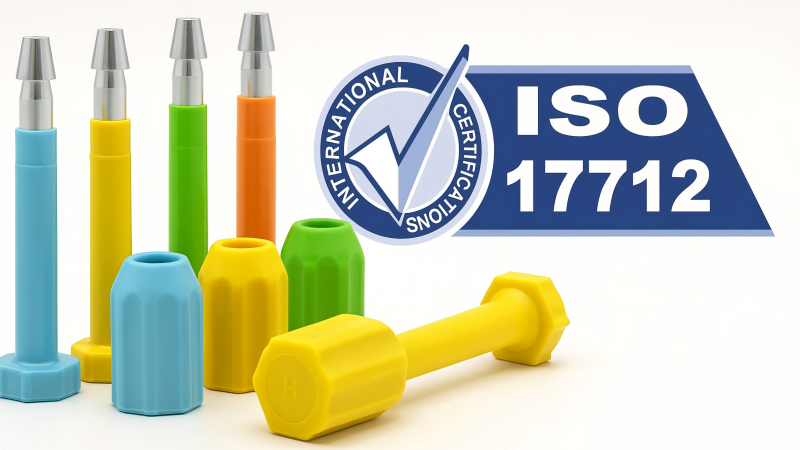
Think of ISO 17712 as the ultimate stress test for a seal. It's not a marketing claim; it's a certification earned through rigorous, independent lab testing. It ensures a seal meets specific standards for strength and tamper evidence. For any cross-border shipments, especially to North America, this isn't optional; it's mandatory for programs like C-TPAT.
The Three Classes of ISO 17712
The standard classifies seals into three levels, which perfectly aligns with our risk assessment:
- (I) Indicative Seals: Provide tamper evidence (e.g., plastic seals).
- (S) Security Seals: Provide limited barrier resistance (e.g., cable seals).
- (H) High-Security Seals: The highest level of barrier strength (e.g., bolt seals). They must pass specific pull, shear, and impact tests.
When a supplier provides an ISO 17712 "H" certificate, it proves their bolt seal has the physical strength required to be considered a true barrier seal by customs authorities worldwide. Don't just take a supplier's word for it; ask for the certificate.
The Final Choice: A Quick Checklist to Help You Match the Right Seal to Your Shipment.
You've considered all the factors. How do you bring it all together into a simple, final decision every single time you ship?
Use a quick checklist. This turns the complex balancing act into a consistent, daily operational procedure, ensuring you make the right choice for every shipment.
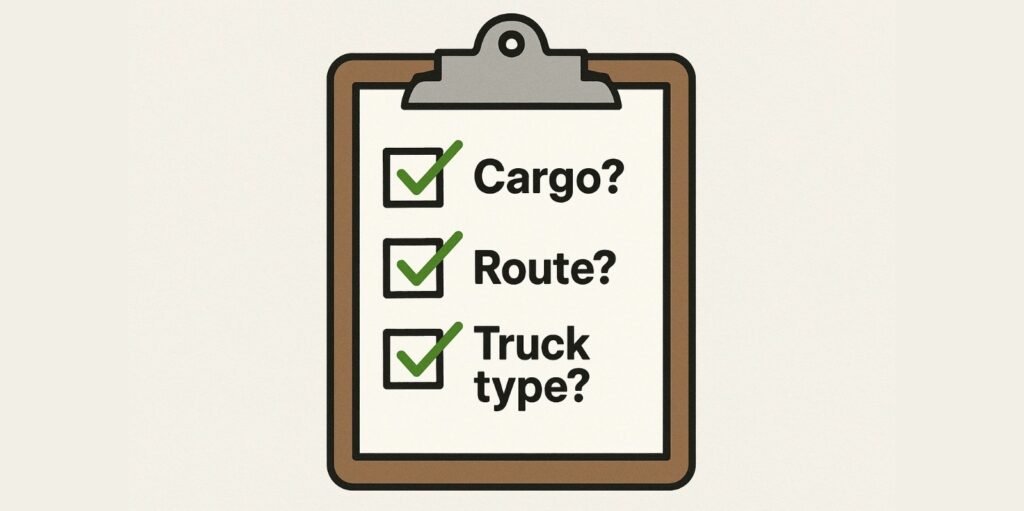
After years of guiding purchasers, I've condensed the process into five simple questions. Ask these questions for every single shipment, and you will arrive at the right seal choice. This is how you put the "dynamic balancing act" into practice.
Your 5-Question Seal Selection Checklist
- What is the cargo's value and theft risk?
- (Low risk -> Indicative Seal, High risk -> High-Security Seal)
- What is the route and its associated risks?
- (Short/Local -> Indicative, Long/Cross-Border -> High-Security)
- What type of truck and door mechanism am I securing?
- (Container -> Bolt Seal, Roll-Up Door -> Cable Seal)
- Are there any specific regulatory requirements?
- (International/C-TPAT -> ISO 17712 "H" Certified Seal)
- Based on the above, what is the most cost-effective seal that meets all requirements?
- This is the final balancing act. Don't over-spend, but never under-secure.
Conclusion
Choosing the right truck seal is a strategic decision, not a simple purchase. By balancing cargo value, route risk, and truck type, you make a smart "risk investment" that ensures certainty and protects your bottom line.
Make the Right Choice with ProtegoSeal
Don't gamble with your cargo's security. At ProtegoSeal, we guide you through this balancing act to find the perfect, most cost-effective seal for your needs. Contact us to secure your shipments with confidence today.