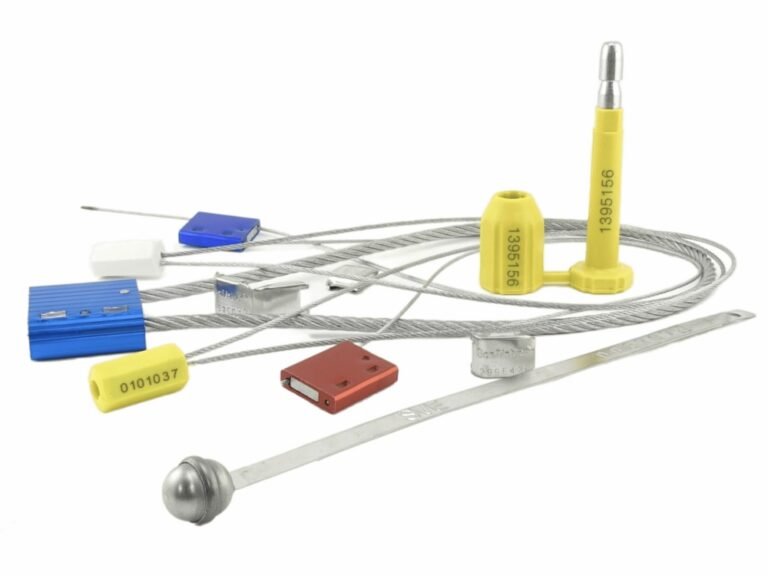
Utility managers often view electric meter seals as cheap plastic consumables. This mindset is expensive. In reality, these seals are the foundational physical evidence chain of your entire revenue protection system.
Electricity theft costs the global economy billions annually. The meter seal is not designed to physically stop a thief from breaking in; it is designed to make the theft undeniable. When a seal is properly applied, it transforms a disputed bill into proven fraud.
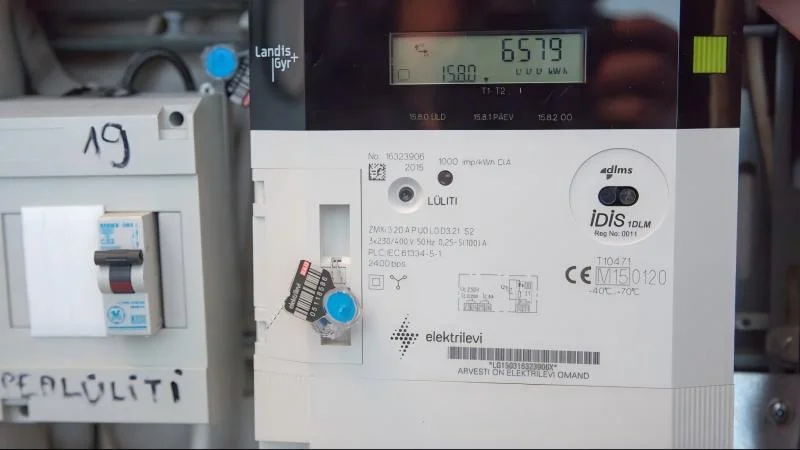
I often explain to procurement directors that they are not buying plastic; they are buying legal admissibility. If a meter is bypassed, the only thing standing between the utility and a lost court case is the integrity of that seal. If the seal can be manipulated without damage, or if the serial number fades in the sun, your evidence is gone. You must select a seal that acts as an irreversible witness to the crime.
How Do Electric Meter Seals Effectively Indicate Tampering?
How do you prove a homeowner opened their meter to slow down the dial? You cannot rely on the meter's data alone, as that can be hacked. You need physical proof of entry.
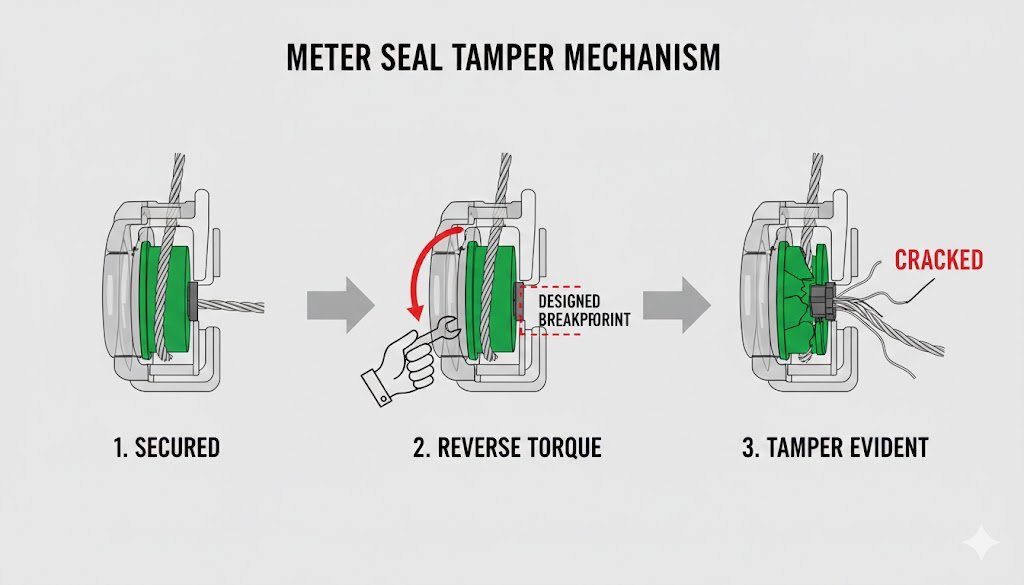
A high-quality meter seal functions on a "self-destruct" logic. Once the locking mechanism (usually a rotor or plunger) is engaged, any attempt to reverse it or pull the wire out will fracture the internal components, leaving visible, permanent evidence of tampering.
The "Tell-Tale" Mechanics
In my experience with utility audits, the most effective seals use a transparent outer shell with a colored internal insert. This contrast is vital. If a thief tries to heat the seal to soften the plastic, the internal rotor usually deforms or changes color. If they try to force the wire out, the rotor blades snap off. Because the shell is clear, the inspector can inspect this damage instantly with a flashlight. It removes the ambiguity. The seal screams "failed," and that is the trigger for your revenue protection team to issue a penalty.
Comparing Common Designs: Twist, Anchor, and Padlock
Not all meters have the same latching geometry. Using a padlock seal on a rotary meter is like trying to fit a square peg in a round hole. It leaves gaps that thieves exploit.
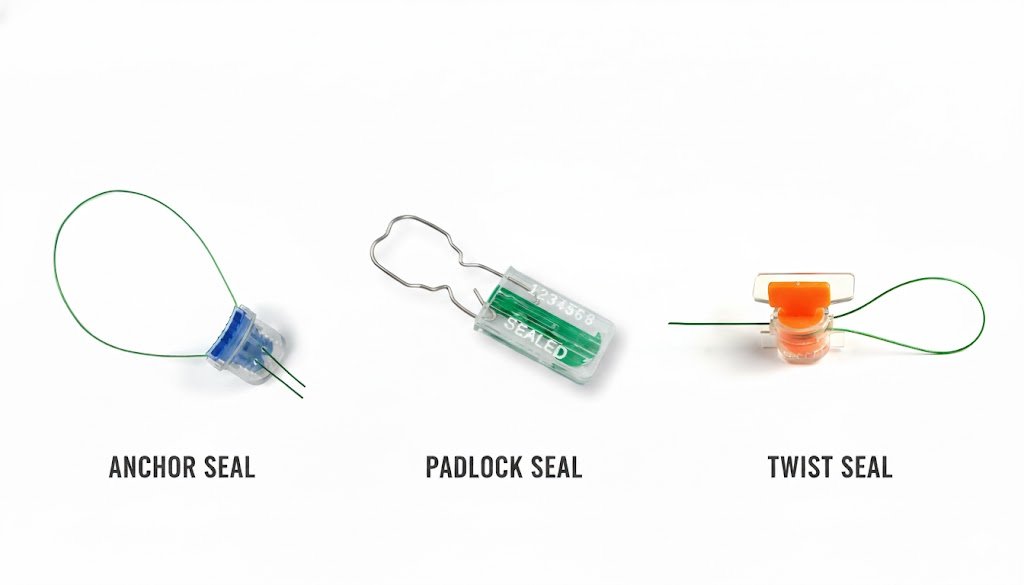
You must match the seal form factor to your specific metering equipment. Twist seals allow for tight wire tensioning; Anchor seals offer rapid snap-on application; and Padlock seals serve hasp-based locking rings.
Selecting the Right Form Factor
- Twist Meter Seals: These are the industry standard for residential meters. You thread a wire through the seal and the meter latch, then twist a handle to tighten it. The advantage here is the "zero-slack" result. You can crank the wire tight so there is no wiggle room for a thief to insert a tool.
- Anchor Seals: These generally push into a specific casing shell. They are faster to apply (just a click) but are less versatile than the wire-based twist seals.
- Padlock Seals: These look like traditional padlocks but are made of plastic. They are commonly used on the metal locking rings of large industrial meters. However, be careful: if the hasp loop is too thin, the seal sits loosely, which I always advise against.
Why Is Polycarbonate Material Superior for Meter Protection?
Why do we recommend Polycarbonate (PC) over cheaper polypropylene (PP) for meter seals? The answer lies in transparency and brittleness.
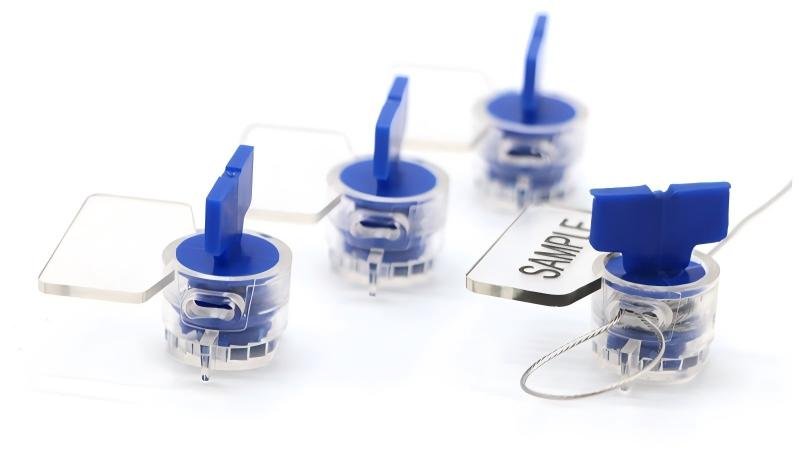
Polycarbonate is an engineering-grade thermoplastic that is glass-clear and extremely tough. It allows inspectors to clearly see the internal locking mechanism, whereas cheaper cloudy plastics hide the evidence of tampering.
The Clarity Advantage
I have seen procurement teams switch to cheaper PP seals to save money. Six months later, the seals turned yellow and opaque in the sun. The inspectors could no longer verify the locking mechanism inside. Polycarbonate is naturally UV stable and retains its clarity. Furthermore, PC is harder. If a thief tries to cut it, it might crack or shatter (showing evidence), whereas soft PP might just stretch, potentially allowing the thief to manipulate it and put it back. For "Revenue Protection," optical clarity is a security feature, not just an aesthetic one.
The Critical Role of Laser Marking and Serialization
A seal without a secure number is just a piece of plastic. If a thief can buy a generic seal online and replace the one they broke, your security is zero.
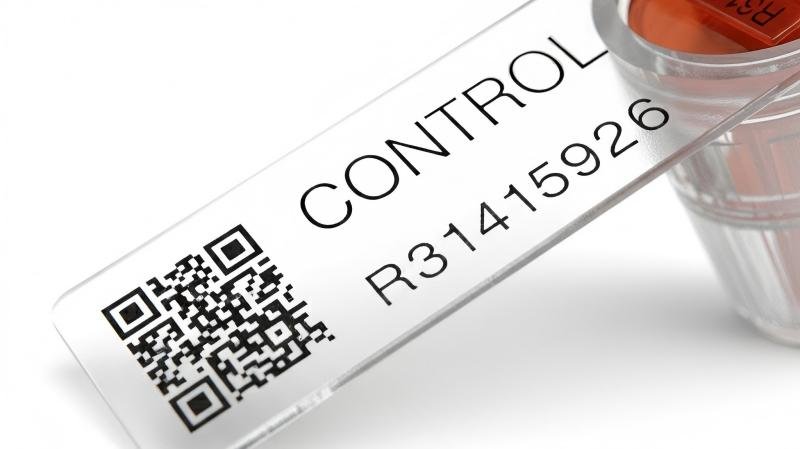
Laser marking burns the serial number and logo deep into the plastic body, making it impossible to rub off or alter without destroying the seal itself.
Preventing the "Clone" Attack
The most sophisticated electricity theft involves "cloning." A thief breaks your seal, bypasses the meter for a week, and then puts on a new seal that looks exactly like yours. To prevent this, every single seal must have a unique, non-repeating serial number logged in your database. I always recommend laser marking over hot stamping. Hot stamped ink can be dissolved with solvents. Laser marking changes the carbon structure of the plastic. It is permanent. If you scan the barcode and it doesn't match the account on file, you know immediately that the meter has been compromised.
Can Using Low-Quality Seals Lead to Hidden Revenue Loss?
Saving pennies on the seal price often leads to losing thousands in unrecoverable billing. It is a mathematical error to compromise on the quality of the evidence chain.
Low-quality seals with weak locking mechanisms or fading numbers fail to provide the legal proof needed to collect fines, resulting in massive Non-Technical Losses (NTL) for the utility company.
The ROI of Evidence
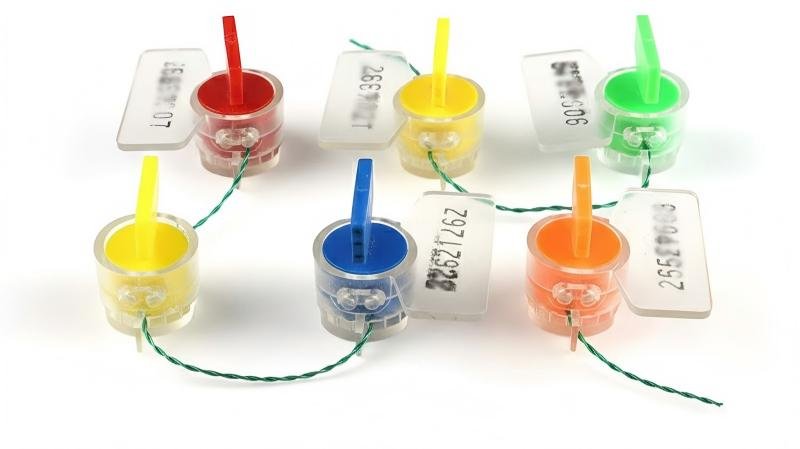
Imagine this scenario: Your inspector finds a bypassed meter. The potential fine is $5,000. But the seal on the ground is faded, and the locking mechanism just fell apart due to poor manufacturing. The homeowner argues, "It fell off by itself." Without a high-quality, clearly tampered seal as evidence, you often lose that argument. You lose the $5,000 to save $0.05 on a plastic part. I urge clients to view seals not as consumables, but as insurance policies. The strict mechanical failure point of a quality seal is what guarantees your revenue recovery.
Conclusion
Electric meter seals are the guardians of utility revenue. By combining transparent Polycarbonate material, tamper-evident twist mechanisms, and permanent laser marking, you build a legal evidence chain that stops electricity theft.
Secure Your Revenue with ProtegoSeal
Don't let invisible theft drain your profits. At ProtegoSeal, we understand that a seal is a financial instrument. We manufacture high-security, laser-marked Polycarbonate meter seals designed to withstand harsh environments and provide undeniable proof of tampering. Contact us today to audit your current revenue protection strategy.