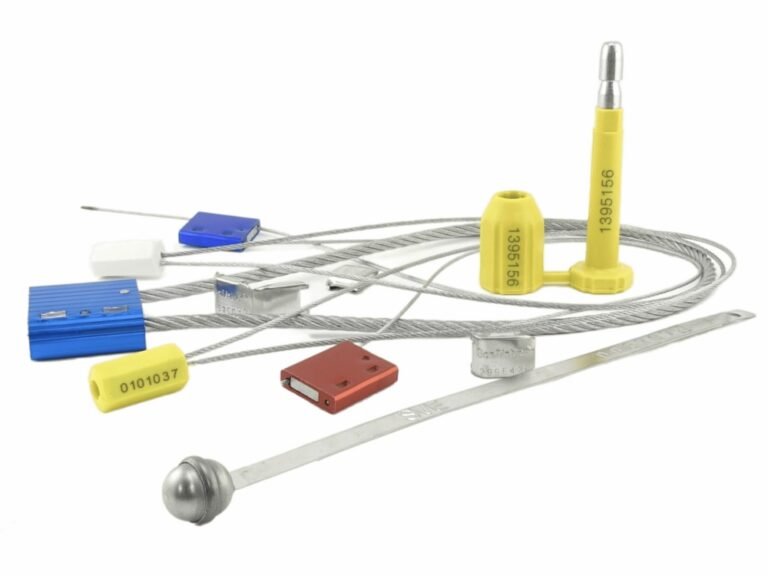
A security seal is scanned, the number matches the manifest, and everything seems perfect. Yet, when the container is opened, the cargo has been tampered with. The horrifying truth dawns: the seal was a fake, but the barcode was a perfect copy.
This is the fatal flaw of traditional barcodes that sophisticated criminals now exploit. They offer efficiency for tracking but provide zero protection against a clever counterfeiter, creating a massive vulnerability in your supply chain.
Yes, in high-security applications, QR codes are actively replacing traditional barcodes. This isn’t because they are newer technology, but because they solve a critical security problem that barcodes cannot: authenticity verification. A barcode can be copied, but a dynamic QR code system can instantly identify a fake or duplicated seal.
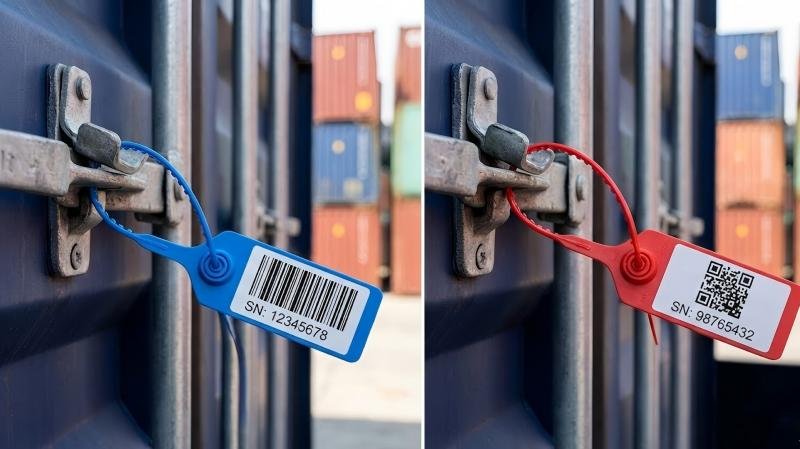
I remember a client, an electronics exporter, who was facing this exact nightmare. They were using high-quality bolt seals with clearly printed barcodes. A shipment arrived, the seal was intact, and the barcode scanned perfectly into their system. But $50,000 worth of components were missing, replaced with cheap parts. An investigation found a nearly identical counterfeit seal on the ground nearby. Their barcode system, which they trusted for logistics, was completely blind to the forgery. It was this incident that made them realize their security needs had evolved beyond what a simple barcode could offer. This is the very reason we're having this conversation today.
What Functions Give QR Code Seals True Replacement Potential?
A QR code can hold more information, maybe a website link. But how does that simple function translate into a powerful security tool that makes it a true replacement for a barcode?
It's easy to dismiss the QR code as just a fancier-looking square. If all you see is another way to store a serial number, you're missing the revolutionary potential that is driving this industry shift.
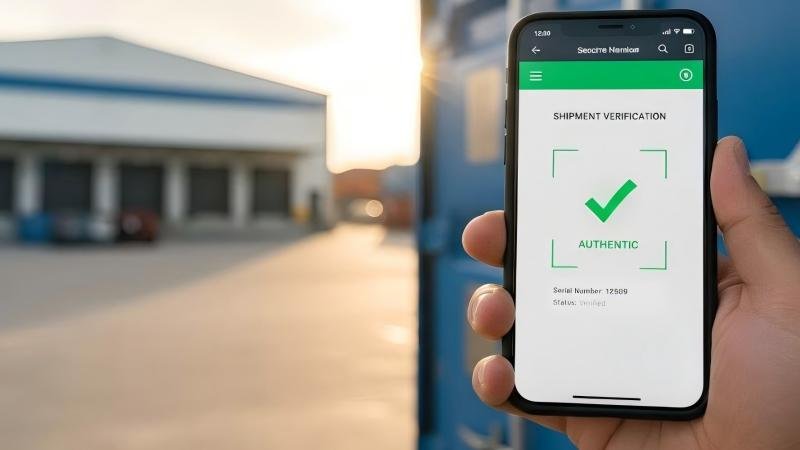
The replacement potential of QR codes comes from one core capability: dynamic, online verification. Unlike a static barcode, a QR code can link to a secure server, enabling real-time authentication and turning the seal into an interactive part of your digital security ecosystem.
This is the fundamental difference. A barcode is a number printed on a seal; a QR code is a secure gateway. Let's break down what this enables:
Anti-Counterfeiting Verification
The primary driver for this shift. When you scan a well-implemented QR code on a security seal:
- It directs your phone to a secure web address unique to that single seal.
- The server checks its database. Is this the first time this unique code has been scanned?
- The webpage instantly returns a result: "AUTHENTIC" or "WARNING: This seal has been scanned before at [Date/Time/Location]. It may be a counterfeit."
A barcode can't do this. A counterfeiter can print the same barcode on 1,000 fake seals, and every one of them will scan as "correct." But if they copy a unique QR code, only the first scan of the genuine seal will pass the test.
Enriched, Real-Time Data
A QR code ecosystem can provide far more than a simple "pass/fail." It can securely display:
- Shipment details and product manifests.
- Instructions for the recipient.
- A full chain of custody log, showing every time the seal was scanned during its journey.
Why Are Barcode Security Seals Still Irreplaceable in Some Sectors?
The power of QR codes is clear, but does that make every barcode seal in your inventory obsolete? There is still a critical place for the traditional barcode in modern logistics.
Jumping to a new technology for all applications can lead to unnecessary costs and complexity. The key is to match the technology to the actual risk level and operational need, not just to chase the latest trend.
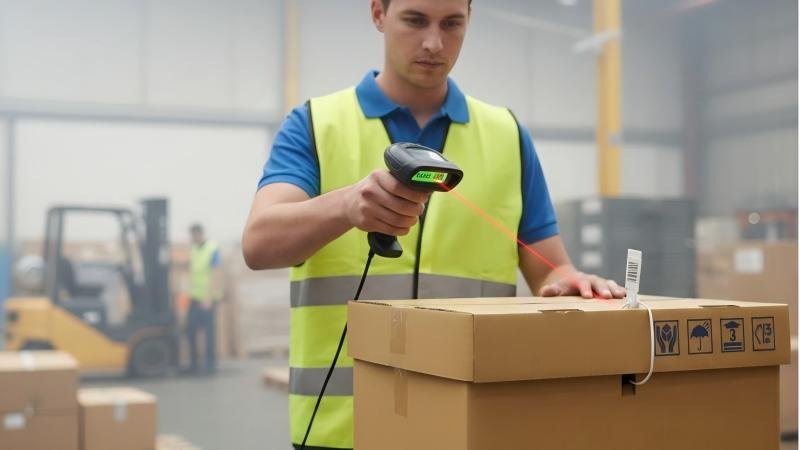
Barcode security seals remain irreplaceable in high-volume, low-risk internal environments where the primary goal is fast logistical tracking, not anti-counterfeiting. Their simplicity, low cost, and compatibility with legacy scanning hardware make them the perfect tool for the job.
The decision to use a barcode or a QR code is a risk-based one. Barcodes excel in scenarios where:
- The Risk of Counterfeiting is Low: This often applies to internal logistics loops, where assets are moving between trusted company facilities. The main goal is to track movement, not to defend against malicious external actors.
- Legacy Systems are Prevalent: Many large warehouses and logistics hubs have robust infrastructures built around traditional laser scanners. Barcodes integrate seamlessly with these existing systems without requiring new hardware or software.
- Speed is the Only Priority: For simple check-in/check-out processes, the instantaneous read of a 1D barcode with a dedicated scanner can be marginally faster than opening a phone camera for a QR code.
The barcode is the perfect tool for an efficient, internal asset tracking system. It was never designed to be a frontline defense against forgery, and in that context, it remains a highly valuable and cost-effective solution.
On Security: Is a QR Code an Upgrade or a Replacement for a Seal's Core Safety?
Beyond the technical differences, what is the impact on a seal's fundamental purpose? Does adding a QR code change the physical security, or just the data associated with it?
It’s crucial to separate the physical, tamper-evident function of the seal from its data-carrying function. Confusing the two can lead to a false sense of security, assuming new technology can make up for a physically weak seal.
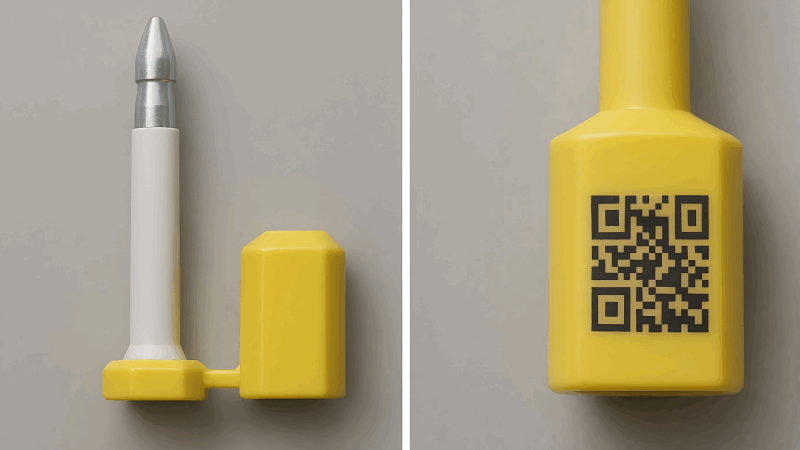
A QR code is a powerful upgrade to a seal's data security, but it is not a replacement for its core physical security. An effective security protocol requires both: a physically robust, tamper-evident design and a digitally secure, verifiable identifier.
I always explain this to my clients using a simple analogy: think of a high-security door.
- The Bolt Lock (Physical Security): This is the seal's body—the steel bolt, the locking mechanism, the tamper-evident features. Its job is to physically prevent or show evidence of unauthorized entry. A weak bolt makes the door useless.
- The Security Key (Data Security):: This is the identifier—the serial number, barcode, or QR code. Its job is to verify that you are at the right door and that no one has swapped the door with a fake one.
A traditional barcode is like a simple key that can be easily copied. A QR code is like a modern smart key that communicates with a central system to confirm its authenticity before unlocking. Adding a QR code doesn't make the bolt lock stronger, but it ensures that the entire system (door and key) is genuine. True security is achieved when a physically strong seal is paired with a digitally verifiable QR code.
Should My Business Make the Switch? When to Consider Moving from Barcode to QR Code Seals.
The benefits are compelling, but the real question remains: is now the right time for your specific business to upgrade? What operational pains or business goals should trigger this move?
Making a premature switch can be an unnecessary expense, while waiting too long can expose you to significant financial loss and brand damage from counterfeiting. The decision must be data-driven and strategic.

You should switch from barcode to QR code seals when the financial or brand risk of counterfeiting outweighs the cost of implementation. This tipping point is typically reached when you are shipping high-value goods, operating in complex supply chains, or need to provide customers with proof of authenticity.
Here’s a practical checklist to help you decide if it's time to make the switch:
| Consider Switching to QR Codes If You Answer "Yes" to Any of These: |
|---|
| Are your goods high-value? (e.g., electronics, pharmaceuticals, luxury items) |
| Is your brand's reputation a critical asset? (e.g., consumer goods, certified products) |
| Do your products travel through complex, multi-party supply chains? |
| Have you ever suspected or experienced shipment tampering or product substitution? |
| Do you need to provide your end customers with a way to verify product authenticity? |
| Is your business subject to strict regulatory compliance or chain of custody reporting? |
If you checked any of these boxes, the risk of a single counterfeiting incident likely justifies the investment in a QR code-based security system.
The Verdict: It's Not Replacement, It's an Evolution of the Security Seal Itself.
This whole discussion seems to pit two technologies against each other. But perhaps there's a better way to look at this shift. What if it's not a simple replacement, but a fundamental change in what we expect a security seal to do?
Viewing this as a "barcode vs. QR code" fight misses the bigger picture. It's not about which marking is better in a vacuum; it’s about how the role of the security seal is expanding in the modern world.
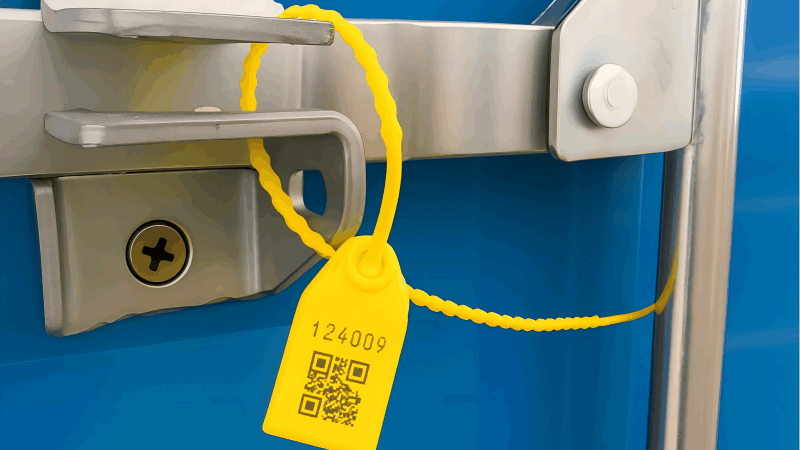
The shift to QR codes isn't about one technology replacing another; it's about the security seal evolving from a simple, physical lock into an intelligent, data-rich node in the supply chain. The business need has expanded from "Is it locked?" to "Is it authentic, and what is its story?".
A security seal with a serial number or barcode answers one question: "Is this the same physical object that was applied at the start?"
A security seal with a connected QR code answers a whole new set of crucial business questions:
- "Is this a genuine seal from my factory?"
- "Has anyone, anywhere, ever tried to scan this exact same identifier before?"
- "What is the full, documented journey of this specific item?"
- "Can I give my end customer a tool to trust that the product they received is real?"
This isn't a replacement. It's an evolution. The security seal is no longer just a passive object; it is now an active participant in securing and informing your entire business process.
Conclusion
The evolution is clear: QR codes address the critical security gap—counterfeiting—that barcodes cannot. This shift isn't about replacing old tech; it's about upgrading the security seal itself, transforming it from a simple lock into an intelligent guardian of your assets.
Evolve Your Security with ProtegoSeal
Is your supply chain vulnerable to counterfeiting? It's time to upgrade the very core of your security: the seal itself. ProtegoSeal manufactures a new generation of security seals featuring verifiable QR code technology, turning each physical seal into a powerful tool for authenticity. Contact us to get the intelligent security seals you need to protect your products and your brand.