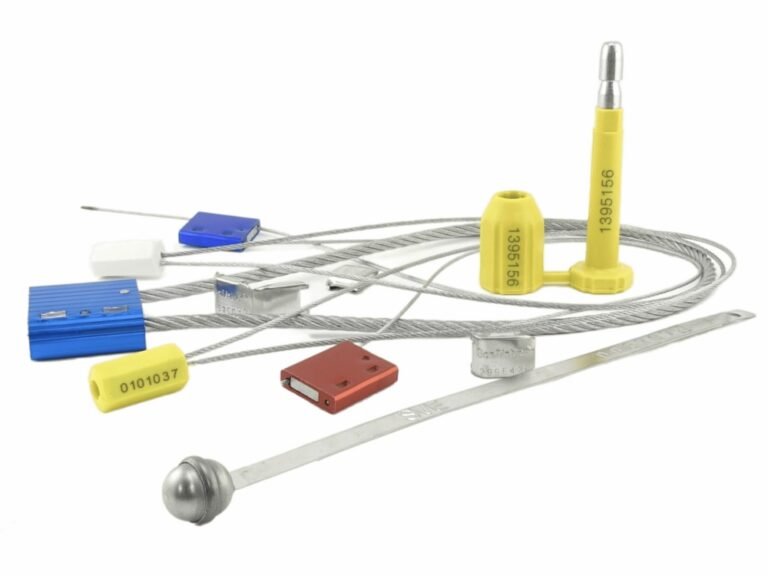
You need a secure truck seal, but you're caught in a frustrating budget trap. Weak plastic seals are cheap but can be defeated easily, while high-security bolt seals are strong but drive up your operational costs. This constant compromise leaves your cargo in a state of unacceptable risk or unnecessary expense.
For most domestic trucking, metal strap seals are the ideal solution that balances these extremes. They provide a significant upgrade in tamper-evidence and physical strength over plastic seals but remain far more cost-effective and easier to remove than heavy-duty bolt or cable seals.
Throughout my career designing security protocols for logistics fleets, I've seen companies hemorrhage money by failing to recognize this crucial "middle layer" of security. They treat seal selection as a binary choice between cheap plastic and expensive steel. I learned that the most effective programs aren't about choosing the strongest seal, but the smartest one for the specific journey.
What is a Metal Strap Seal's Real Job?
Many people see a metal strip and assume it's a high-security barrier. This is a dangerous misconception. Using it with the wrong expectations creates a false sense of security, leaving your assets vulnerable to professionals who know exactly how to defeat an improperly chosen seal.
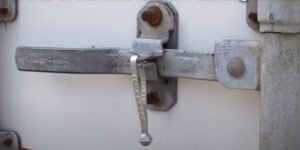
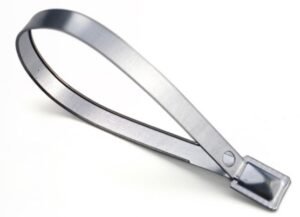
The primary job of a metal strap seal is to be a robust indicative seal. Unlike a barrier seal, its main purpose isn't to be unbreakable; it's to provide immediate, undeniable visual evidence of tampering. Its fixed length and self-locking ball mechanism make it impossible to open without destroying the seal, a key feature recognized in cargo security frameworks.

Dive Deeper: The Indicative Seal with Teeth
I think of the metal strap seal as an "indicative seal with teeth." In a project for a regional food distributor, they were experiencing persistent, low-level theft from their trucks. The drivers were using plastic pull-tight seals, but a few opportunistic thieves along the route had learned to manipulate them with heat or simple tools, stealing a couple of cases at a time. The losses were insidious, adding up to over $15,000 per quarter.
A full upgrade to bolt seals was vetoed by the finance department due to the cost of the seals and the bolt cutters required at every one of their 50+ delivery points.
My solution was to implement a simple switch to uniquely numbered metal strap seals. The change was incredibly effective for two reasons:
- Increased Effort to Defeat: A plastic seal can be defeated quietly with a pocketknife or lighter. A metal strap seal requires tin snips or a cutter, which makes more noise and requires a more determined effort. This simple escalation was enough to deter the opportunistic thieves.
- Unambiguous Evidence: There is no way to subtly "fix" a broken metal strap seal. Once cut, it's done. This made post-trip inspections black and white. If the seal was broken, a security report was mandatory.
This simple change reduced their quarterly theft losses by over 90%. It was a textbook case of matching the security tool precisely to the threat level.
Why Not Just Use It for International Shipments?
You've found a cost-effective, strong seal. The logical next step seems to be rolling it out across all your routes, including international ones. But this is a compliance trap that can lead to costly customs delays, inspections, and even fines.
For most international maritime container shipments, metal strap seals do not meet the high-security "H" classification required by standards like ISO 17712. These regulations, enforced by programs such as the Customs-Trade Partnership Against Terrorism (C-TPAT), mandate the use of barrier seals like bolt or cable seals to ensure a higher level of physical security.

Dive Deeper: My ISO 17712 Litmus Test
Early in my career, I almost made this mistake. A client shipping parts to Mexico was happy with the metal strap seals we used for their domestic U.S. routes. They asked, "Why not just use these for our cross-border shipments to save money?"
It sounded reasonable. But before I agreed, I did my due diligence and consulted the official ISO 17712 standard documentation. The standard is crystal clear about the physical strength tests a seal must pass to be classified as "High Security." These include tensile, shear, and impact tests that a simple metal strap seal is not designed to withstand.
Using a metal strap seal for a C-TPAT regulated shipment would have been a critical compliance failure. The container would have been flagged at the border, likely impounded, and subjected to a full manual inspection. The cost of those delays—easily thousands of dollars per day—would have dwarfed any savings on the seals.
This taught me a simple litmus test:
| Shipment Type | My Default Recommendation | Rationale |
|---|---|---|
| Domestic Trucking (Full Truckload) | Metal Strap Seal | Perfect balance of cost and security for moderate risks. |
| International Maritime Container | ISO 17712 "H" Certified Bolt or Cable Seal | Non-negotiable for customs and C-TPAT compliance. |
| Domestic Less-Than-Truckload (LTL) | High-quality, uniquely numbered Plastic Seal | High number of stops; the goal is tamper evidence between hubs. |
| Long-Term Storage or High-Value Cargo | High-Security Cable Seal | Offers a strong barrier and more flexibility than a bolt seal. |
How Does It Compare in Durability and Strength?
It's tempting to think that "metal is metal," but the durability of a seal is about more than just its material. Assuming a metal strap seal has the same resilience as a bolt seal is a critical error that ignores the engineering behind their designs, risking seal failure on rough journeys.
A metal strap seal offers excellent durability for its intended purpose—securing a truck or trailer door for a single journey. It's made of steel and résists casual tampering and environmental wear. However, it lacks the massive steel bolt and hardened locking cylinder of a high-security seal, making it vulnerable to a determined attack with heavy tools.
Dive Deeper: Strength vs. Application Environment
In a project for a client moving construction equipment on flatbed trailers, they initially used metal strap seals to secure toolboxes and tarps. They quickly ran into problems. The constant vibration and high winds on the highway caused the thin metal straps to fatigue and, in a few cases, snap. The issue wasn't a lack of security but a mismatch of the tool to the environment.
The stress on those seals was constant and dynamic, something a fixed-length strap isn't designed for. A standard metal strap seal is tested for a static pull force but not for continuous, high-frequency vibration.
Here's my approach to matching strength to the real-world environment:
- Assess the Threat: Is the primary threat opportunistic theft (requiring evidence) or a sustained, professional attack (requiring a physical barrier)?
- Opportunistic: Metal strap seal is perfect.
- Professional: Upgrade to a cable seal or bolt seal.
- Analyze the Journey: Is it a smooth highway trip or a bumpy, multi-day route with significant physical stress on the seal?
- Smooth: Metal strap seal is sufficient.
- Rough/High-Vibration: A more robust seal, like a cable seal with its flexible, multi-strand wire, is a better choice.
- Consider the "Human Factor": Who needs to remove the seal? A truck driver with tin snips, or a warehouse team with 24-inch bolt cutters? The removal process is part of the security protocol. A metal strap seal is easy to remove with common tools, which is an advantage for domestic routes.
What Are Its Core Features and Applications?
Without understanding a seal's core design features, you're just guessing. A procurement manager might see it as just a "metal tie," completely missing the specific anti-tampering functions that make it effective and the applications where it truly shines a critical oversight.
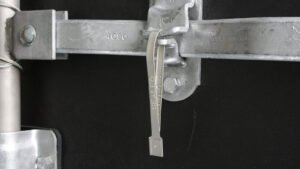
The essential features of a metal strap ball seal are its all-metal construction, fixed-length design providing a clear tamper indicator, a unique serial number for tracking, and a ball-style locking mechanism that cannot be disengaged without destroying the seal. These features make it ideal for securing truck trailers, rail carriages, and domestic freight containers.
Dive Deeper: From Feature to Function
Each feature is designed to solve a real-world problem. In my projects, I always map the feature directly to the operational benefit it provides.
Feature: Fixed-length strap.
- Function: Prevents "cinch-and-return" tampering common with adjustable seals. It creates a consistent loop size that makes visual inspection quick and reliable. A loose seal is an immediate red flag.
Feature: Ball locking mechanism inside a domed housing.
- Function: This is a classic, proven one-way lock. Once the strap is in and the ball engages, it can't be pulled back out. The housing also protects the lock from being easily accessed or manipulated.
Feature: Laser-engraved unique serial numbers.
- Function: This transforms the seal from a physical lock into a data point. The number must be logged on the bill of lading at the start of the journey and verified at the destination. Any discrepancy in the number means the cargo's integrity has been compromised, even if a new seal was put on. This is a foundational principle of supply chain security.
Feature: All-metal construction (typically tin-plated steel).
- Function: It provides a clear step-up in weather resistance and physical strength over plastic. It won't become brittle in the cold or easily stretch in the heat. It also serves as a visual deterrent.
The correct application of these seals, like on TIR cables for cross-border European trucking or domestic rail cars, leverages all these features to create a secure, verifiable chain of custody.
So, Is It the Right Seal for My Operations?
Asking if a seal is "good" isn't the right question. A tool is only as good as its application. Choosing a seal based on price or perceived strength alone, without a clear risk assessment, is the most common and costly mistake I see in the field.
The metal strap ball seal is the right choice if you require a cost-effective, easy-to-use indicative seal that offers a significant security upgrade over plastic for moderate-risk, primarily domestic shipments. If your needs involve high-value cargo, international maritime shipping, or routes with extreme physical stress, a high-security barrier seal is the more appropriate solution.
Dive Deeper: My Final Decision Checklist
When a client asks me to make the final call, I walk them through this simple checklist.
- What is the Total Value at Risk? If the loss of this single shipment represents a major financial blow, you should always err on the side of higher security (bolt or cable seal). If the risk is manageable and more about preventing petty theft, a metal strap seal is perfect.
- Will this shipment cross an international border via sea container? If yes, a metal strap seal is the wrong choice. You need an ISO 17712 "H" certified seal. Period.
- What tools do your receivers have? Can every single destination easily access and use 24-inch bolt cutters? If not, implementing a high-security seal program will create a massive operational bottleneck. The easy removal of a metal strap seal with tin snips is a significant benefit.
- What does your data say? Are your losses coming from organized, professional rings or from low-level opportunism? Analyze your security incident reports. A metal strap seal is an excellent deterrent for the latter.
This framework moves the conversation away from "which seal is better" and toward "which seal is the correct countermeasure for our specific, identified risk."
Conclusion
The metal strap seal holds a critical place in logistics security. It's a smart, cost-effective tool when used correctly—an ideal choice for strengthening domestic supply chains against common threats.
How ProtegoSeal Can Fit Into Your Next Seal Program Decision
Choosing the right seal is a strategic decision that balances cost, compliance, and real-world risk. I've spent years helping companies avoid common pitfalls and implement security programs that actually work. A seal is not just a product; it's the endpoint of a security strategy.
If you're facing these choices and need a partner who understands the nuances of cargo security beyond a product catalog, the team at ProtegoSeal can help. We bring over a decade of firsthand experience to help you analyze your routes, identify your true risks, and implement a cost-effective sealing solution. For a no-obligation consultation, please contact us, and we'll help you build a smarter security protocol.