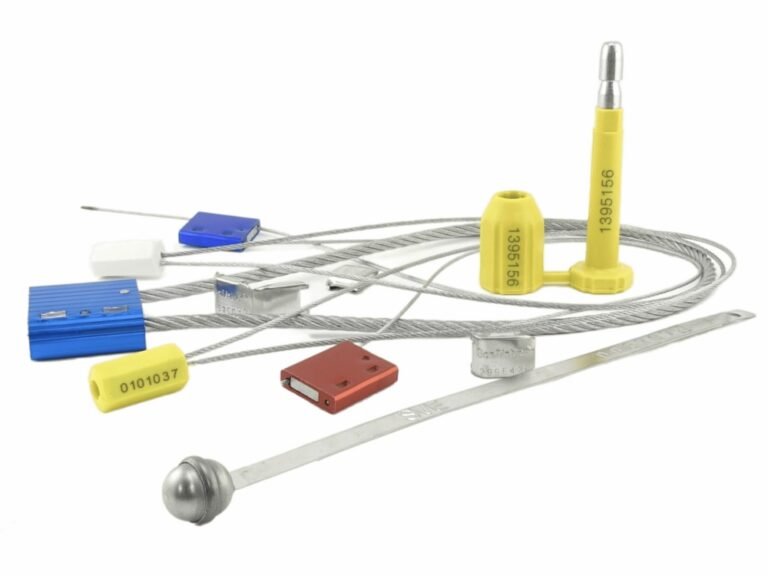
Think that shiny hologram sticker guarantees authenticity? A fake one can look convincing at first glance, putting your brand reputation and revenue directly at risk. Verification is your essential defense.
To verify a hologram sticker, tilt it to observe color and image changes, look for multiple layers and kinetic effects, and inspect the edges and surface for tampering. A true security hologram is a system designed to be both difficult to copy and impossible to move intact.
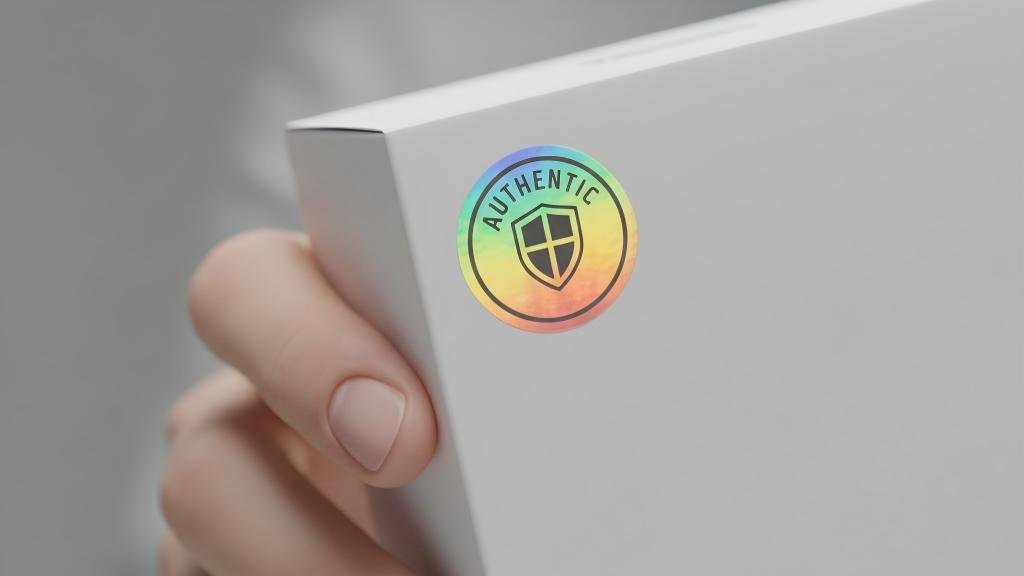
The security of a hologram is a complete system. It goes far beyond the optical complexity of the image itself. I learned this the hard way with a client years ago. They had invested in what they thought were secure holograms. The images were complex, but the stickers could be carefully peeled off one product and moved to another. Counterfeiters weren't even bothering to copy the holograms; they were just harvesting real ones from low-value goods to legitimize high-value fakes. This taught me a vital lesson. A true security solution must solve two core threats: preventing "counterfeiting" (making fakes) and preventing "transference" (moving real ones). This is why a secure solution isn't just a hard-to-copy image; it's a tamper-evident carrier designed to self-destruct.
Why Is Verifying Hologram Stickers a Critical Security Step?
You've invested in holograms to protect your products. But if your team can't spot a fake, that investment is completely wasted, leaving your brand exposed to fraud.
Verification is the final, active step in your security protocol. It empowers your team to confirm the authenticity of a product at any point in the supply chain, turning a passive sticker into an active defense against counterfeits and protecting your brand's integrity.

Think of it this way: the hologram sticker is a lock, but verification is the act of checking to see if the lock has been picked. Without a consistent verification process, counterfeit goods can flow through your distribution channels undetected. This can lead to huge revenue losses, customer complaints, and irreparable damage to your brand's reputation. I once worked with a spirits company that discovered a sophisticated counterfeit ring had infiltrated their market. Their solution was to train their sales and distribution teams on a simple, three-point verification check. Within two months, they were able to identify and seize hundreds of cases of fake products, effectively choking off the counterfeiters' access to the market. Verification isn't just a suggestion; it's the enforcement arm of your entire anti-counterfeiting strategy.
What Security Features Make a Hologram Authentic?
A simple, shiny sticker offers no real security. Counterfeiters can easily replicate basic rainbow effects. The real value is in the layers of complexity that are difficult and expensive to copy.
An authentic security hologram combines multiple features. This includes 2D/3D depth effects, kinetic movement (microtext or guilloché patterns), and hidden features visible only with special tools. Most importantly, it's integrated with a tamper-evident material.
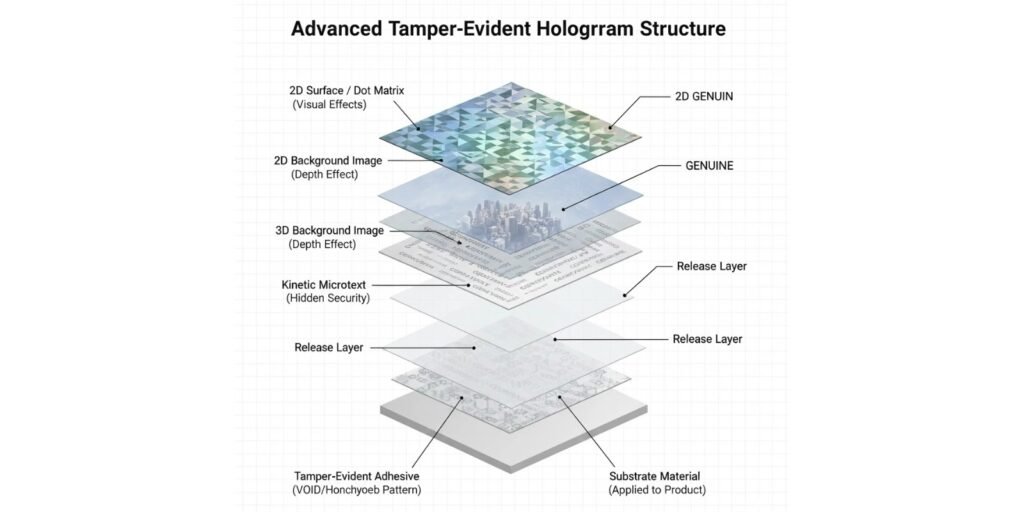
As I mentioned, a hologram must fight both counterfeiting and tampering. Here’s how the features address those threats:
1. Anti-Counterfeiting Features
These are the optical effects that are difficult to replicate without specialized holographic mastering equipment.
- Depth and Parallax: A genuine 2D/3D hologram shows different layers of the image at different depths. As you tilt it, the foreground and background should appear to shift in relation to each other.
- Kinetic Effects: These are patterns or text that seem to move, shimmer, or animate as the viewing angle changes. A simple fake will just show a static rainbow pattern.
- Covert & Forensic Features: These can include nano-text (too small to be read without a microscope) or images that are only visible under a UV light or with a specific laser reader.
2. Anti-Tampering Features
This is the "carrier" that ensures the hologram cannot be moved.
- Destructible Materials: The most effective holograms are made on brittle or "frangible" materials that break into tiny pieces if someone tries to peel them off.
- VOID Pattern Release: Many security stickers will leave behind a "VOID," "OPENED," or checkerboard pattern on the product surface if removed, providing clear evidence of tampering.
A truly secure hologram has both.
The 4 Core Techniques for Hologram Stickers Verification
You don't need a laboratory to perform an effective initial verification. A few simple, hands-on techniques can quickly expose the majority of common fakes.
To verify a hologram, use the "Tilt, Look, Scratch, Scan" method. Tilt for optical effects, look for depth, gently scratch an edge to check for tampering evidence, and scan for any QR code or digital integration.
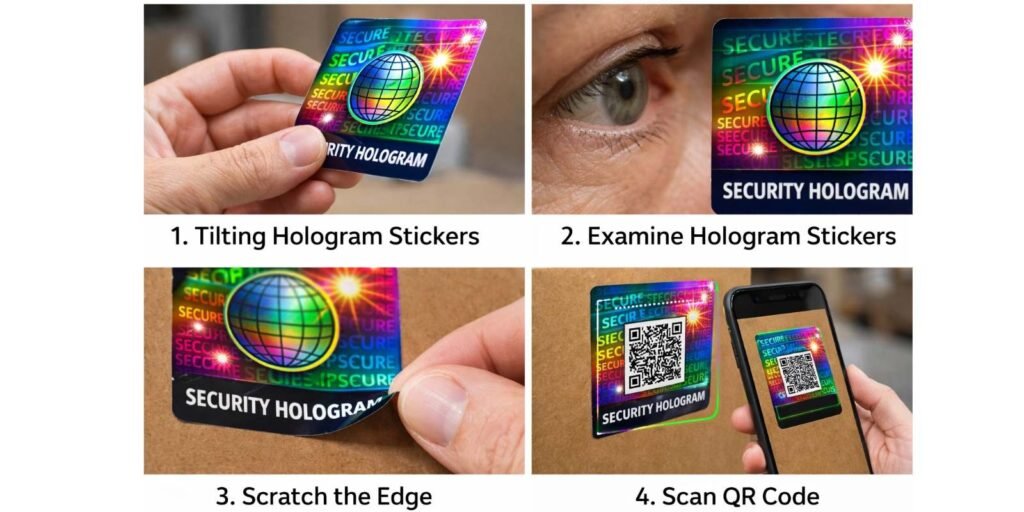
I train clients on this simple, memorable process. It takes less than 30 seconds and can be done by anyone in your supply chain, from the warehouse floor to the retail counter.
The "Tilt, Look, Scratch, Scan" Method
| Technique | Action | What to Check For |
|---|---|---|
| 1. TILT | Hold the sticker under a light source and tilt it back and forth, and side to side. | Do the colors change smoothly? Do different elements of the image appear and disappear? Do kinetic patterns animate correctly? |
| 2. LOOK | Look closely at the image itself. Does it have depth? | Can you see a background layer that seems further away than a foreground layer? Is the imagery sharp and clear, or is it blurry and flat? |
| 3. SCRATCH | Gently try to lift one edge of the sticker with your fingernail. (Caution: Do this only if you are authorized to test the product). | Does the sticker start to flake apart or leave behind a "VOID" pattern? A genuine security sticker should not peel off cleanly. If it does, it fails the transference test. |
| 4. SCAN | If the hologram includes a QR code or serial number, scan or check it. | Does the QR code lead to a legitimate verification website? Does the serial number match the one in your database? This links the physical seal to a digital security system. |
What Are Common Signs of a Counterfeit Hologram Sticker?
Knowing what to look for can make the difference between accepting a fake and rejecting it. Counterfeiters often cut corners, and these small imperfections are the giveaways.
A counterfeit hologram often appears flat, lacks true depth, and shows a simple, repeating rainbow pattern instead of complex kinetic effects. It may also peel off too easily or have poorly defined, blurry images.
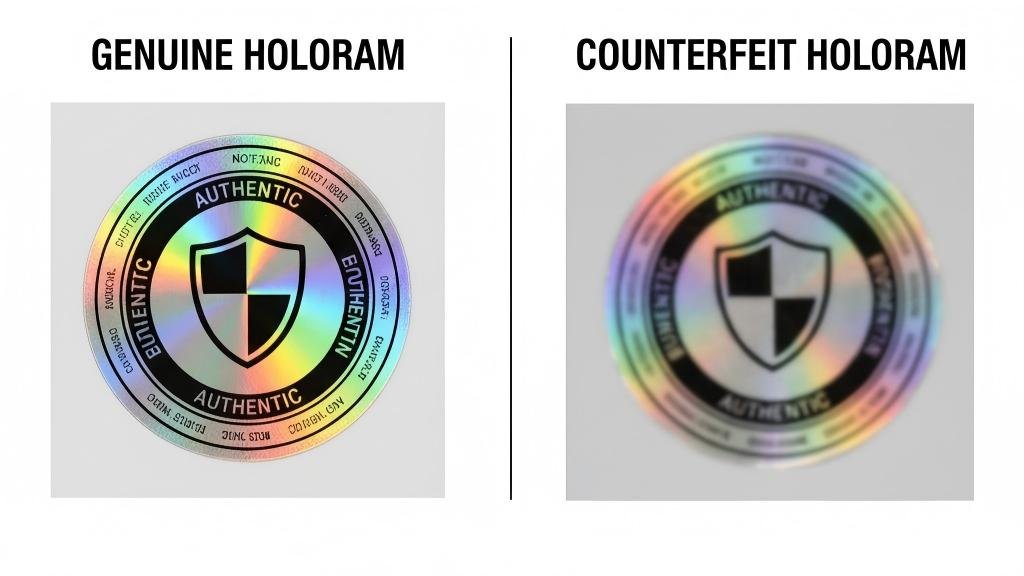
During my time as a QC inspector, I learned to spot fakes by looking for what wasn't there. Counterfeiters rely on the initial "wow" factor of the rainbow effect. But when you look closer, the signs are clear.
Red Flags for Counterfeits
- No Depth or Parallax: The image looks completely flat, like a simple shiny sticker. When you tilt it, the whole image moves as one, with no sense of different layers.
- "Dead" Colors: The colors look dull or don't shift through the full spectrum as you tilt the sticker.
- Easy Removal: The sticker peels off in one piece with little to no residue or self-destruction. This is a critical failure.
- Poor Print Quality: Microtext is unreadable or looks like a smudged line, and the edges of the holographic image are fuzzy.
- Lack of Hidden Features: If you know there's supposed to be a UV feature and it doesn't appear under a blacklight, you have a fake.
Found a Fake? Here’s What to Do Next
Discovering a counterfeit product can be alarming. Acting rashly can destroy evidence, but doing nothing allows the problem to grow. A clear plan is essential.
If you find a suspected fake hologram, do not disturb it further. Document it immediately with photos, note the source (where and when you got it), and secure the item as evidence. Then, report it through your company's designated security channel.
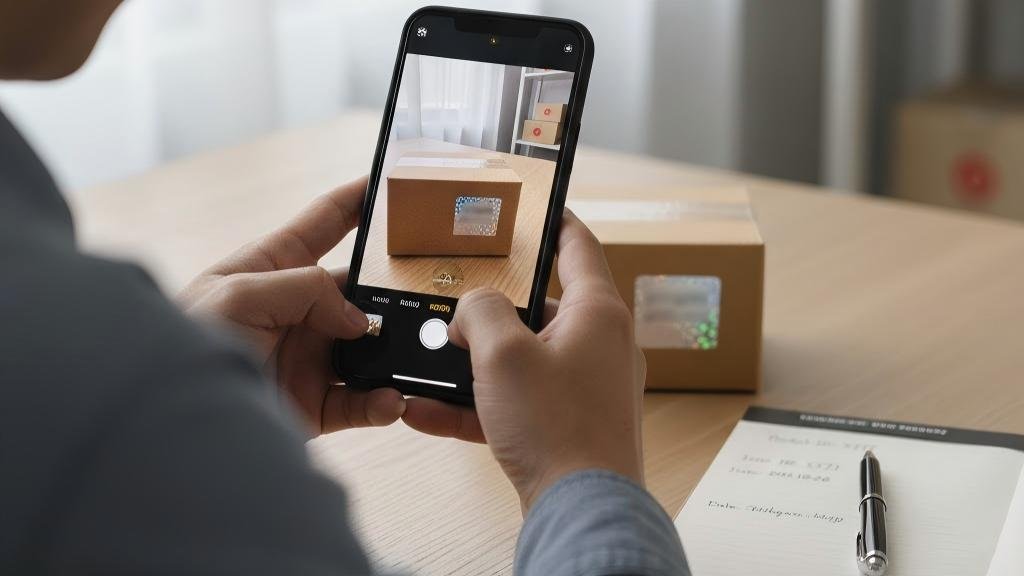
This is a Chain of Evidence issue. The goal is to preserve the counterfeit item in the state you found it for future investigation.
- Isolate: Separate the suspected product from genuine inventory to prevent it from being accidentally sold or used.
- Document: Take clear, well-lit photos of the product and a close-up of the counterfeit hologram. Note the date, time, location, and any information about its origin (e.g., supplier, batch number).
- Secure: Place the item in a labeled bag or box. This is now evidence.
- Report: Immediately contact your supervisor, brand protection department, or security manager. Do not try to contact the supplier yourself. Let your company handle the official investigation. This information is invaluable for tracking the source of the counterfeit goods.
Conclusion
Verifying a hologram sticker is a simple but critical process. It protects your investment, your brand, and your customers by enforcing the security system you've put in place.
Transform Verification from a Task to a Strategy with ProtegoSeal
A strong verification process requires a hologram designed to be verified. At ProtegoSeal, we engineer multi-layered hologram stickers with advanced anti-counterfeiting and anti-tampering features. Contact us to create a security solution that gives you and your team confidence in every check.