That nagging feeling that a shipment has been tampered with isn't a modern problem. It's a conflict as old as trade itself. For millennia, people have sought a reliable way to prove a container's integrity.
The history of security seals is not a story of creating an indestructible lock. It is a 4,000-year journey focused on perfecting one thing: creating undeniable, self-exposing evidence of tampering. The core driver was never just about materials; it was about the evolution of the "information value" that a seal carries.
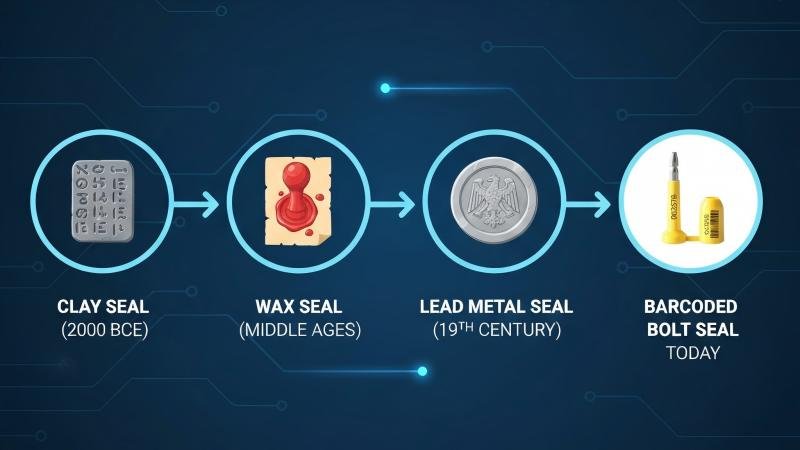
When I trace this history, I see the same fundamental challenges my clients face today being solved by progressively smarter technology. The goal evolved from creating passive, ambiguous proof to a system of active, precise information. It's a fascinating story of innovation driven by the basic need for trust.
What Did the Earliest Security Seals Look Like?
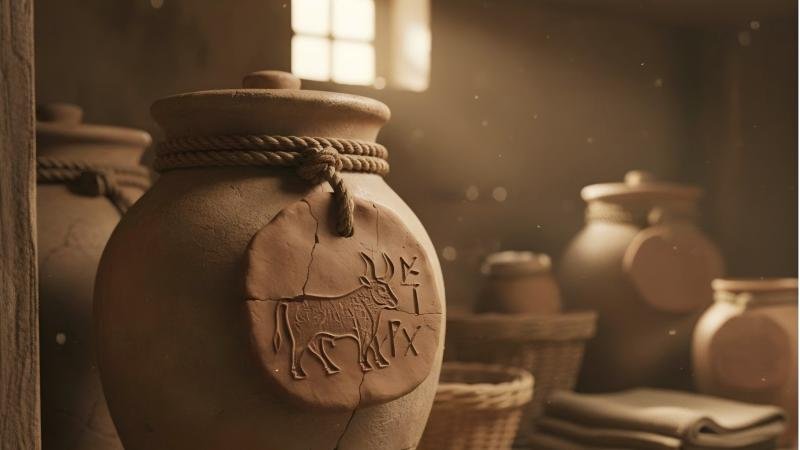
The concept of tamper evidence began over 4,000 years ago in places like ancient Egypt and Mesopotamia. Merchants needed to protect valuable goods like oils and grains. Their solution was brilliantly simple: a rope tied around a container's lid, with a soft ball of clay pressed over the knot. This clay was then stamped with a unique cylinder seal. The genius of this design was its intentional fragility. A broken clay seal was undeniable proof that the container had been opened.
This marked the birth of our industry's core principle. It shifted the argument from "Did you steal something?" to "Why is this seal broken?" The physical object became the evidence. The information it carried was a simple "yes or no," but it was a revolutionary first step. It was the moment someone realized that the evidence of tampering could be more powerful than the lock itself.
From Medieval Wax Seals to Industrial Revolution's Metal Stamps
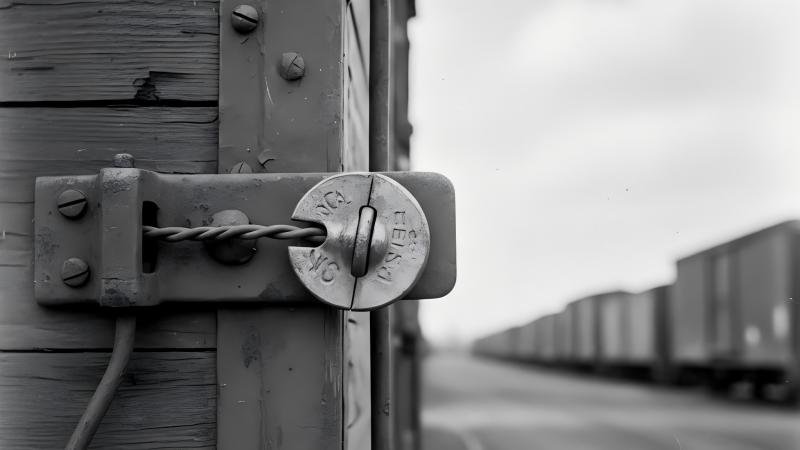
As empires rose, the need for more sophisticated information grew. For a medieval king sending a decree, proving authenticity was critical. This led to the dominance of the wax seal, pressed with an intricate signet ring. This added a new layer of information: identity. The seal now declared, "This was sealed by this specific person." Then, the Industrial Revolution's railroads demanded a more durable solution. Fragile wax was replaced by the lead-and-wire seal, where a wire was crimped inside a soft lead puck.
The truly game-changing leap of this era was the introduction of sequential numbering. For the first time, each metal seal was stamped with a unique number. It was no longer a generic object. A manifest could record seal #1001 was applied at origin. If #1002 arrived, even if intact, you had concrete proof of a swap. The seal had officially evolved from a simple physical barrier into a trackable asset, transforming logistics accountability forever.
The 20th-Century Leap: The Birth of Plastic, Serial Numbers, and High-Security Standards?
The mid-20th century marked another turning point. While metal seals were durable, their simple crimping mechanisms could still be crudely replicated. The industry needed a revolution in both material and information clarity. This came in the form of plastic, which was a game-changer because it could be molded into complex shapes, allowing for the creation of intricate internal locking mechanisms. Unlike a simple lead crimp, a plastic seal could be designed to break internally if tampered with, making it a true single-use device.
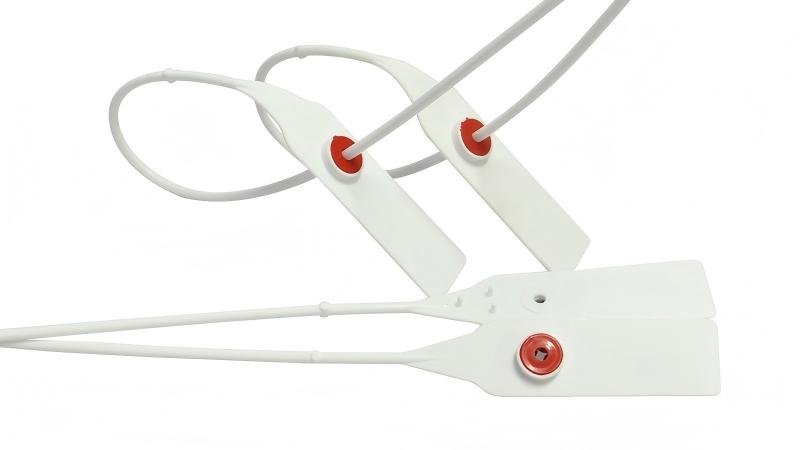
This period also saw the refinement of serial numbers, moving from crude stamping to clearer hot-stamping. As global trade grew, a need for universal trust emerged, leading to the development of early security standards. This combination of superior physical locks and clearer information cemented the role of the modern security seal, setting the stage for an even higher level of security as shipping containers began to rule the seas.
The Advent of High-Security Seals for the Container Shipping Era
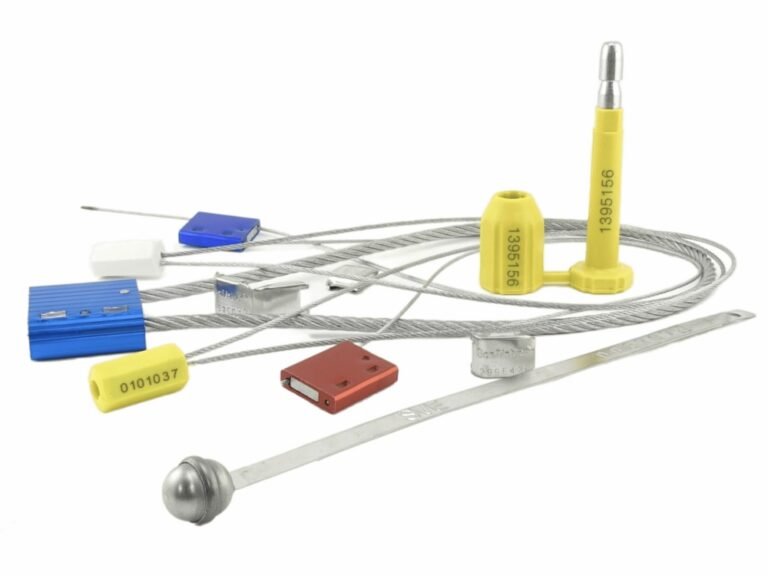
The standardization of the intermodal container in the latter half of the 20th century created an urgent need for a new class of seal. These containers held immense value and would cross oceans, passing through countless hands. A simple plastic pull-tight seal was not enough. This gave rise to the high-security seal, specifically the bolt seal and cable seal.
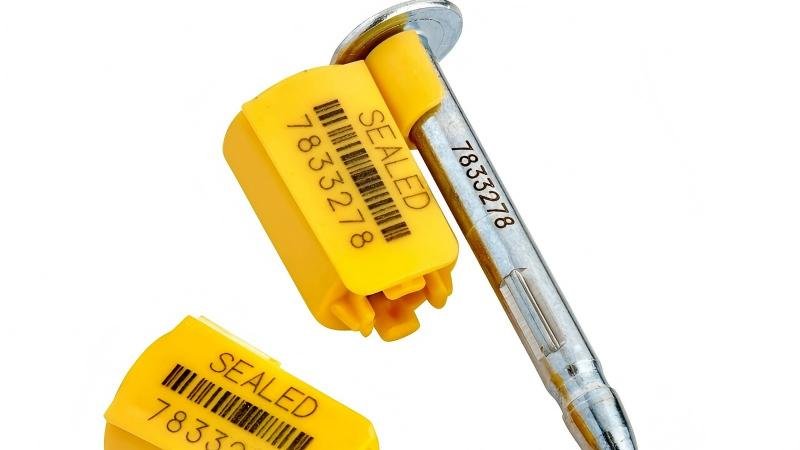
These seals were different. They were built for brute force resistance, and their security was codified by the new global standard, ISO 17712. To be classified as a "High Security Seal," it had to withstand specific, testable shearing, impact, and tensile forces. The information value also took a leap. Numbers were now deeply laser-engraved onto a hardened steel pin and a plastic-coated barrel. This made altering a number extremely difficult without leaving obvious grinding marks, providing clear, undeniable evidence of an attack. It was a purpose-built solution for the backbone of global trade.
The Evolution from Physical Locking to Digital Tracking
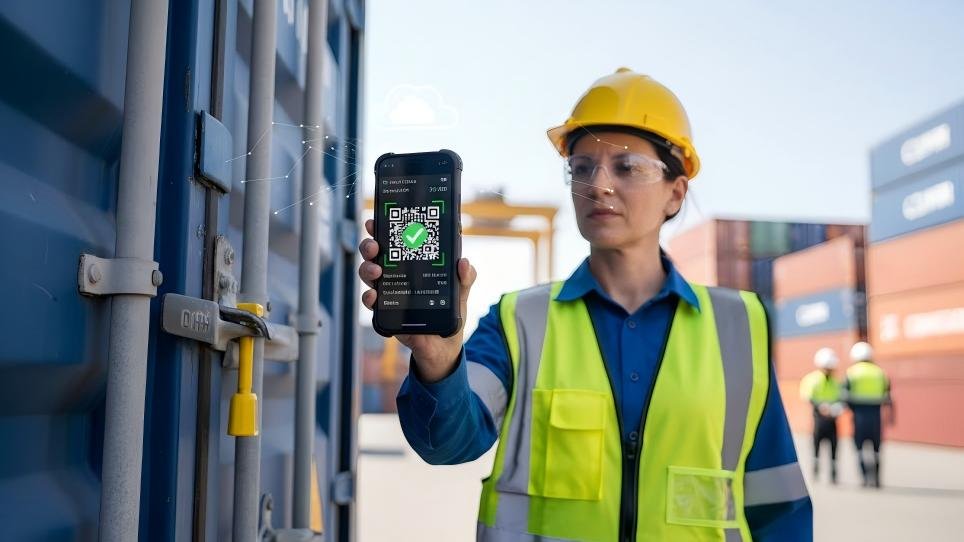
In today's fast-moving supply chains, a broken seal tells you that something happened, but it fails to tell you when or where. This information gap is where liability disputes are born. This final challenge prompted the seal's ultimate evolution: its integration with digital technology.
Today, a security seal's barcode is the physical key to a digital Chain of Custody. When scanned at each handover point, it links the physical asset to a cloud-based system, capturing a complete data record: the seal's unique number, the operator's ID, the GPS coordinates, and an unalterable timestamp. This transforms the seal from a static object into an active data point. The evidence of tampering is no longer just a broken piece of plastic; it's a missing scan in a digital log. The data ends the argument. It is the culmination of a 4,000-year quest for undeniable proof.
Conclusion
The 4,000-year history of security seals follows a clear path: from vague, passive proof to active, precise information. The goal has always been the creation of undeniable evidence to protect assets and assign accountability.
Transform Your Security with ProtegoSeal's Modern Solutions
Your supply chain deserves the certainty that today's technology provides. The barcoded and high-security seals from ProtegoSeal are designed to be the backbone of a modern, data-driven Chain of Custody. Contact us to stop disputes and start relying on the undeniable power of information.