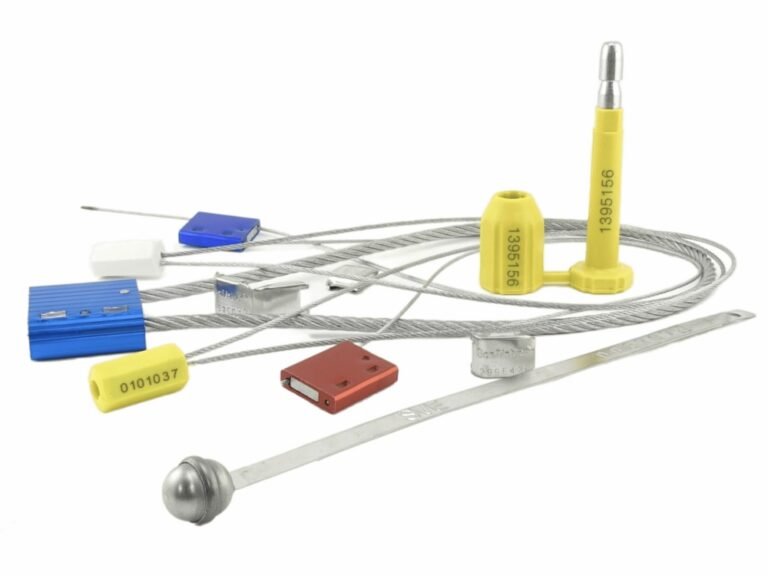
Your manifest says seal A12345 was applied at the factory. At the destination, the seal is A12345, but the cargo is damaged. You know the seal wasn't broken, but what if it was swapped with a counterfeit? A standard serial number gives you a dead end, leading to unresolved claims and a complete lack of accountability in your supply chain.
Custom serial numbers improve traceability by embedding logistical intelligence—like location codes, dates, or batch IDs—directly onto the security seal. This transforms the seal from a simple lock into a rich data point. This makes the entire supply chain transparent and allows for forensic-level analysis when an incident occurs.
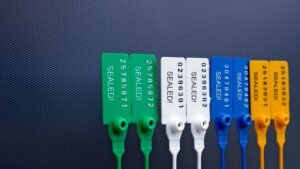
In my experience managing security programs, I've seen that the jump from standard to custom serialization is the single most impactful upgrade a company can make to their physical supply chain security. It closes the gap between simply knowing if a seal was tampered with and understanding the full who, what, when, and where of its journey.
What's Wrong with Standard Serial Numbers?
You're already using serialized seals, so you assume your traceability is covered. This is a common but dangerous assumption. A standard number creates a false sense of security, as it lacks the contextual data needed for true supply chain intelligence.
A standard serial number is typically just a sequential or random string of digits assigned by the manufacturer (e.g., 1234567). While unique, it carries no intrinsic information. It confirms a seal's presence but offers no context about its origin, its intended route, or the cargo it protects.
Dive Deeper: The "Phantom Shipment" Project Failure
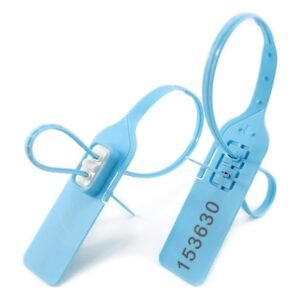
I once worked on a project for a pharmaceutical distributor. They were moving high-value medical supplies between two major cities. They used standard, sequentially numbered plastic seals. One day, a shipment arrived with a reported loss of over $200,000. The seal number on the container matched the manifest perfectly. There were no visible signs of tampering.
Here’s what my investigation uncovered: a sophisticated theft ring had obtained a large batch of unused seals of the same model. Because the serial numbers were generic and sequential, they could easily source a seal with a number that was numerically close to the real one. They intercepted the truck, swapped the seal and cargo, and altered the last two digits on the paper manifest with a pen.
The standard number provided no defense. It had no link to the specific batch, the date of shipment, or the distribution center it came from. This incident was the catalyst for my "Traceability Triage" framework, which starts with a simple rule: a number that carries no data is not a security feature; it's just a tag.
How Do Custom Serial Numbers Provide Actionable Intelligence?
You understand custom numbers are "better," but what specific, tangible advantages do they offer? How does changing a number's format translate into real-world operational benefits and risk reduction?
A custom serial number is a sequence you design to align with your organization's internal logic. By encoding meaningful data into the number itself, you create a powerful link between the physical seal and your digital tracking systems, like a Warehouse Management System (WMS) or Enterprise Resource Planning (ERP) system.
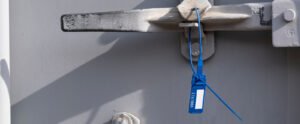
Dive Deeper: The Anatomy of a Smart Serial Number
Let's move from theory to practice. Imagine we are designing a numbering scheme for a food and beverage company shipping from multiple facilities. A standard number would be 7654321. It's meaningless.
Instead, I would design a custom format like this: LAX-240725-B4-001
Let’s break down the intelligence embedded here:
LAX: Origin Code. Instantly tells us this shipment originated from the Los Angeles distribution center.240725: Date Code. This seal was applied on July 25, 2024 (YYMMDD format).B4: Batch/Product Code. Identifies this as Batch #4 of a specific beverage.001: Sequential Number. The first seal used for this specific batch on this day.
Now, compare the two. If seal 7654321 is found broken in Denver, you have an isolated incident. If seal LAX-240725-B4-001 is found broken, you immediately know:
- The origin of the shipment.
- The exact date it was sealed.
- The specific product batch that was compromised, allowing for a targeted recall or quality check, a requirement under standards like the Food Safety Modernization Act (FSMA).
This isn't just a number; it's a story.
How Does This Apply to Different Seal Types?
Is a custom number on a plastic seal as effective as one on a high-security bolt seal? This is a crucial question. The intelligence of the number must be paired with the physical security appropriate for the risk level.
The principle of custom serialization applies to all security seals, but its implementation and impact vary based on the seal's physical properties and the technology used. The goal is to match the data security of the number with the physical security of the seal.
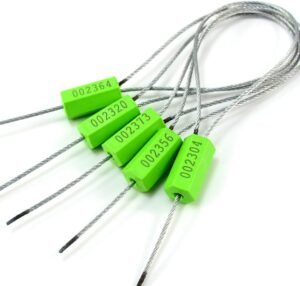
Dive Deeper: Matching the Seal to the Mission
In my projects, I use a three-tiered approach to serialization based on asset risk and regulatory requirements.
| Tier | Risk Level | Common Seal Types | Customization Approach & Rationale |
|---|---|---|---|
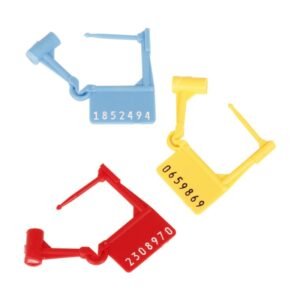
| Tier 1: Indicative | Low-Risk (e.g., retail totes, internal mail bags) | Plastic Pull-Tight Seals, Padlock Seals | Laser-Engraved Barcodes + Custom Number. The goal is fast, error-proof scanning for internal logistics. The custom number prevents accidental duplication and provides basic traceability. |
| Tier 2: Barrier | High-Risk (e.g., cross-country cargo, high-value goods) | Metal Cable Seals, Bolt Seals | Deep-Etched Custom Number + Barcode. The physical security is paramount. The custom number must be permanently marked to resist physical tampering or alteration, meeting standards like ISO 17712. |
| Tier 3: Intelligent | Critical-Risk (e.g., pharma, defense, real-time tracking) | Electronic Seals, RFID-enabled Seals | Encrypted RFID/NFC Chip + Custom Number. The physical seal is now a digital asset. The custom number acts as a public key, while the chip contains a secure, encrypted digital manifest that can be updated and verified in real-time. |
Using a simple plastic seal for a Tier 2 application is a common failure. The seal can be easily defeated, making the custom number irrelevant. The key is a holistic approach: the number's intelligence and the seal's strength must be aligned.
How Do You Implement a Custom Seal Program?
Shifting to custom serialization seems complex. Where do you even begin? A poorly planned rollout can lead to duplicate numbers, integration failures with your WMS, and operational chaos.
A successful implementation requires a structured approach focusing on three areas: designing a logical numbering system, integrating it with your existing software, and training your staff on the new procedures.
Dive Deeper: My 5-Step Implementation Checklist
When I guide clients through this transition, I use a simple, five-step checklist to ensure a smooth and effective rollout.
- Map Your Information Needs: Before designing the number, map your supply chain. What are the most critical data points you need at a glance? (e.g., Origin, Destination, Date, Product Line). Don't overcomplicate it.
- Design a Scalable Format: Create a numbering architecture that is logical, unambiguous, and has room for growth. Use fixed character lengths for each data segment to ensure compatibility with database fields.
- Establish a "Single Source of Truth": Your ERP or WMS must be the master controller of number allocation. Work with your IT department to ensure the system can generate and track these custom sequences without allowing duplicates. Never allow manual number generation in the field.
- Launch a Pilot Program: Before a full rollout, test the new system on a single, low-risk shipping lane. This allows you to identify and fix bugs in scanning, data entry, and reporting in a controlled environment.
- Train and Document: Create simple, visual standard operating procedures (SOPs) for all staff. Training should cover how to properly apply, visually verify, scan, and record the new seals. According to the Council of Supply Chain Management Professionals (CSCMP), human error remains a major source of data inaccuracy in logistics. Proper training is non-negotiable.
Conclusion
Custom serial numbers elevate a security seal from a passive lock to an active informant in your supply chain, providing the granular data essential for true traceability and accountability.
How ProtegoSeal Can Fit Into Your Next Seal Program Decision
Transitioning to a custom serialization program is a significant operational upgrade. It requires a partner who understands not only how to manufacture high-quality seals but also how to help you design and implement a numbering system that works for your specific logistical challenges. The frameworks and checklists I've shared are born from years of hands-on experience in this field.
At ProtegoSeal, we specialize in collaborating with clients to develop custom security solutions. We can help you design a smart serialization scheme and provide the laser-engraving or RFID technology to bring it to life on the right seal for your application. If you’re ready to move beyond basic security and build true traceability into your supply chain, contact us.