You think ordering a "custom" seal is just about adding your company logo for branding. This mindset leaves you vulnerable, treating security as a cosmetic choice rather than a strategic defense, exposing your entire operation to risk.
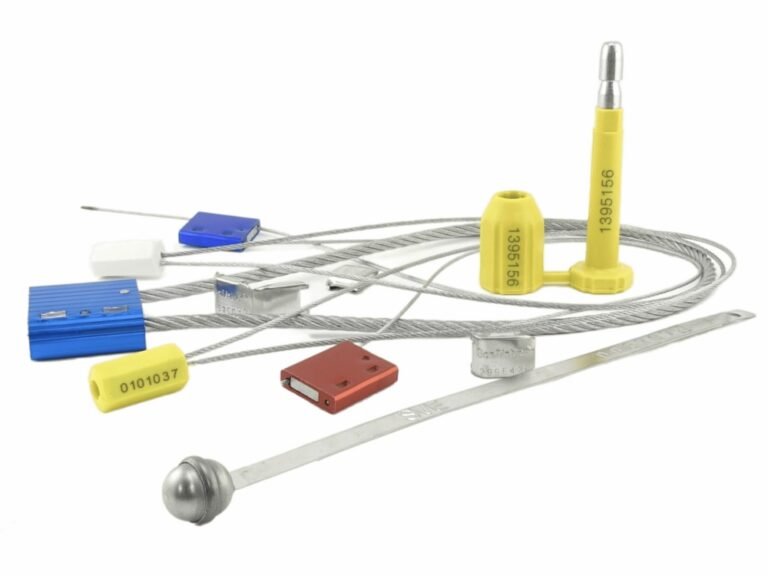
A truly custom security seal combines a logo, a unique serial number, and a barcode. This isn't just branding; it's a layered security strategy that creates significant obstacles for intruders while dramatically improving your own operational efficiency.
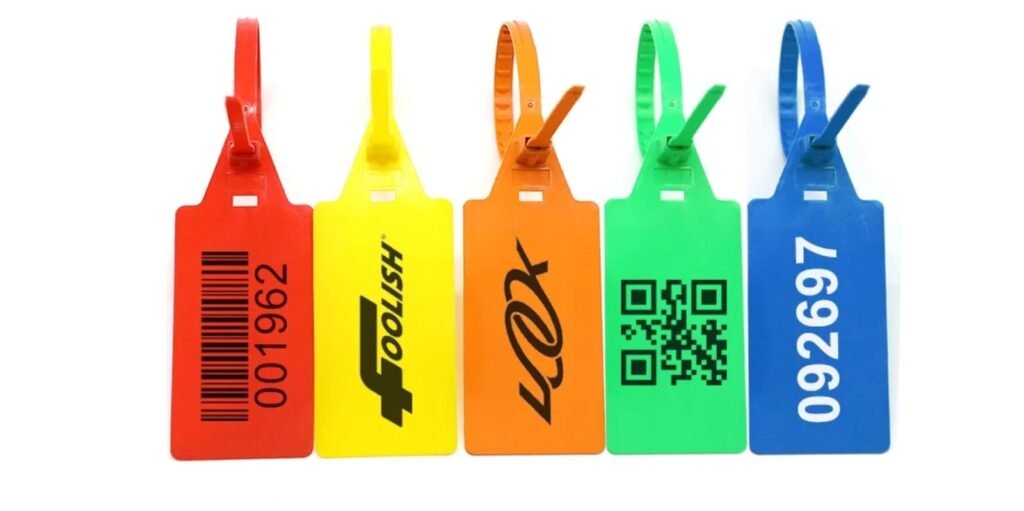
In my 20 years of experience, the real power of customization lies in two things: “manufacturing obstacles” and “improving efficiency.” Every custom element you add—a logo, a number, a barcode—is another barrier for a potential intruder to overcome. At the same time, it’s one less point of failure for your own internal processes. An experienced buyer knows custom seals are safer than generic ones. But a true expert understands that customization isn't a single action; it’s a complete security strategy. Logos, serial numbers, and barcodes are not "options" to choose from. They are three distinct, stackable "defense layers." Your goal shouldn't be just to 'have a unique seal,' but to 'build a flawless management loop.'
Beyond Branding, What Security Value Does a Custom Logo Add to a Security Seal?
You're using generic, off-the-shelf seals. A thief cuts one, steals your goods, and replaces it with an identical generic seal. How would you ever know a breach occurred until it's too late?
This is a huge vulnerability. Without a unique identifier, your seals offer a false sense of security. A custom logo transforms a seal from a generic commodity into a unique security device, making unauthorized replacement nearly impossible.
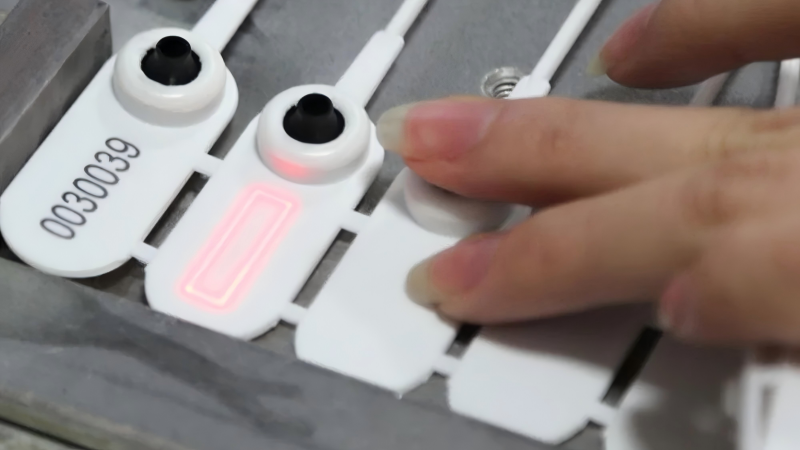
A custom logo is your first and most fundamental defense layer. Its primary security function is to create a significant obstacle for any would-be thief. A generic seal can be bought online for a few dollars. But a seal with your company's high-resolution logo? That cannot be easily sourced. The thief now has two bad options:
- Attempt to replicate it: This requires time, resources, and skill, increasing their risk of being caught.
- Give up: The barrier is too high, and they move on to an easier target.
The Logo as a Visual Checkpoint
From an operations standpoint, a logo adds immediate efficiency. Any employee, at any point in the supply chain, can instantly verify that the seal is authentic. There’s no need to consult a log or a manifest for this first check. It’s a simple, binary question: Is it our logo, yes or no? This simple visual verification is the first step in building a secure chain of custody.
Why Should My Custom Security Seals Have Both a Logo and a Unique Serial Number?
So your seal has a logo, making it hard to replace. But what if a clever thief bypasses it without breaking it, or what if an insider tampers with the goods and reseals the original?
Without a unique tracking number, you can't prove which specific seal was applied to which specific shipment. A logo confirms authenticity, but it can't provide a unique audit trail. This is where your second defense layer comes in.
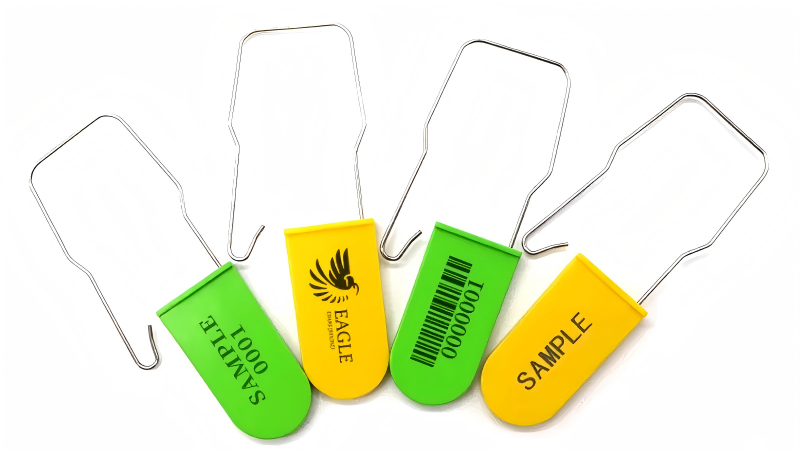
Combining a logo with a unique, sequential serial number creates a two-factor security system. It moves you from simple authenticity to rigorous accountability. Here’s how these two layers work together to close the management loop:
| Defense Layer | Question it Answers | Security Function |
|---|---|---|
| Layer 1: Logo | "Is this an authentic seal from our company?" | Prevents unauthorized replacement of the seal. |
| Layer 2: Serial Number | "Is this the correct seal assigned to this specific shipment?" | Creates a unique, auditable record for every single asset. |
From Authenticity to Accountability
In my experience, this two-layer system is where real inventory management control begins. At the point of origin, you don't just apply a seal; you record its unique serial number against the shipment ID. At the destination, the receiver doesn't just check for the logo; they verify that the serial number matches the one in the manifest. Any discrepancy is an immediate, undeniable red flag that requires investigation.
Is a Barcode Necessary on My Custom Security Seal If It Already Has a Serial Number?
You have a logo and a serial number. Your process requires staff to manually write down the 7-digit number at origin and type it into a system at the destination. What happens when someone is tired and transposes two digits?
That one small typo just created a massive data error. Your security record is now broken. You might trigger a false alarm, halting a critical shipment for hours over a simple mistake, or worse, you might miss a real breach because the numbers don't match up for clerical reasons.
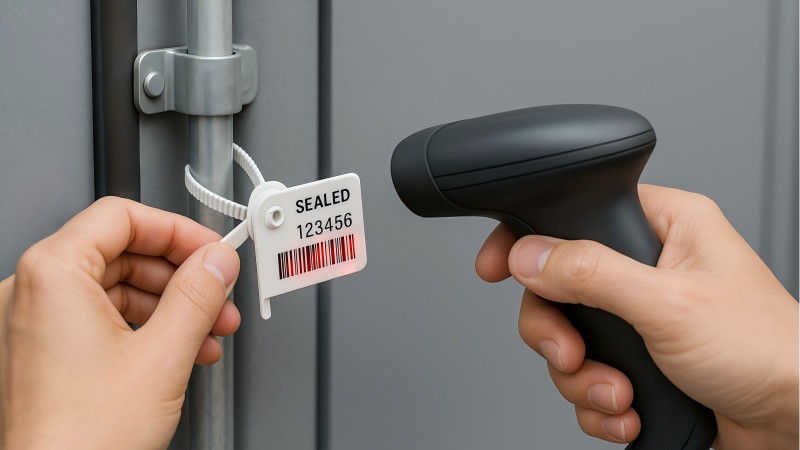
A barcode is your third defense layer, and its function is efficiency and data integrity. It is not redundant to the serial number; it is the automation of its capture. In a fast-paced environment like logistics or retail, manual data entry is a guaranteed point of failure. A simple barcode scan achieves two critical goals:
- Speed: Scanning is instantaneous. It reduces a process that takes 30 seconds down to one second. Across thousands of seals, this time savings is enormous.
- Accuracy: Scanning eliminates human error. It guarantees that the exact serial number on the seal is the one entered into your tracking system, ensuring 100% data integrity.
This is the final piece of your flawless management loop. With a barcode, your security protocol becomes faster, cheaper to operate, and more reliable.
How Do I Select the Right Customization Mix for My Security Seals Based on My Industry?
You understand the layers, but do you need all three? Does a retail store have the same needs as a cross-continental logistics firm?
Absolutely not. The right mix depends entirely on your specific operational risks and efficiency needs. Over-engineering is wasteful, but under-engineering is dangerous. This is about matching the defense layers to the specific threats you face.
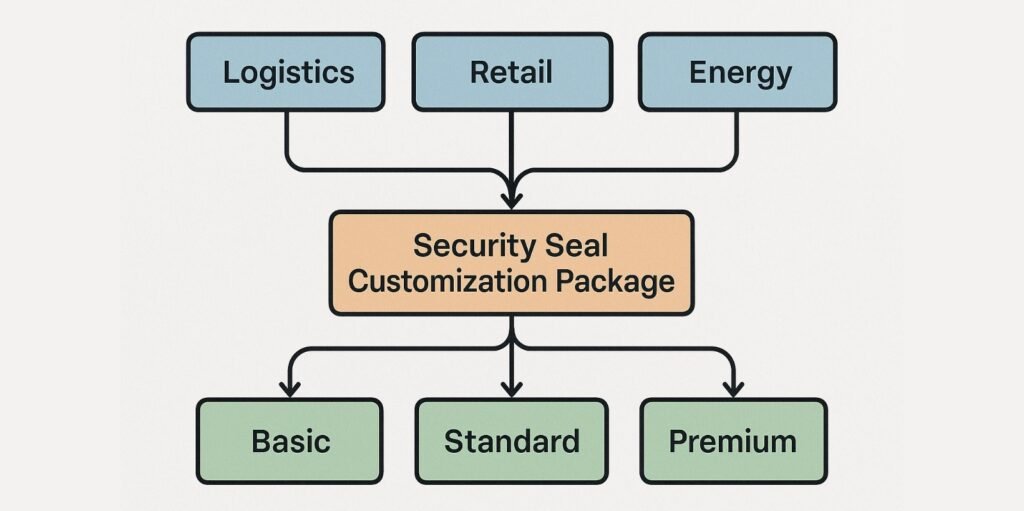
Based on my experience working with clients across various sectors, here’s a basic framework for making that decision.
Simple Industry Guide to Customization
| Industry | Common Need | Recommended Mix | Rationale |
|---|---|---|---|
| Local Retail | Deterring opportunistic theft, simple inventory. | Logo + Serial Number | The logo prevents swapping seals. The serial number provides a basic audit trail sufficient for store-level tracking. |
| Logistics & Freight | High-volume, fast-paced, cross-docking, high-value goods. | Logo + Serial Number + Barcode | All three layers are critical. Barcodes are essential for a high-volume supply chain to maintain speed and accuracy. |
| Energy & Utilities | Long-term meter security, regulatory compliance, data logging. | Logo + Barcode/QR Code | The logo ensures authenticity. A barcode (often a QR code) can link to detailed meter data and service history in a database. |
| Pharmaceuticals | High-security, anti-counterfeiting, strict regulatory audit trail. | All three + other security features | Requires the highest level of security to ensure patient safety and meet strict FDA regulations. |
This isn't a rigid rule, but it's the starting point for a strategic conversation.
What Key Design Files and Data Must I Provide a Supplier for a Flawless Custom Seal Delivery?
You've decided on your customization strategy. Now, how do you ensure the seals you receive are perfect and delivered on time?
Providing incomplete or incorrect information is the number one cause of production delays and costly errors. To ensure a flawless delivery, your supplier needs precise, production-ready files and data from you.
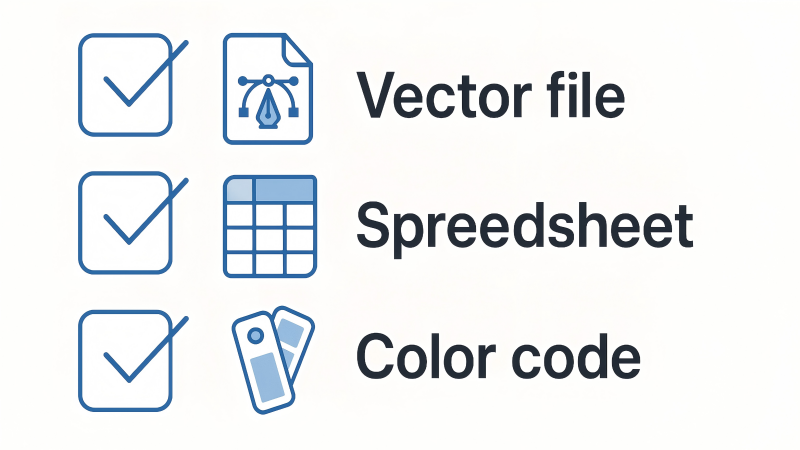
As a partner in this process for over a decade, I can tell you that a prepared client gets the best results. Before you place your order, have the following ready. This will make the process smooth for you and your supplier.
Your Essential Production Checklist
- For the Custom Logo: A vector file (formats like .AI, .EPS, or .SVG). A standard image file like a .JPG or .PNG is not suitable for high-quality laser printing or molding and will result in a blurry, unprofessional logo.
- For Serial Numbers: A clear starting number and confirmation of the sequence (e.g., "Start at 100001 and continue sequentially"). Do not provide this verbally. Put it in writing.
- For Barcodes/QR Codes: The exact data or number sequence you need to be encoded in the barcode. Also, specify the barcode type (like Code 128, QR, etc.) if your scanning system has specific requirements.
- For Custom Colors: The specific Pantone Matching System (PMS) color code. Describing it as "our company blue" is not enough and can lead to color mismatches.
Providing this information correctly from the start prevents miscommunication and ensures what you envisioned is exactly what you get.
Conclusion
Customizing a security seal is not about branding. It is a strategic decision to build a layered defense system that creates obstacles for thieves and boosts your own operational efficiency, closing your management loop for good.
Build Your Layered Security Strategy with ProtegoSeal
Stop thinking in terms of "options" and start building a complete security system. At ProtegoSeal, we are experts in designing custom sealing solutions that create a flawless management loop. Contact us to build the right defense layers for your business.