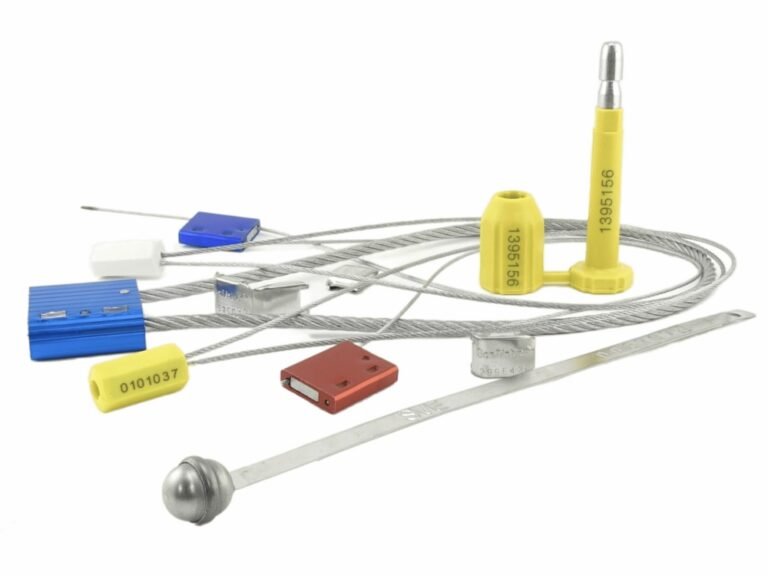
You're a procurement manager sourcing security seals for US-bound cargo. A potential supplier sends you a professional-looking CTPAT certificate via email. The price is right, so you're tempted to check this task off your list. But this is a critical moment. Accepting that PDF at face value is a gamble that can lead to your container being flagged, impounded at the port of Long Beach, and slapped with demurrage fees exceeding USD 10,000. The entire supply chain stalls, all because of a verification process that wasn't robust enough.
To properly verify a supplier's CTPAT compliance, you must execute a multi-step, evidence-based process. This involves obtaining their official Status Verification Interface (SVI) number for independent confirmation via the U.S. CBP portal, and rigorously scrutinizing their third-party ISO 17712:2013 test reports for the specific seals you intend to purchase.

Over the past decade, I've seen more "shortcut" verification processes fail than I can count. It’s often treated as a bureaucratic formality rather than a core security function. My goal here is to give you the systematic approach I personally use—a battle-tested workflow that moves beyond trust and relies solely on objective, verifiable proof.
What Does CTPAT Compliance for a Seal Supplier Truly Mean?
Many buyers mistakenly believe CTPAT is just a product quality stamp. This fundamental misunderstanding leads them to ask "Is the seal certified?" when they should be asking, "Is your manufacturing process certified?" This leaves them dangerously exposed to suppliers who can produce a strong seal but have zero internal security.
The Customs-Trade Partnership Against Terrorism (CTPAT) is a voluntary program where U.S. Customs and Border Protection (CBP) certifies a company's entire security posture. For a seal manufacturer, this means their factory access controls, employee vetting, quality control procedures, and data security have been audited and approved. It's an assurance that the company itself is a secure link in the supply chain, which is crucial for importers who are CTPAT members to maintain their own status and benefits, such as fewer inspections and access to "green lanes."

Dive Deeper: The Case of the "Perfect" Seal and the Disgruntled Employee
I was brought in to consult for a major electronics importer whose shipments were suddenly being subjected to an almost 50% inspection rate at the Port of Seattle, a logistical and financial nightmare. They were using high-grade, ISO-tested bolt seals and were convinced the issue was with customs, not them.
My audit trail led back to their seal supplier. The seals themselves were physically sound. The problem was the manufacturer's abysmal internal security. They had no access controls in their production area and kept poor records of serial number ranges. A recently fired production manager had allegedly walked out with a master list of serial numbers for the next 100,000 seals.
This created a catastrophic security failure. The unique serial number—the very heart of a seal's integrity—was no longer unique. Criminals could now create perfect counterfeit seals with "valid" numbers. I believe CBP's risk-analysis algorithms detected anomalies tied to this supplier, flagging all containers using their seals. The importer had to scrap over $50,000 worth of seal inventory and switch suppliers immediately. This taught me a career-defining lesson: you are not just buying a piece of metal; you are buying the integrity of the manufacturer's entire process.
The Technical Cornerstone: Decoding the ISO 17712:2013 Standard
You're told the seal must be "high-security," but what does that mean in auditable, technical terms? Without understanding the specific standard, you can't intelligently review a supplier's documentation. You're flying blind, unable to spot a fraudulent or non-compliant test report.
The specific technical requirement for a CTPAT-compliant seal is certification to the ISO 17712:2013 standard as a "High Security" or "H" class seal. This international standard is the universal language of seal security. It dictates the brutal physical tests a seal must survive (tensile, shear, impact) and, most critically, mandates an audit of the manufacturer's security-related business practices under Annex A.
Dive Deeper: A Forensic Look at a Test Report
When a supplier sends you an ISO 17712 report, don't just file it. Scrutinize it. Here is my checklist for separating a legitimate report from a red flag.
| Checklist Item | What a Good Report Shows | Red Flags to Watch For |
|---|---|---|
| Testing Laboratory | Clearly named ISO/IEC 17025 accredited lab. You should be able to Google the lab and find their credentials. | An obscure, unaccredited lab or no lab name listed at all. |
| Standard Version | Explicitly states ISO 17712:2013. | An outdated standard (e.g., 2010 or 2006) or no version number. |
| Seal Classification | A definitive statement that the seal is classified as "High Security" ("H"). | Vague language, or a classification of "Security" ("S") or "Indicative" ("I"). |
| Annex A Compliance | A specific section confirming the manufacturer's processes passed the Annex A audit. | The report only covers physical tests (Clause 5) and makes no mention of Annex A (Clause 6). |
| Product Identification | The report includes clear photos and the exact model number of the seal you are buying. | Generic photos, or a model number that doesn't match the supplier's product code. |
A trustworthy supplier will be proud to provide a report that meets all these criteria. Any hesitation is a major warning sign.
My Step-by-Step CTPAT Verification Workflow
You now have the background knowledge. It's time to execute. A proper verification is an active, evidence-based process. You must obtain specific credentials from the supplier and then independently validate them through official government channels.
This is the exact 5-step workflow I use for every supplier vetting process. It's designed to be systematic and leave no room for ambiguity.
- Request the SVI Number: My first email is simple and direct: "For our compliance records, please provide your CTPAT Status Verification Interface (SVI) number." This is a unique ID assigned to all certified partners. A legitimate partner has this readily available.
- Verify via the CBP Portal: Go to the official CTPAT Portal. Never trust a verification link sent by the supplier. Manually enter the SVI number they provided. The portal will give you a real-time, unambiguous "Confirmed" or "Not Found" status. This is your single source of truth for their membership.
- Demand the Full ISO 17712 Report: My second request is: "Please provide the complete, unedited third-party test report for [Insert Exact Seal Model Number] demonstrating compliance with all clauses of ISO 17712:2013, including Annex A." Being specific is key.
- Physically Inspect Samples: Once you have samples, check them against the standard. A compliant "H" class seal must be permanently marked with:
- The letter 'H'
- The manufacturer's unique logo
- A unique serial number that is not easily erased or altered.
- Schedule Annual Re-Verification: CTPAT status can be revoked. I advise my clients to set a calendar reminder to re-verify their key suppliers' SVI numbers annually. A good supplier will also proactively inform you of their re-certification. This transforms verification from a one-time event into an ongoing process.
Common (and Costly) Mistakes in the Verification Process
You think you've done your due diligence, but a simple oversight can invalidate the entire effort. Years of cleaning up these messes have taught me what the most common failure points are.
Avoid these four common mistakes:
- Mistake #1: Accepting a PDF Certificate at Face Value. This is the most common error. A certificate is a piece of paper; it can be forged or outdated. The SVI number and direct portal verification is the only reliable method.
- Mistake #2: Confusing ISO 9001 with ISO 17712. Many suppliers will heavily promote their ISO 9001 certification. While this is good (it's a quality management standard), it has absolutely nothing to do with seal security standards and is not a substitute for ISO 17712.
- Mistake #3: The "Blanket Approval" Fallacy. Some procurement teams will approve a supplier and then assume all products they sell are compliant. A CTPAT-certified supplier can and will sell non-compliant indicative seals. You must verify the specific high-security seal model you intend to use.
- Mistake #4: Making Price the Primary Driver. A shockingly low price on a high-security seal is often a red flag. Proper materials, accredited testing, and secure manufacturing processes cost money. An unusually cheap seal likely means corners were cut on one of these critical compliance steps.
So, Which Seal Do I Actually Choose?
Verification of the supplier is step one. Step two is choosing the correct compliant product from their catalog for your specific shipping lane. Using the wrong seal type is a compliance failure, even if it comes from a verified supplier.
For any freight entering the United States under CTPAT guidelines, your choice is limited to high-security barrier seals.
| Shipping Lane / Scenario | CTPAT Seal Requirement | Correct Seal Types | Incorrect Seal Types |
|---|---|---|---|
| International Sea Container to U.S. | Mandatory | ISO 17712 "H" Bolt Seal, Cable Seal | Plastic Seals, Metal Strap Seals, Padlock Seals |
| Cross-Border Trucking into U.S. | Mandatory | ISO 17712 "H" Bolt Seal, Cable Seal | Any non-"H" class seal |
| Domestic U.S. Trucking | Not Required by CTPAT | Any seal type (choice based on risk) | N/A |
Conclusion
Verifying a supplier's CTPAT status is not a bureaucratic hurdle; it is a fundamental act of supply chain risk management. A systematic, evidence-based approach is your best defense against fraud, delays, and financial loss.
How ProtegoSeal Can Fit Into Your Next Seal Program Decision
This guide lays out the rigorous process required for proper CTPAT verification. It's a level of scrutiny that any truly compliant and confident supplier should welcome.
As a fully vetted CTPAT partner, ProtegoSeal operates with full transparency. We provide our SVI number for immediate verification and share our complete ISO 17712:2013 compliance reports upon request. We built our processes to withstand this level of detailed examination. If you're looking for a partner to remove uncertainty and provide proven, compliant security solutions, please contact us.