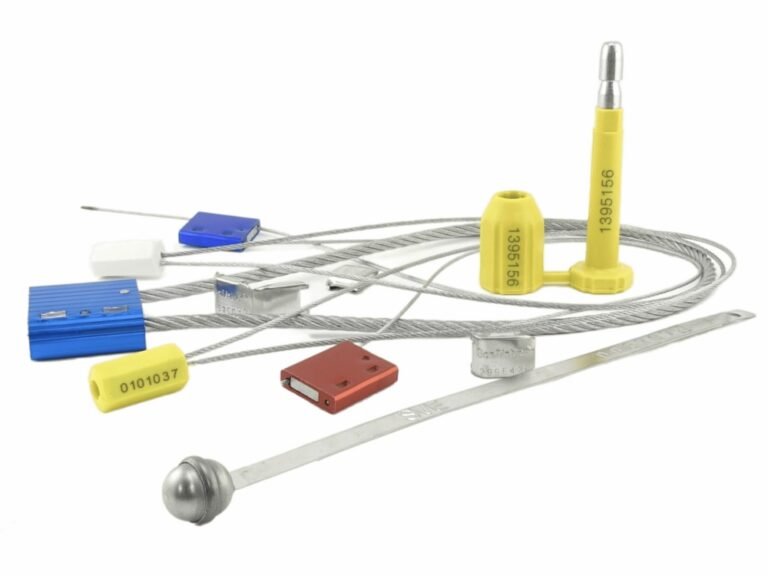
You analyze your monthly reports and instinctively blame aging infrastructure or leaking pipes for your rising Non-Revenue Water (NRW) figures. This tunnel vision is a financial trap, as it ignores a silent, pervasive issue that is likely costing your utility millions: deliberate water theft.
Commercial and residential meter tampering is a primary driver of commercial losses in water utilities. Implementing a high-security sealing program allows you to segregate theft from technical leakage, creating an undeniable audit trail that transforms vague water loss into recoverable revenue.
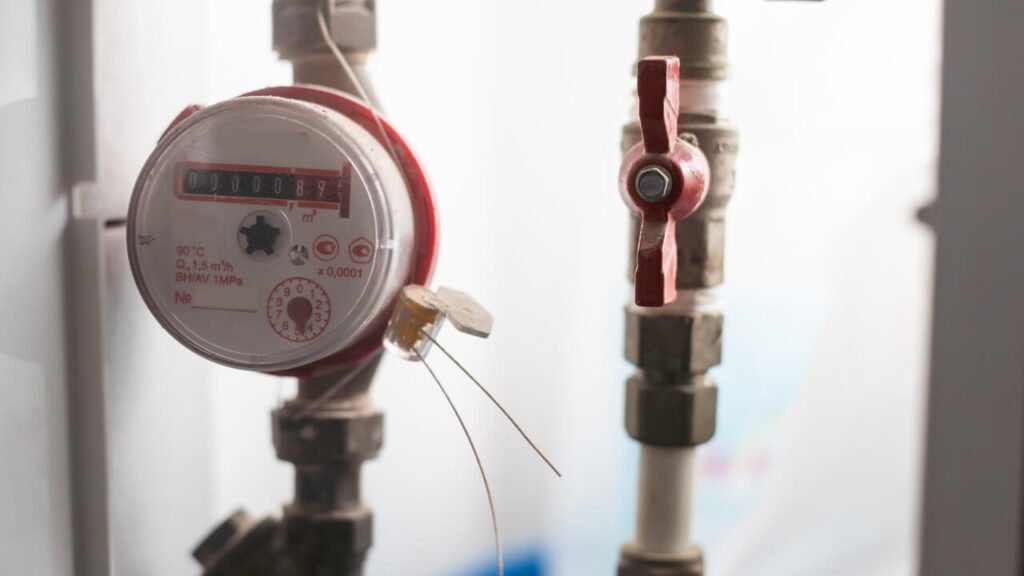
In my years working with utility directors, I have noticed a pattern: most managers are comfortable fixing pipes but uncomfortable confronting theft. They view NRW as an engineering problem rather than a behavioral one. However, if you treat a broken seal as a maintenance ticket rather than a security incident, you are failing to protect your assets. A robust sealing strategy is not just about plastic and wire; it is about sending a "Management Signal" to your consumer base. When you secure the meter, you shift the psychological dynamic from "nobody is watching" to "every drop is accounted for."
How Do You Accurately Estimate the Portion of NRW Caused by Tampering?
Your total water loss is a black box. Without separating technical losses (leaks) from commercial losses (theft and errors), you are blindly throwing money at the wrong problems. You cannot fix what you do not measure.
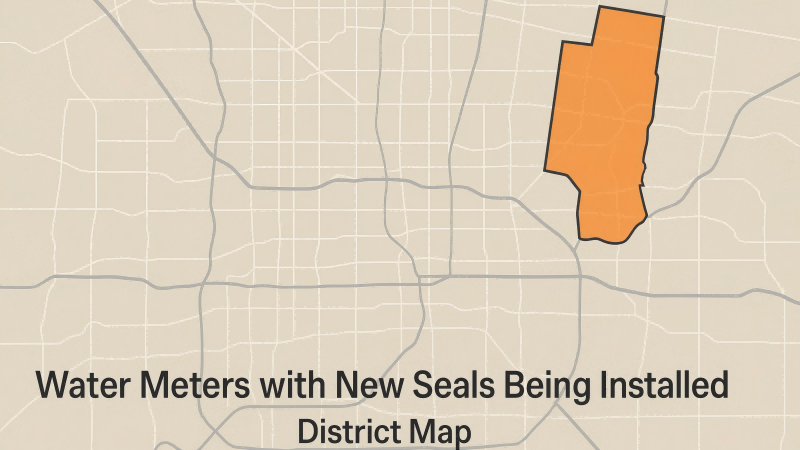
The most scientifically accurate method to isolate theft is to conduct a Controlled Pilot Sealing Program. By securing a specific District Metered Area (DMA) with high-security seals, you can establish a new consumption baseline and mathematically prove the volume of water being stolen.
The Pilot Audit Protocol
I always advise my clients to stop guessing and start testing through a phased approach. It begins by selecting a representative zone—ideally a mix of 500 to 1,000 residential and commercial connections. For the first three months, you simply measure the Input Volume vs. Billed Volume to establish a historical baseline of loss.
Once that baseline is set, you deploy a team to inspect every meter, fix technical leaks, and install high-security, serial-numbered seals on every connection point. After running this "secured" zone for another quarter, you compare the new billing data against your historical baseline. The difference represents the "Recoverable Commercial Loss." This hard data provides the undeniable financial ammunition needed to justify a utility-wide rollout to your board of directors.
What Are the Most Common Covert Methods of Water Meter Tampering?
Thieves are becoming increasingly sophisticated. Gone are the days when someone would just smash the meter with a hammer. Modern tampering is subtle, designed to lower the bill without raising alarms during a casual drive-by inspection.
You need to know exactly what you are looking for. Tampering usually involves manipulating the flow measurement physics or bypassing the unit entirely, often leaving the meter looking superficially "normal."
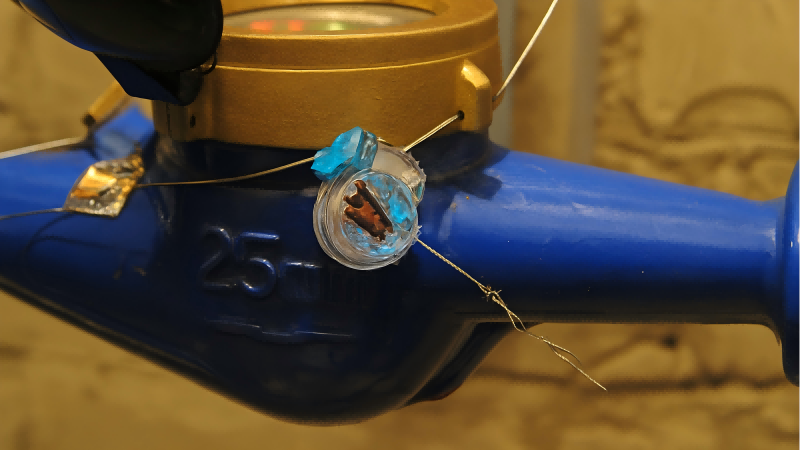
If your field inspectors don't know the tricks, they will walk right past a tampered meter. Here is a breakdown of the methods I encounter most frequently in the field:
| Tampering Method | The Mechanism | The Indication to Look For |
|---|---|---|
| The "Vice Grip" | Users apply a C-clamp or vice to the plastic body of the meter. This slightly deforms the measuring chamber, creating friction that slows down the internal piston or impeller. | Look for stress marks, whitening of the plastic (stress crazing), or scratches on the side of the meter body. |
| Magnetic Interference | Placing a strong Neodymium magnet on the register of older mechanical meters can decouple the magnetic drive, stopping the counter while water flows. | This is hard to prove without a seal. However, modern magnetic seals change color or pattern when exposed to magnetic fields. |
| The Reverse Flow | The user disconnects the meter, flips it 180 degrees, and reconnects it. The meter runs backward, subtracting from the total reading. | Check if the security seals on the coupling nuts are missing or replaced with generic wire. Ensure the flow arrow on the meter matches the pipe direction. |
| Needle Insertion | A small hole is drilled (often heated with a needle) through the plastic casing to insert a wire that physically blocks the gears. | Look for tiny, melted pinholes, usually hidden on the underside or back of the meter register. |
How Do High-Security Seals Act as a Psychological and Physical Deterrent?
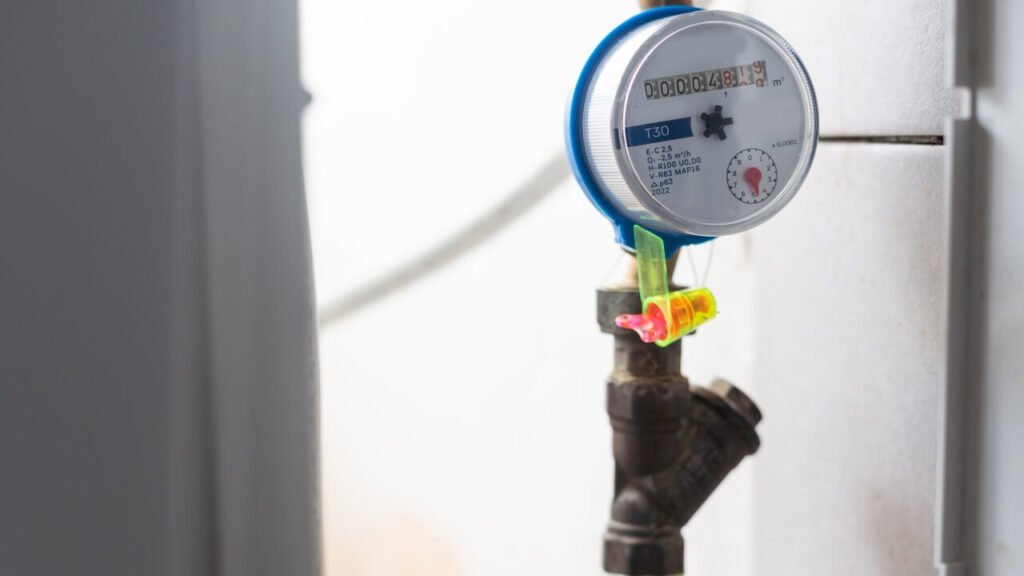
You cannot place a police officer at every connection point. You need a passive security system that works 24/7. A security seal is effective not because it is unbreakable, but because it creates Evidence of Intrusion. A high-quality seal acts as a psychological barrier, communicating to the customer that the asset is managed, monitored, and that any attempt to interfere will result in a heavy fine based on the forensic evidence left behind.
The Mechanics of Deterrence
This strategy relies on the "Broken Window" theory of Criminology. Visible signs of disorder encourage more crime, while clear signs of order and monitoring suppress it. By ensuring every meter is secured with a brightly colored, laser-marked seal, you demonstrate visual authority. An unsealed meter looks abandoned and vulnerable; a sealed meter looks managed. Furthermore, unlike generic lead seals, modern seals carry unique serial numbers and barcodes. This creates forensic accountability, as the user knows they cannot simply buy a replacement at a hardware store to hide their tampering. If the number doesn't match your database, the fraud is instantly exposed.
Which Tamper-Evident Seals Are Best Suited for Mechanical vs. Smart Meters?
One size does not fit all. I have seen utilities fail because they used a cheap plastic padlock seal on a high-pressure coupling, or a wire seal on a smart meter that had no holes for it. Selecting the right seal depends entirely on the Vulnerability Point of your specific meter technology.
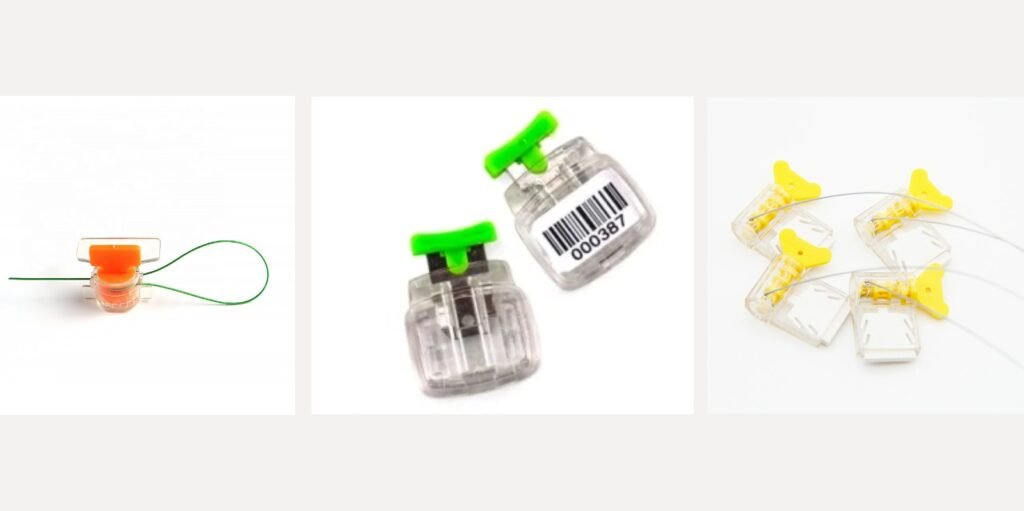
For traditional Mechanical Brass Meters, the primary threat is removal and reversal. Here, Twist-Type Wire Seals or Rotary Seals are essential. These devices use a wire that threads through the tiny holes in the coupling nuts, and the internal twisting mechanism pulls the wire tight. The transparent polycarbonate body allows inspectors to visually verify that the internal locking mechanism hasn't been tampered with.
In contrast, Smart/AMI Meters face a different threat: the risk of opening the electronic housing to disable the antenna or battery. Since these meters often lack coupling holes, Anchor Seals or Adhesive Void Labels are the superior choice. Anchor seals snap into specific recesses in the meter body, while Tamper Evident Labels leave a distinct "VOID" residue if peeled, protecting the digital interface ports from unauthorized access.
How Can You Calculate the ROI of a Sealing Program to Justify the Investment?
The hesitation for many procurement departments is viewing security seals as a "consumable cost." This is the wrong financial lens. In B2B utility management, revenue protection is an investment with a measurable payback period. To justify the budget for a comprehensive sealing program, you must present the Return on Investment (ROI) based on the volume of recovered water, not the unit price of the seal.
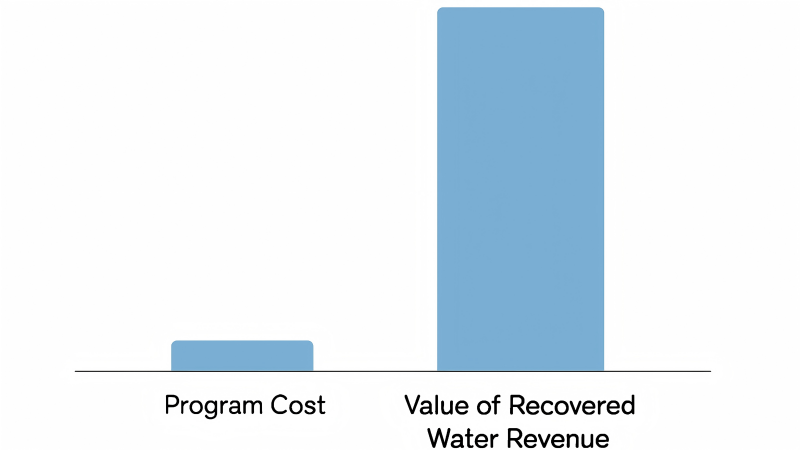
When building a business case, focus on the "Breakeven Timeline." Consider a single commercial connection tampering with the meter; the volume of water lost over one year often exceeds the cost of implementing a sealing program for hundreds of users. By comparing the cumulative value of successfully billed water against the investment in seals, labor, and training, most utilities see the program pay for itself within 3 to 6 months. After that break-even point, every dollar of recovered revenue is pure profit that goes directly to the bottom line, funding further infrastructure improvements.
Conclusion
Non-Revenue Water is not just a technical statistic; it is a leak in your company's financial hull. By shifting your focus from "patching pipes" to "preventing theft" using high-security seals, you gain control over your grid. You move from estimating losses to enforcing revenue.
Secure Your Revenue Stream with ProtegoSeal
Don't let water theft drain your profits. At ProtegoSeal, we specialize in revenue protection strategies tailored for the utility sector. Whether you need Twist Meter Seals to lock down mechanical coupling nuts against reversal, or Plastic Padlock Seals to secure the electronic housings of smart assets, we have the precise solution for your infrastructure. Contact us today to request a consultation and sample kit, and let us help you start your revenue recovery pilot program.