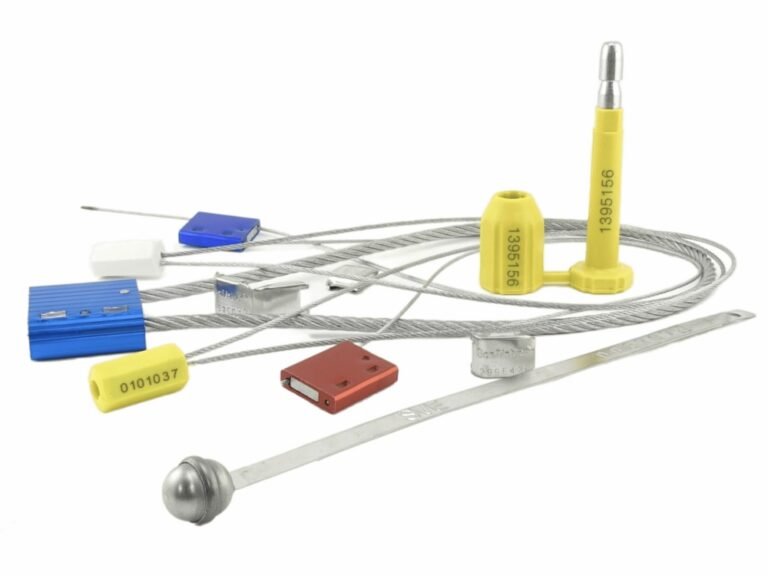
Do you trust a locked seal? The most dangerous theft isn't a broken lock, but an expertly re-closed seal, leaving you with empty boxes and full liability.
To detect if a security seal has been tampered with, inspect for physical "scars" like glue residue or stress whitening. Test the mechanical locking mechanism for loose spinning, and verify data integrity by ensuring barcodes remain scannable.
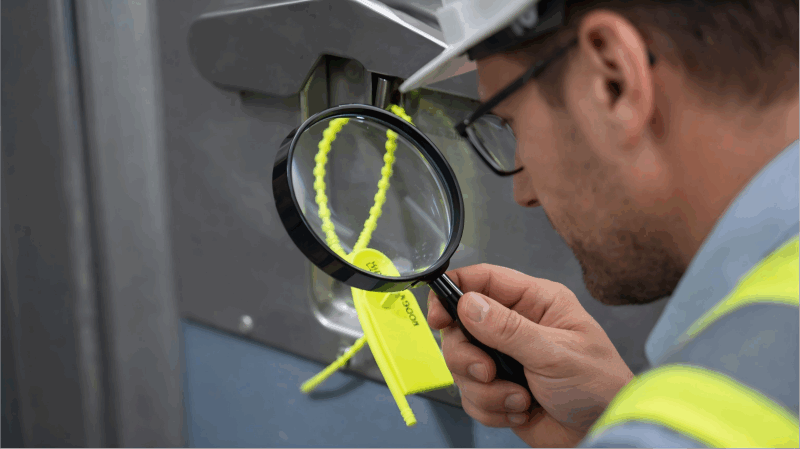
In my 15 years in this industry, I have learned that a seal is a silent witness. If you torture it, it will bear scars. The key is understanding that factory injection molding produces chemically uniform, smooth surfaces. Any deviation—a rough ridge, a cloudy patch, or a spinning bolt—is a permanent, irreversible "scar" left by the thief's tools. We need to move beyond a casual glance to a forensic examination of the plastic's memory.
Conducting a Visual Inspection: Identifying Abnormal Cuts and Re-gluing Traces
The first line of defense is your sense of touch. Injection-molded plastic seals come out of the factory with a chemically uniform and microscopically smooth surface, so any deviation from this smoothness is an immediate red flag.
Thieves often cut the seal's tail to open it and then use Cyanoacrylate (Super Glue) to reconnect it. If you run your finger along the stem and feel a sudden ridge, bump, or rough patch, or see a frosty white haze known as "blooming" around the neck, it indicates a chemical re-bonding attempt rather than a factory molding line.
The Biology of a Cut-and-Paste Attack
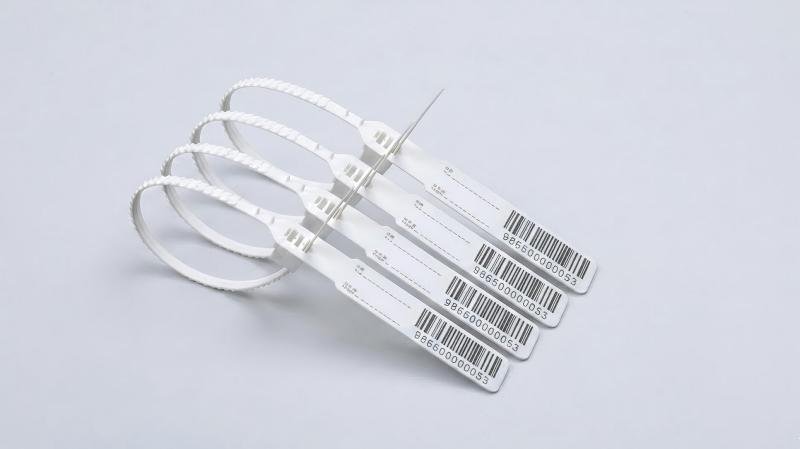
To truly identify a cut, you must understand how thieves operate. They slice the seal stem at the point where it enters the locking chamber. After stealing the goods, they use instant adhesive to glue the cut ends back together. This creates two distinct physical anomalies that you can detect.
Surface Texture Analysis
The first anomaly is textural. A factory-made seal is single-piece molded. There are no seams on the stem. When a thief glues two pieces together, they can never align them perfectly on a microscopic level. During your inspection, run your fingernail down the length of the seal. If your nail "catches" on a ridge, or if the texture changes from smooth to gritty, this is definitive proof of tampering.
Chemical Haze Indicators
The second anomaly is visual. Super glues release fumes as they cure. These fumes settle on the surrounding plastic, creating a white, chalky residue. This is not dust. If you see a white ring around the locking chamber that smears when you rub it, the seal has been chemically compromised.
| Inspection Point | Factory Condition | Tampered Condition |
|---|---|---|
| Tactile Feel | "Glass-like" smoothness, consistent friction. | Rough, gritty spots, sudden ridges. |
| Visual Clarity | Uniform color and gloss finish. | Cloudy white haze ("Blooming") near joints. |
| Flexibility | Bends without breaking. | Brittle at the glue point; snaps clearly. |
How Do Heat and Solvent Attacks Manifest on Plastic Seals?
What happens when a thief tries to soften the plastic to pull the mechanism out without cutting? The material fights back by changing color permanently.
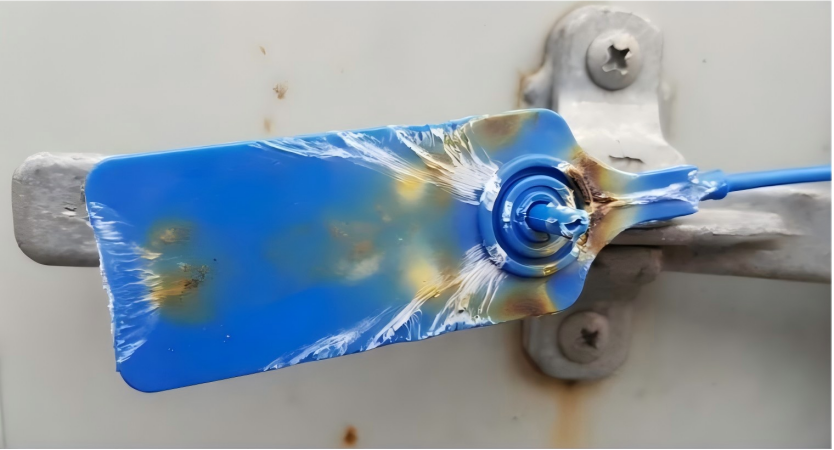
This phenomenon is called Stress Whitening. When polymers like Polypropylene are subjected to the intense heat of a hair dryer or the chemical attack of a solvent, the polymer chains stretch and eventually break, creating a permanent discoloration scan be spotted instantly.
Heat Gun Manipulation
Thieves often use heat guns to soften the locking teeth inside the chamber. They hope to make the plastic pliable enough to pull the strap out backward. However, plastic has a memory. When heated near its melting point, the dye in the plastic separates and the crystalline structure changes. This results in the surface losing its glossy shine and turning matte. More importantly, colored seals (especially Blue or Red ones) will display a pale, milky-white spot exactly where the heat was applied. This color shift is irreversible.
Chemical Solvent Attacks
Another method involves using acetone or paint thinners to dissolve the surface slightly, making the strap slippery. Unlike heat, this attack affects the texture more than the color. A solvent-attacked seal will feel "tacky" or sticky to the touch, long after the chemical has evaporated. In severe cases, the surface will look rippled, resembling the skin of an orange. If a seal feels like it is melting in your hand or looks foggy, it has engaged in a chemical battle it lost.
| Attack Method | Visual Symptom | Tactile Symptom |
|---|---|---|
| Heat Gun | "Milky" white spots; Loss of gloss. | Hard but brittle surface. |
| Solvents | Foggy appearance; Color bleeding. | Sticky, tacky, or "orange peel" texture. |
| Freezing | Micro-cracks in the casing. | Extremely brittle; shatters on impact. |
What Are the Signs of "Spinning" and Manipulation on High-Security Bolt Seals?
Moving from plastic to heavy-duty metal, how do you verify a bolt seal? The most simple yet effective attack on bolt seals is the "High-Speed Spin."
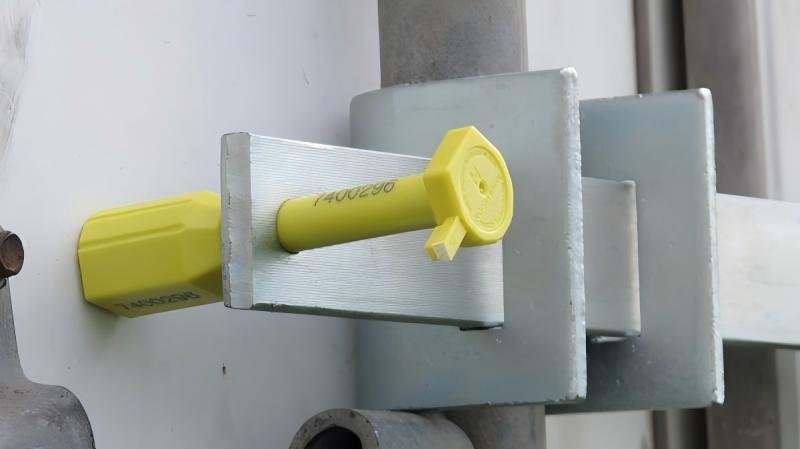
Thieves use a power drill to spin the locked bolt shaft inside the locking body at high RPM. This friction generates heat, melting the internal plastic ring until the bolt slides out. A genuine High-Security bolt seal must have a robust anti-spin mechanism to prevent this specific vulnerability.
The Mechanics of the Spin Attack
A bolt seal consists of a pin and a barrel (lock). In a standard seal, the pin can rotate freely inside the barrel. Thieves exploit this. By attaching the pin to a drill, they spin it so fast that the friction melts the internal locking clips. Once melted, the pin pulls out, the thief opens the door, and then re-inserts the pin. The seal looks locked, but the internal teeth are destroyed.
Testing for Rotational Resistance
To detect this, you must check the "Anti-Spin" feature. When you grab the head of the bolt seal and try to twist it, you should feel significant resistance or "damping." The seal is designed to lock into grooves that prevent free rotation. If you twist the seal and it spins freely like a ball bearing or a fidget spinner, the internal locking teeth have been ground down. Additionally, inspect the gap between the head and the lock. If you see black plastic dust or "soot" oozing out, that is the residue of the friction melting process.
| Component Check | Healthy Condition | Tampered Condition |
|---|---|---|
| Rotation | Stiff; locks into grooves; hard to turn. | Spins freely with zero resistance. |
| Gap Residue | Clean metal or plastic interface. | Black plastic dust (soot) or melted shavings. |
| Pull Test | Solid; zero movement vertically. | Loose; feels like it might slide out. |
Why Is Examining the Integrity of the Internal Locking Mechanism Crucial?
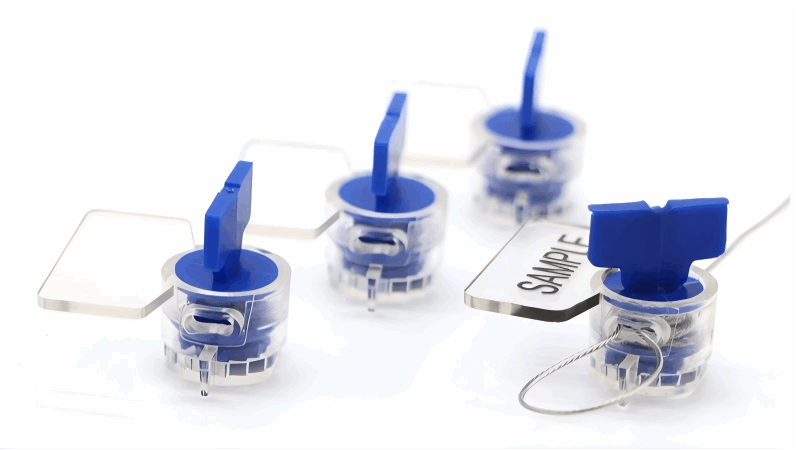
Why do premium seals have transparent covers? So you can see the "crime scene" inside the locking chamber.
The internal locking mechanism, usually a metal spring clip, is the heart of the seal. Thieves try to manipulate this spring using thin metal shims or needles. Any debris, distortion, or foreign object inside this transparent capsule is immediate grounds for rejecting the cargo.
Detecting Shimming and Picking
"Picking" a seal involves sliding a thin piece of metal or a needle into the locking chamber to compress the spring clip, allowing the strap to be released. This is delicate surgery, and it rarely happens without leaving a mess. When a thief forces a steel tool against the internal metal clip, it scrapes off tiny particles.
The Micro-Debris Indicator
Look closely through the transparent plastic body. The chamber should be clinically clean. If you see glistening metallic dust, tiny plastic shavings, or dark grease spots inside the capsule, someone has been digging around in there. Furthermore, check the geometry of the metal clip itself. It should be perfectly centered. If the spring looks bent, twisted, or pushed to one side, it indicates that a tool was forced in to disengage it.
| Internal Sign | What It Means | Action Required |
|---|---|---|
| Metal Dust/Filings | A metal tool scraped the internal clip. | Reject immediately. |
| Displaced Spring | Force was applied to push the lock open. | Quarantine cargo. |
| Ghosting/Fog | Glue or solvent fumes entered the chamber. | Detailed inspection. |
Verifying Seal Data: Matching Numbers and Photos in the Chain of Custody
Finally, let’s talk about data. The most sophisticated thieves don't break the seal; they clone it by buying a blank seal and laser-marking your serial number onto it.
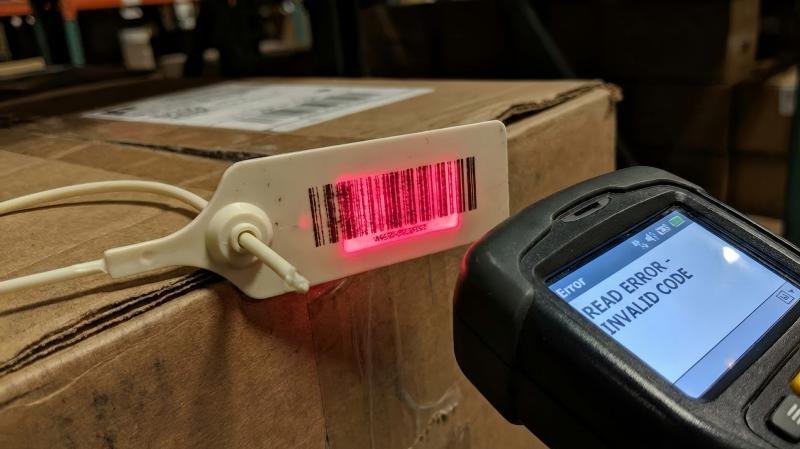
How do you spot a clone? You look for the "Unreadable" error. Laser marking on genuine seals creates a deep carbonized contrast that is machine-readable, whereas counterfeit markings often fail simple scanning tests.
The Contrast and Depth Test
Genuine manufacturers use industrial-grade fiber lasers that burn deep into the plastic, creating a raised, carbonized texture that is extremely distinct. Counterfeiters often use cheap desktop lasers or thermal printing. To the naked eye, the number "123456" might look correct. However, scanners see differently.
Scannability as a Verification Tool
The ultimate test is the scanner. If you point a standard logistics scanner at the barcode or QR code and it beeps "Error" or refuses to register, you are likely looking at a fake. Counterfeit barcodes often suffer from "fuzzy edges" (low DPI) or poor contrast ratios that optical sensors cannot resolve. A barcode that is visually present but digitally unreadable is a prime indicator of a substitution. The thief can copy the number, but they rarely have the expensive equipment to match the print quality.
| Feature | Genuine Manufacturer Seal | Counterfeit / Clone Seal |
|---|---|---|
| Scan Result | Instant beep; 100% read rate. | "Error", "No Read", or requires multiple tries. |
| Font Depth | You can feel the etching with your finger. | Flat print; feels smooth or painted on. |
| Edge Sharpness | Crisp, sharp lines under magnification. | Fuzzy, pixelated, or bleeding edges. |
Conclusion
Detecting tampering requires a forensic mindset to verify physical, mechanical, and digital evidence. By identifying artifacts like stress whitening and glue residue, testing for loose spinning bolts, and confirming barcode readability, you can effectively detect if a security seal has been tampered with before losses occur.
Secure Your Logistics with ProtegoSeal
Don't let invisible tampering ruin your reputation. At ProtegoSeal, our ISO 17712 certified seals feature advanced "blushing" plastics and anti-spin cores that make any tampering attempt immediately visible. Contact us to get our free "Tamper Detection Checklist" and samples of our high-security solutions.