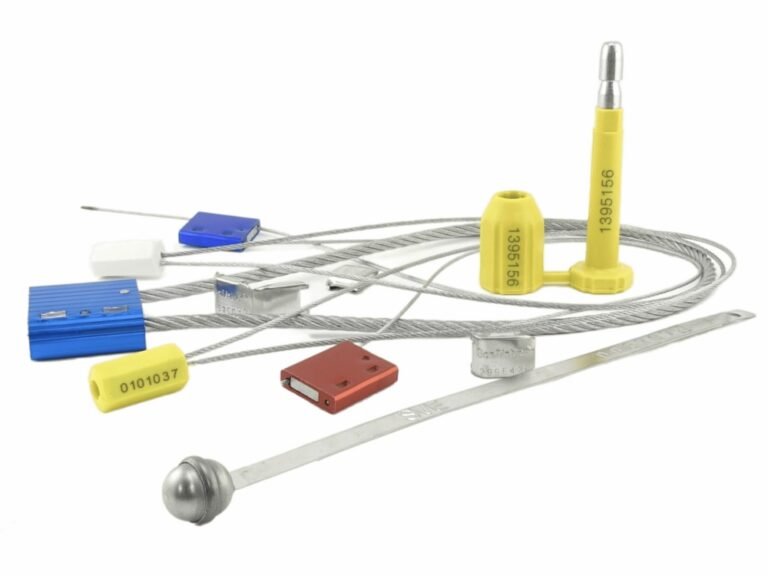
In modern manufacturing and logistics, a product return is rarely just a change of mind—it is a potential dispute waiting to happen. Whether it’s component swapping, false shortage claims, or unauthorized repairs, fraudulent returns are a silent profit killer for manufacturers and distributors.
Tamper-evident labels serve as the ultimate arbitrators of liability. By securing the packaging seams from your warehouse to the client's receiving dock, these adhesive security solutions provide irrefutable physical evidence that prevents false claims, secures warranty integrity, and clarifies liability.
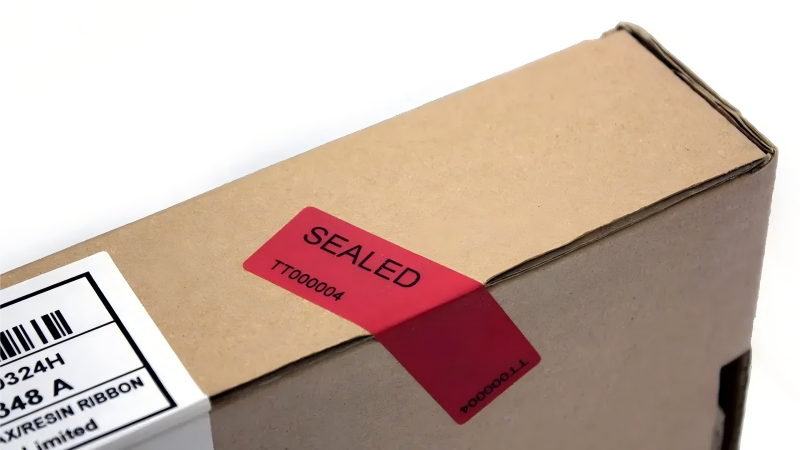
As an operations manager, you know the scenario: A client returns a high-value electronic component claiming it arrived "Dead on Arrival" (DOA), but you suspect they swapped their broken part into your new chassis. Without a tamper-evident label, it is your word against theirs. With a high-security label, the conversation changes instantly. If the label is sliced or shows a "VOID" message, the warranty is nullified, and the liability shifts back to the claimant. This is not just a sticker; it is asset protection.
The Hidden Cost of Commercial Fraud: Why Standard Packaging Fails
Unlike retail theft, commercial return fraud involves high stakes, contract disputes, and long-term relationship damage. Standard packaging tape offers zero security against sophisticated bad actors.
Fraudsters—whether unethical clients, third-party repair shops, or dishonest logistics personnel—exploit "blind spots" in packaging to manipulate assets without leaving a trace.
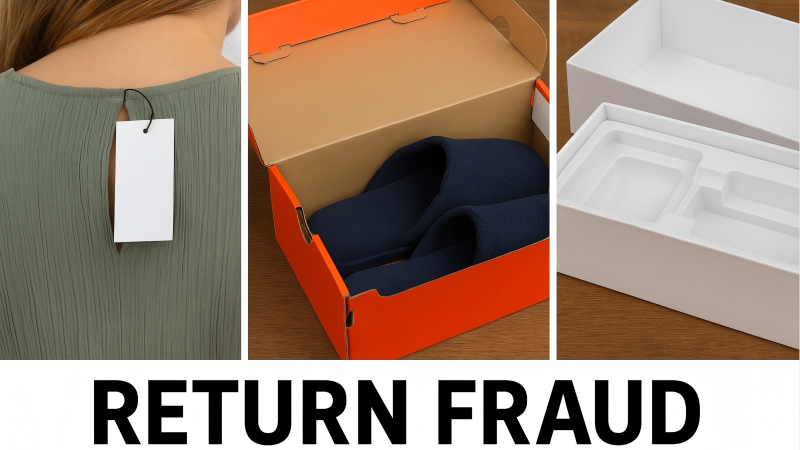
3 Major Threats to Inventory Integrity
| Fraud Type | The Tactic | The Business Impact |
|---|---|---|
| Component Swapping | A buyer purchases a new unit, removes the expensive internal board (PCB, Motor, GPU), replaces it with a broken one, and returns the unit. | You restock a worthless "shell" and lose the value of the critical component. |
| Pilferage & Shortages | Logistics handlers heat-gun standard tape, remove 10% of the product, and reseal it. The customer claims you short-shipped them. | You are forced to issue a credit note or reship product, damaging your "On-Time, In-Full" (OTIF) metrics. |
| Unauthorized Repair | A client tries to fix a machine themselves, breaks it further, and then files a warranty claim. | You absorb the cost of damage caused by the customer's incompetence. |
The Solution: Adhesive Evidence as a Legal Defense
Contracts protect you on paper, but Tamper-Evident Labels protect you in reality. These are not office stickers; they are engineered multilayered devices designed to act as a "Witness on the Box."
When a labeled shipment arrives, the receiver must inspect the label. If it is intact, they accept custody. If the label shows evidence of removal, they accept ownership of the tampering.
How The Label Technology Works
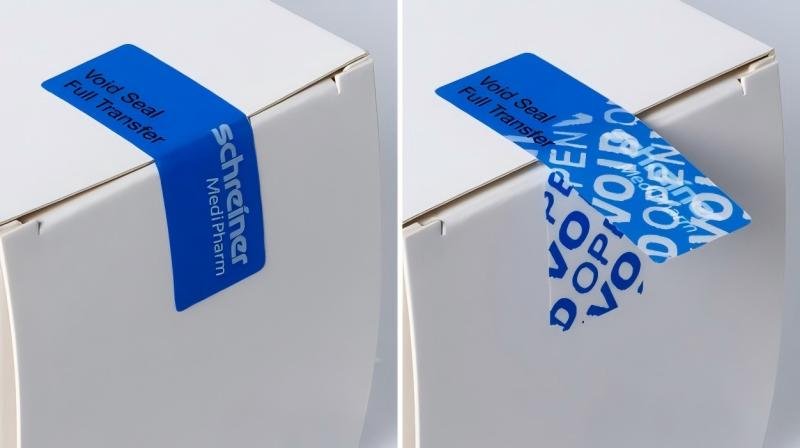
- Total Transfer (High Residue): Best for cardboard boxes and wooden crates. If peeled, the label separates, leaving a permanent, sticky "VOID / OPENED" message on the packaging surface. This makes "slice and reseal" theft impossible to hide.
- Destructible Vinyl: Best for warranty protection on device seams. The material is ultra-frangible (like a dry eggshell). It is impossible to remove this label from a hard drive or control panel without it shattering into tiny fragments.
- Non-Residue: Best for glass, metal, or reusable plastic totes. It reveals a "VOID" message on the label itself if lifted, but leaves no sticky mess on the high-value surface.
Strategic Application: Where to Stick Labels for Maximum Protection
In logistics, placement is everything. You must apply labels to the access points that define liability.
1. The "Warranty Void" Seam (Equipment & Parts)
- Target: The chassis screws, access panels, or enclosure seams of electronic/mechanical devices.
- Strategy: Place a destructible label bridging the seam between the case and the lid.
- Result: If a customer opens the device to swap parts, the label fractures. Result: Warranty Denied.
2. The Carton Closure (Logistics)
- Target: The center seam of the shipping carton, securing the flaps.
- Strategy: Apply a high-tack VOID label or security tape.
- Result: Prevents warehouse workers from opening the box to steal a few units and re-taping it with clear tape. If the "VOID" pattern is visible, the receiver must note it on the Bill of Lading (BOL).
3. The Spare Parts Verification (Distribution)
- Target: The opening flap of the component box.
- Strategy: Use a unique serialized number on the security label that matches the packing slip.
- Result: Prevents the "Old Part in New Box" scam. The return is only accepted if the serial number on the label matches the original shipment.
Operational ROI: Why Ops Managers Choose Security Labels
Implementing a security labeling program is not just about stopping fraud; it is about operational efficiency and Supply Chain Visibility.
- Speed Up RMA Processing: When a return arrives at your warehouse, staff simply check the label. Intact label = Instant restock. Broken label = Inspection required. This reduces labor costs by filtering out "good" returns instantly.
- Resolve Disputes Faster: When a client claims "shortage," you can request a photo of the box before they opened it. If your branded security label was intact, the shortage likely happened at their facility, not yours.
- Compliance: For industries like pharmaceuticals or electronics, maintaining a secure Chain of Custody is often a regulatory requirement.
Industrial Security Label Questions
Q: Can we print our company logo and sequential numbers on the labels?
A: Yes. Custom branding is crucial. It prevents fraudsters from buying generic "VOID" stickers online to reseal your packages. Unique serialization allows you to track specific batches.
Q: Will these labels stick to dirty or dusty warehouse cartons?
A: Industrial-grade security labels use high-tack adhesives designed specifically for porous surfaces like recycled cardboard (corrugated) and stretch film, even in dusty environments.
Q: How do we integrate this into our ERP system?
A: You can scan the unique barcode on the security label into your shipping manifest. This digitally links the physical label to the specific order in your system.
Conclusion
Tamper-evident labels are a strategic asset that provides undeniable proof, protects your bottom line from fraud, and brings accountability to every stage of your supply chain.
Secure Your Assets and Your Bottom Line
Don't let warranty fraud and logistics disputes drain your profits. Establish a secure Chain of Custody that holds every stakeholder accountable.
At ProtegoSeal, we engineer industrial-strength security labels for manufacturers, logistics providers, and distributors. Contact our Solutions Team today for a customized sample kit and secure your supply chain.