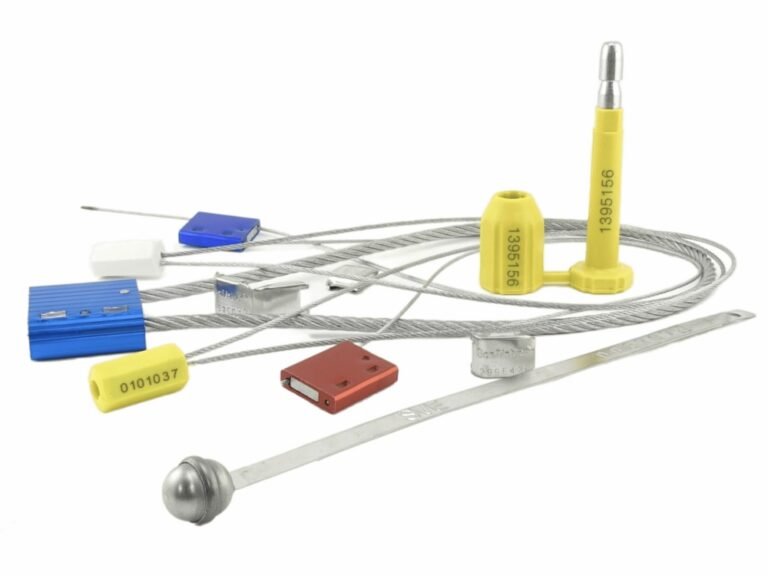
Standard locks are no longer enough to keep your business moving. In the modern logistics landscape, if your container gets flagged for a mismatched seal number, the cost isn't just a broken lock—it is thousands of dollars in demurrage fees and weeks of delay.
A security seal in 2026 is effectively a "compliance voucher" first and a physical barrier second. Its primary function is to serve as the immutable link between your physical cargo and your digital data. By ensuring perfect alignment between the seal data and the manifest, you transform the seal from a simple plastic device into a critical tool for ensuring supply chain fluidity and avoiding customs inspections.
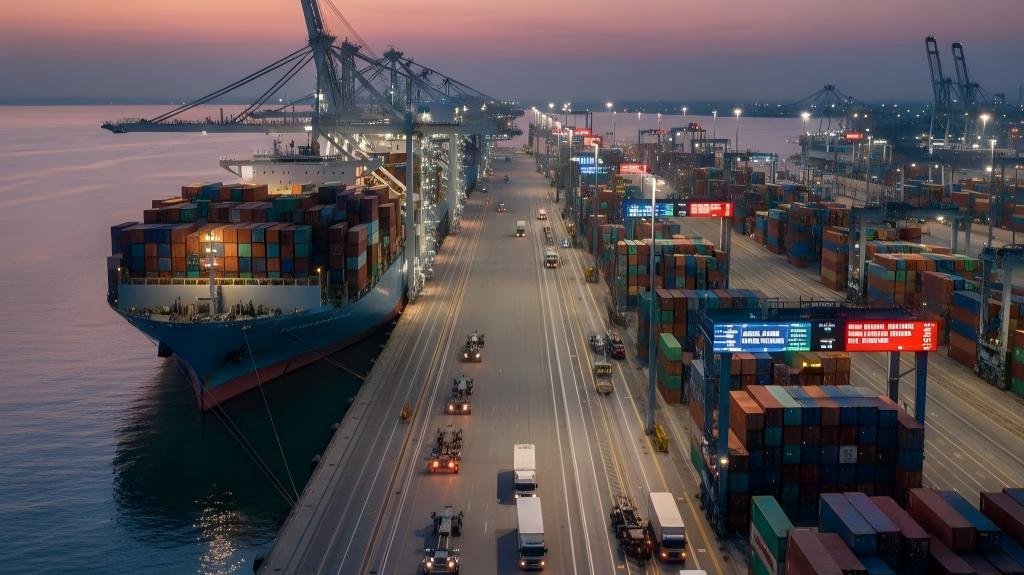
I often tell my clients that a seal is the only witness that travels with the cargo from the factory door to the customer's warehouse. If that witness is silent (compromised) or speaks the wrong language (non-compliant data), the entire supply chain grinds to a halt. We must stop viewing seals merely as "anti-theft" hardware and start viewing them as "data integrity" assets required for the automated future of global trade.
How Do Security Seals Expedite Global Customs Clearance Processes?
Why does one container breeze through the "Green Lane" while another sits in an exam station for days? The answer often lies in data confidence.
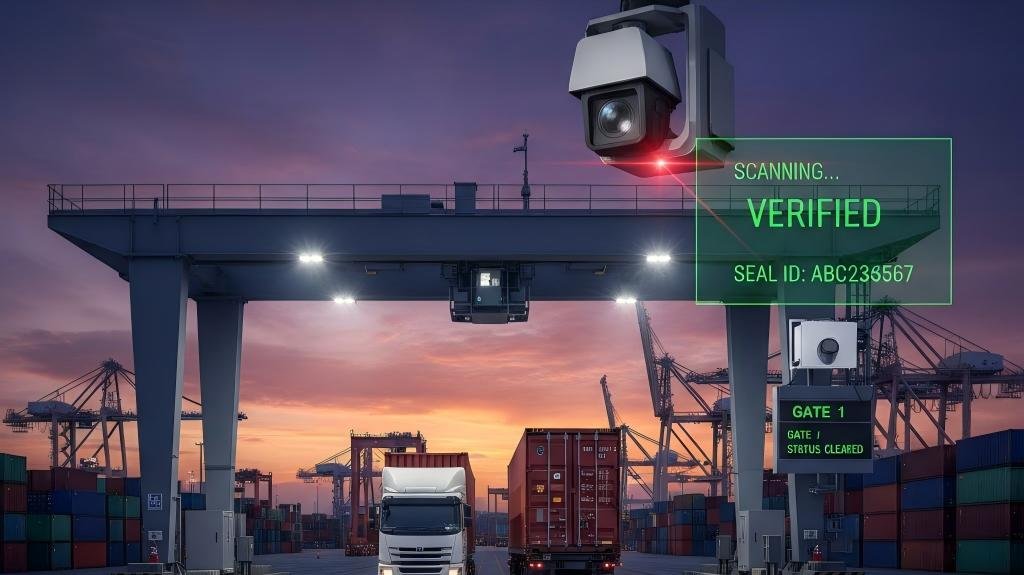
Security seals expedite clearance by acting as the physical anchor for the digital customs declaration. When the seal number physically scanned at the port gate matches the U.S. Customs and Border Protection (CBP) Advance Manifest data exactly, it validates the integrity of the shipment, allowing automated risk assessment systems to clear the release instantly.
The Era of "Touchless" Clearance
In established hubs like Rotterdam or Los Angeles, the human element is being removed from the gate process. High-speed cameras read the container number and the seal number as the truck drives through.
If you use a cheap seal with poorly printed numbers, or if the serial number logic is duplicated, the OCR fails. The system flags the container as "High Risk." This triggers a manual inspection. Speed in 2026 is defined by readability and compliance with WCO SAFE Framework standards.
Why Is ISO 17712 Compliance Non-Negotiable in International Shipping?
Are you willing to risk your insurance coverage to save a few cents on a seal? Using non-compliant seals is a legal liability that voids your protection in the event of theft.
ISO 17712:2013 is the mandatory global standard that classifies seals into "High Security" (H), "Security" (S), and "Indicative" (I). For cross-border maritime shipping, using anything less than an "H" class seal is a direct violation of international shipping protocols and insurance mandates.
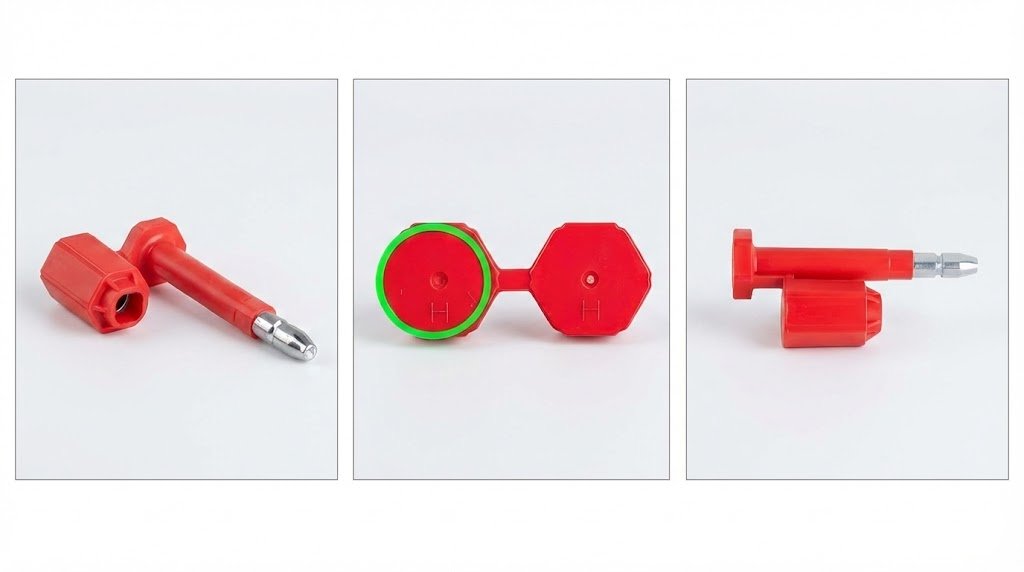
Deconstructing the "H" Classification
Many buyers see the "H" on a bolt seal and assume it just means "strong." It means much more. For a seal to earn this certification, it must pass rigorous lab tests at an ILAC MRA Accredited Laboratory.
- Tensile Test: It must withstand over 1,000 kg of pull force.
- Shear Test: It must survive cutting attacks from standard tools.
- Impact Test: It must not shatter under significant blunt force.
Compliance dictates that the seal must not only hold the door closed but also provide clear evidence of tampering if a breach occurs.
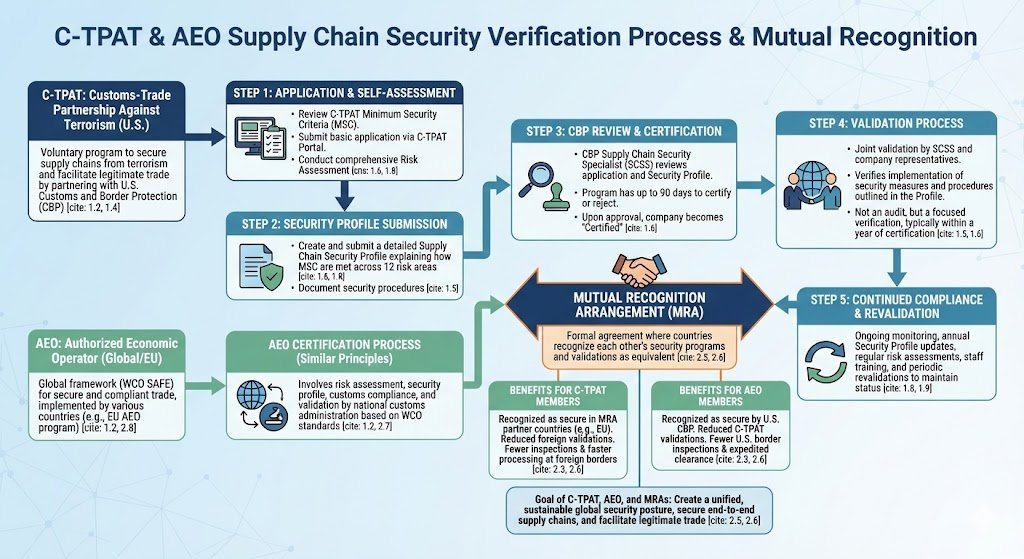
The Role of Tamper-Evident Devices in C-TPAT and AEO Programs
How do major importers secure "Trusted Trader" status and bypass long inspection queues? They prove chain-of-custody integrity through certified sealing programs.
Tamper-evident devices are the cornerstone of the C-TPAT (Customs-Trade Partnership Against Terrorism) and AEO (Authorized Economic Operator) programs. Participants must demonstrate a strict, documented process for controlling, affixing, and verifying high-security seals to retain their fast-lane benefits.
The "Seven-Point Inspection" Mandate
Under C-TPAT guidelines, simply buying the right seal is not enough. You must prove you check it. The seal is the final lock. Before that seal goes on, the container mechanism must be verified.
If a "Trusted Trader" cannot account for a missing seal, they risk losing their status. The seal is a serialized inventory item that needs the same level of security controls as the cash in your safe.
Can High-Security Barriers Effectively Prevent Cargo Pilferage at Sea?
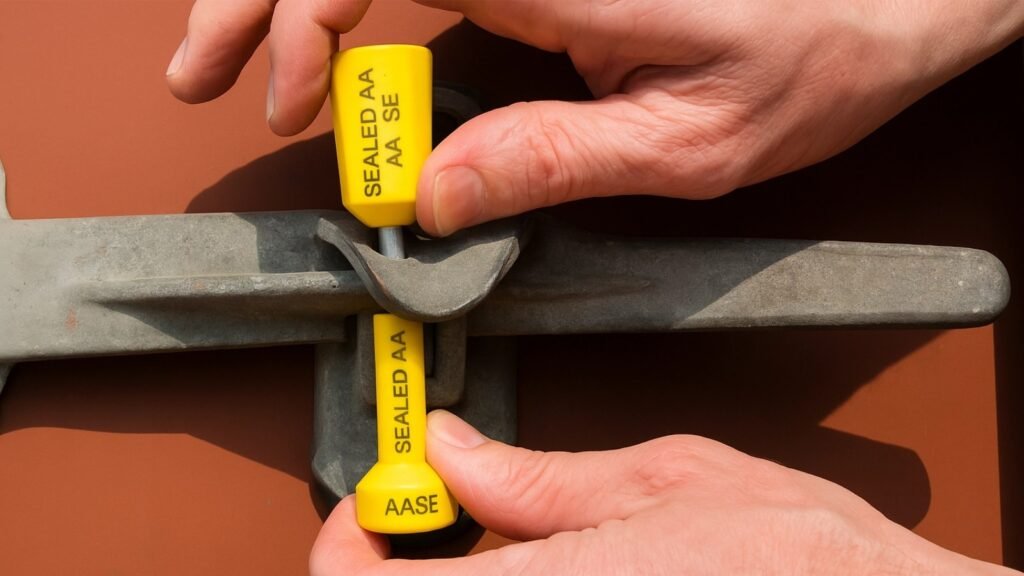
High-security barriers prevent pilferage by buying time. Features like anti-spin mechanisms and hardened steel cores force thieves to use heavy, noisy power tools, turning a quick theft into a high-risk operation.
The Economics of Theft
Thieves look for the path of least resistance.
- Anti-Spin Feature: High-quality ProtegoSeal Bolt Seals have grooves that lock the rotation, preventing friction-melting attacks.
- Material Hardness: An ISO 17712 bolt requires specialized heavy-duty cutters, making opportunistic theft nearly impossible.
Strategies for Managing Seal Integrity Across Complex Supply Chains
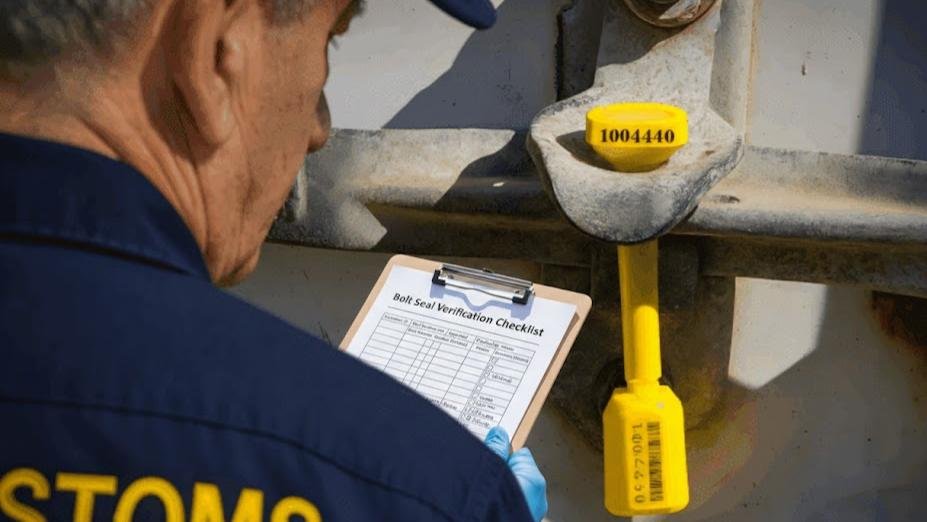
A seal is only as secure as the person verifying it. Effective seal management relies on strict handover protocols at every transshipment point.
The Operational Framework
To eliminate liability disputes, enforce the following framework:
| Step | Action | Objective |
|---|---|---|
| Verify | Perform a "Tug Test" after application. | Ensure the locking mechanism is fully engaged. |
| Control | Secure unused inventory in a locked area. | Prevent unauthorized seal replacement (cloning). |
| Record | Photograph the seal and manifest together. | Create digital evidence for customs and insurance. |
| Check | Audit seal integrity at every handover. | Pinpoint the exact location of any breach. |
Conclusion
In 2026, a security seal is a data carrier for global compliance. By utilizing ISO 17712 certified seals and integrating stricter verification protocols, you transform a simple lock into a powerful tool that guarantees customs efficiency and prevents cargo pilferage.
Secure Your Global Compliance with ProtegoSeal
Don't let non-compliant seals become the bottleneck in your logistics operation. At ProtegoSeal, we manufacture ISO 17712 "H" certified seals designed for the rigors of modern trade.
Contact us today to upgrade your supply chain security and ensure your cargo flows without interruption.