
Counterfeiters now operate industrial-grade facilities. If you rely on basic security labels, your defense is obsolete. Your brand is currently vulnerable.
The 2026 standard demands a "multi-layered defense system" integrating Overt, Covert, and Holographic technologies. Effective protection has shifted from simple barriers to smart carriers blending physical security, digital verification, and eco-friendly materials. This guide explores how to build that fortress around your brand.
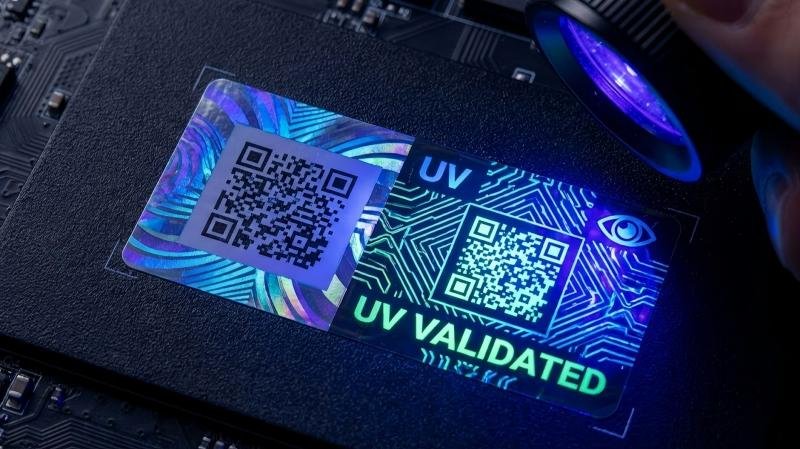
I often tell my clients that a security label is like a bank vault. You don't just have a front door (Overt); you also have hidden sensors (Covert) and complex encryption (Holographic/Digital). If you rely on just one layer, the thieves will find a way in. In my years of analyzing failed packaging security, the common denominator is always a lack of depth. A brand might have a beautiful hologram, but no hidden data for investigators to verify. Or they have a hidden code, but nothing for the consumer to easily check on the shelf. The 2026 standard is about integration: ensuring these layers work together to protect the brand while engaging the consumer.
What Are the Essential Overt Features in Security Labels?
How can a consumer verify your product in the blink of an eye without special tools? If they cannot verify it instantly, they will likely buy a competitor's product or, worse, a fake.
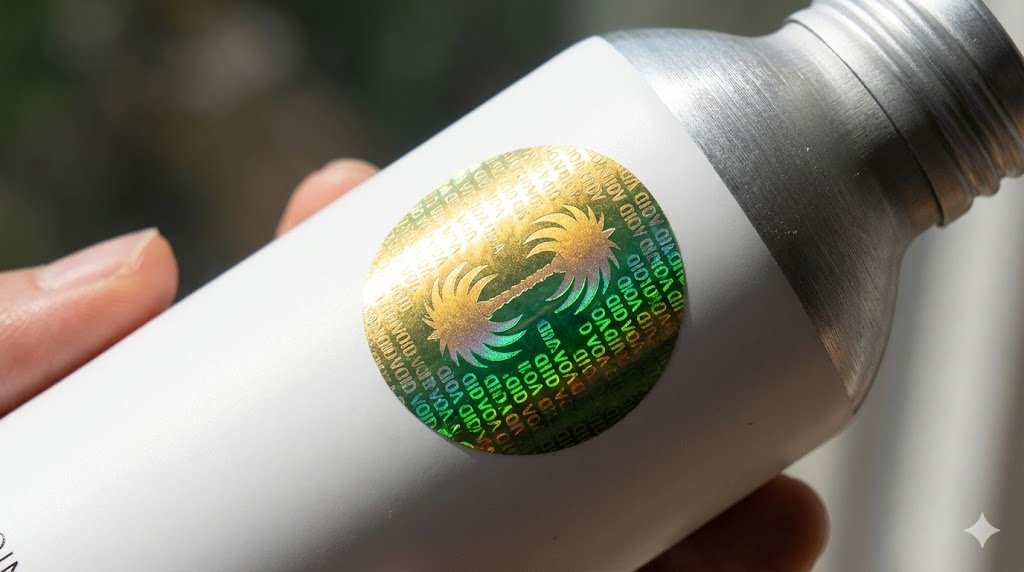
Overt security features are the first line of defense in modern security labels, designed for immediate visual verification by the general public using only their eyes and touch. This includes color-shifting inks, tactile embossing, and complex Guilloche patterns similar to those used in banknotes.
Optical Dynamics: Immediate Verification
The most effective overt feature is highly specialized ink technology. When a customer tilts the label, the color snaps distinctly (e.g., from gold to green). Copiers and standard printers use static CMYK ink; they cannot print "movement." This allows a shopper to verify authenticity in less than one second, a standard advocated by the International Tax Stamp Association for protecting excise goods.
Material as a Defense
Security isn't just ink; it's the substrate. We use ultra-destructible vinyl or "egg-shell" materials. If a fraudster tries to peel a genuine label to reuse it, the material shatters into tiny fragments immediately. This creates a physical, irreversible signal. It turns every customer into a quality control inspector. If the seal is broken, the trust is broken.
Why Are Covert Technologies Crucial for Security Label Integrity?
What happens when a fake looks perfect to the naked eye? How do you prove in a court of law that a product is counterfeit when the packaging looks identical?
Covert technologies are the hidden verified evidence built into security labels, visible only to trained investigators or handheld devices. These solutions often align with ISO 12931 performance criteria to ensure legal defensibility.
The "Trust but Verify" Layer
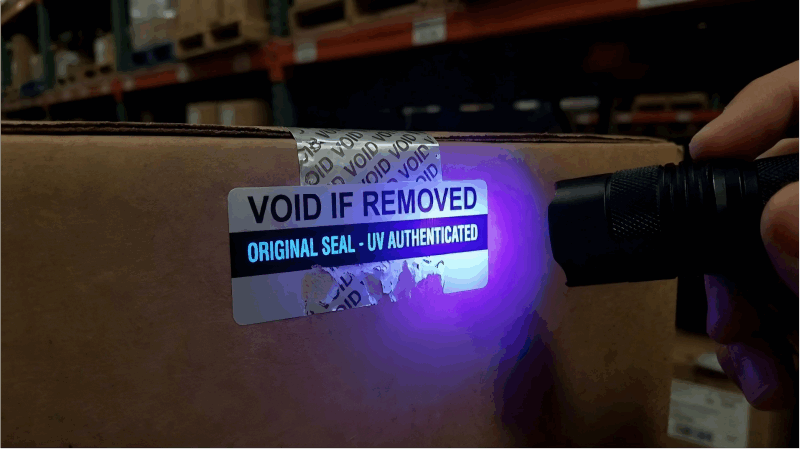
Overt features convince the customer; covert features convince the court. The industry standard includes sophisticated luminescent markers. Under normal retail lighting, the label appears white or clear. Under a blacklight (UV), a specific logo or code glows neon red or yellow. This allows investigators to quickly sweep shelves and identify fakes without opening packaging.
Forensic Detail: Micro-text
For higher security, we utilize Micro-text. These are characters printed below 0.2mm in height. To the naked eye, it looks like a solid line. When counterfeiters scan the label, their equipment lacks the resolution to capture this detail, resulting in a blurry line on the fake. Under a magnifying glass, the difference is undeniable. This "DNA" level of detail is critical for winning legal battles against distributors selling grey market goods.
How Holographic Integration Enhances Security Labels?
Is a hologram just a shiny sticker, or is it a complex optical trap? Many brands dismiss holograms as outdated, but modern optical lithography has reinvented them as a critical bridge between overt and covert security.
Advanced Holography in 2026 provides depth, motion, and hidden data layers that cannot be replicated by standard printing, acting as the visual anchor of the security label's authority.
3D Depth and Demetallization
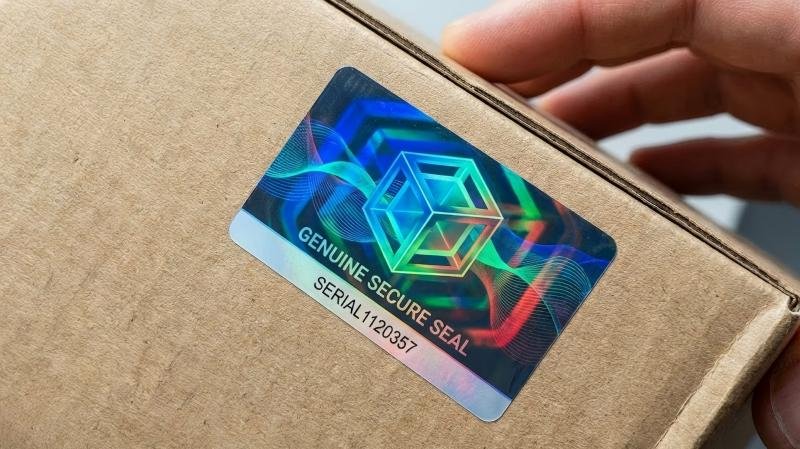
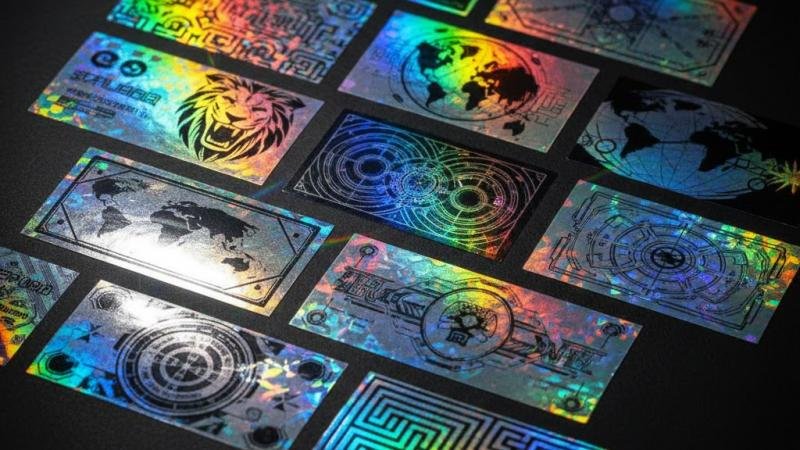
Forget the flat rainbow stickers of the 1990s. Modern E-Beam lithography creates "Volume Holograms" with true optical depth. A powerful technique we use is Demetallization. We remove precise areas of the metallic foil to create fine, clear text or intricate shapes within the hologram. This requires industrial-scale machinery that local print shops simply do not have.
The Optical Lock
Holograms now serve as the bridge. We can embed "covert laser images" (visible only via laser pointer) inside the holographic pattern. This integration forces the counterfeiter to master two distinct technologies: printing and optical physics. If they fail at either, the fake is obvious. The hologram acts as the complex lock that binds the ink and the data together.
What Trends Will Define the Security Label Market in 2026?
The era of the "dumb label" is over. How will digital twins and sustainability reshape the way we protect products in the next few years?
The market is aggressively moving towards Digital Fusion—combining physical security with digital data carriers like QR codes—and materials approved by the Sustainable Packaging Coalition to meet global eco-compliance.
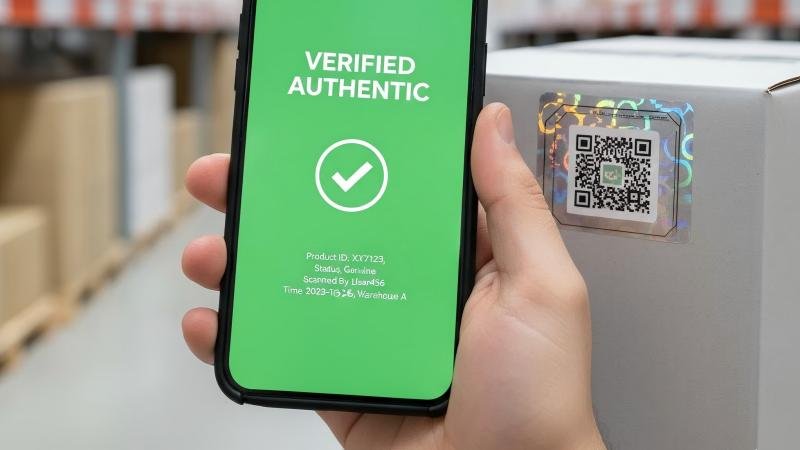
The Digital Twin
Labels are becoming data terminals. By printing a GS1 Digital Link or Serialized QR code, every single product gets a unique digital identity. When a customer scans it, they confirm authenticity. Simultaneously, the brand receives real-time geopositioning data. If an item meant for Peru is scanned in Vietnam, the system flags a "Diversion Alert." This puts supply chain visibility directly into the hands of the brand owner.
Green Security
Sustainability is no longer optional. Traditional security films were often heavy plastics that contaminated recycling streams. The 2026 trend is Eco-Security. We are shifting to PET films with 30% recycled content and biodegradable tamper-evident papers. The challenge is ensuring these green materials still offer the same "break strength" and residue performance as traditional plastics. Brands that adopt this early protect both their revenue and their reputation.
Practical Steps for Choosing the Right Security Labels for Your Brand?
With thousands of options available, how do you select a solution that fits your budget without compromising security? It comes down to assessing risk versus cost.
A practical selection process involves defining your "Threat Level," selecting a combination of one Overt and one Covert feature, and choosing a supplier who controls the entire production chain to prevent leakage.
Risk Assessment Matrix
Don't overspend on low-risk items. Use this table to match your solution to your threat:
| Risk Level | Recommended Combination | Application Example |
|---|---|---|
| Low Risk | Tamper Evident Paper + Unique Serial Number | Food delivery, Warranty seals |
| Medium Risk | Partial Transfer Label + Hologram + QR Code | Auto parts, Electronics |
| High Risk | Color Shift Ink + Microtext + Digital Verification | Pharmaceuticals, Luxury Goods |
The Layering Rule
Never rely on a single feature. A hologram alone is vulnerable. A QR code alone can be copied. The "2026 Standard" requires layering: combine a Physical barrier (Void material) with an Optical barrier (Hologram) and a Digital barrier (QR Code). This exponentially increases the cost and difficulty for counterfeiters, forcing them to move to an easier target.
Conclusion
The 2026 security label is a sophisticated blend of distinct visible effects (Overt), hidden forensic data (Covert), and digital connectivity. It is no longer just a sticker, but a multi-layered gateway that ensures trust and data integrity.
Build Your Defense System with ProtegoSeal
Don't let your brand be an easy target for counterfeiters. At ProtegoSeal, we specialize in constructing these multi-layered defense systems, ensuring that your security labels are as unique as your fingerprints. From holographic integration to digital tracking, we have the manufacturing power to secure your future. Contact us today to design your 2026 security strategy.

