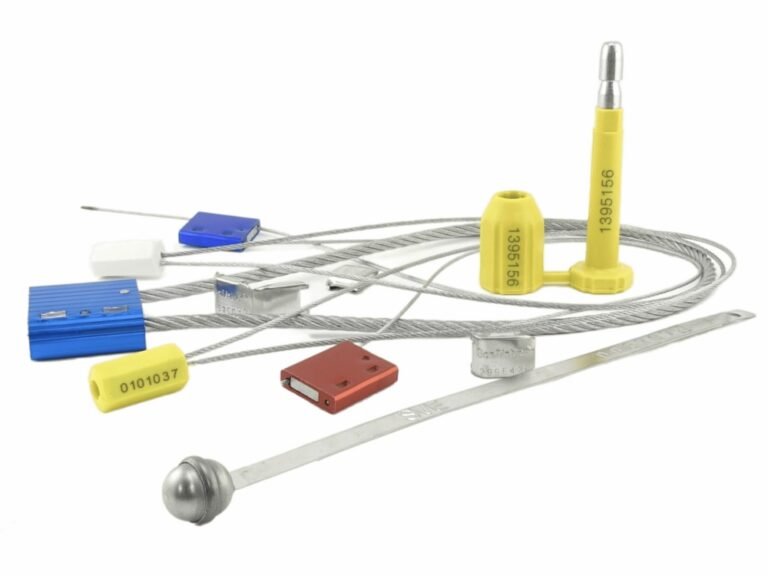
Are you choosing security seals based on a simple "good, better, best" mentality? This common mistake forces you into a false choice, often leading you to either overspend on security for low-risk items or critically under-protect your most valuable assets.
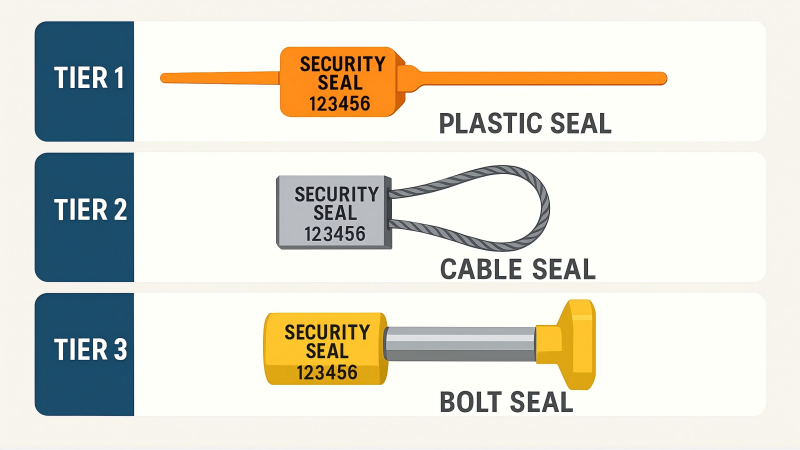
These three tiers are not a product ladder; they are three distinct risk management strategies. To visualize the difference, think of them this way:
- Tier 1 (Indicative): A Witness.
- Tier 2 (Security): A Patrolling Guard.
- Tier 3 (High-Security): An Armored Guard.
The right choice isn't about buying the most expensive option; it is about matching the security level to the asset's risk.
Throughout my career, I've seen clients struggle with this choice. The key to success is to stop thinking like a shopper and start thinking like a security director. Choosing a seal is like assigning personnel to an asset. You wouldn't put an unarmed watchman in charge of a Brinks truck, nor would you assign a SWAT team to guard the office supply closet.
Understanding these three tiers as distinct strategies is the first step to building a security plan that is both effective and cost-efficient.
Tier 1: Indicative Seals — The "Witness" Strategy
Do you believe that a security seal is useless unless it's incredibly hard to break? This common misconception overlooks the immense power of pure information in a security strategy.
Indicative seals are your witnesses. They are not designed to be a physical barrier, but to provide clear, undeniable evidence of tampering. This strategy is perfect for low-risk scenarios where accountability and information are the primary goals.
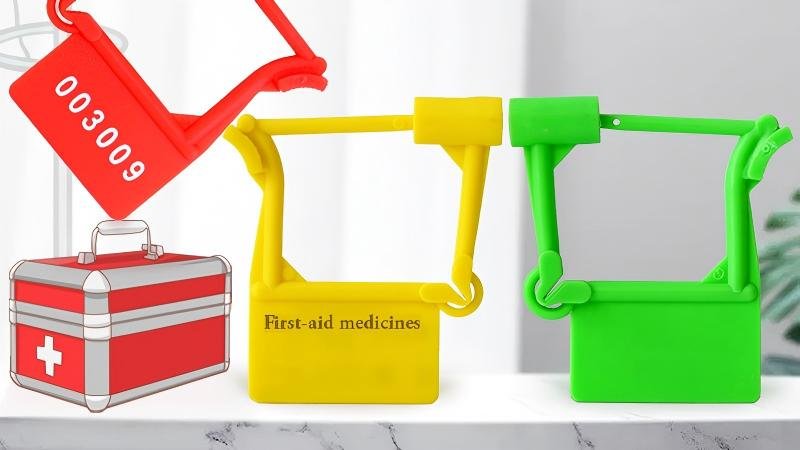
Indicative seals are the foundation of many internal control systems. Their mission is not to fight, but to testify. They provide the crucial data point that tells you whether the integrity of an item has been maintained.
The Mission: Information Over Force
The entire design philosophy of an indicative seal revolves around evidence. Typically made of plastic, they can be removed by hand or with a simple cutting tool. Their physical weakness is a feature, not a bug. It ensures that any attempt at entry, no matter how small, is immediately and visibly recorded.
The Key Feature: The Serial Number
The true power of this "witness" is its unique serial number. This feature transforms a simple piece of plastic into a link in your chain of custody. By recording the number at the point of sealing and verifying it at the destination, you create an unbreakable information trail. A thief can break the seal, but they cannot replace it without the discrepancy in the serial number being discovered.
Best For:
- Fire extinguishers and first-aid kits (validating readiness).
- In-flight catering and duty-free trolleys.
- Internal logistics totes and roll cages.
Tier 2: Security Seals — The "Patrolling Guard" Strategy
What happens when you need more than a witness, but a full-blown armored guard is too expensive or impractical? This is where a balanced, mid-level strategy is required.
Security seals are your patrolling guards. They offer a moderate physical barrier and a stronger visual deterrent than indicative seals, perfectly balancing strength and cost for a wide range of domestic and mid-risk shipments.
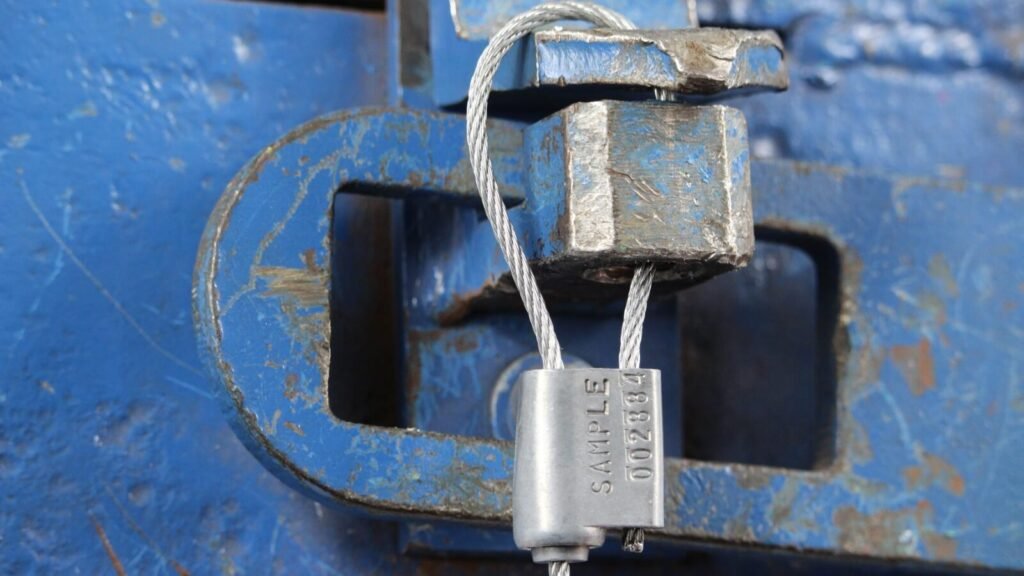
This tier represents the smart, middle-ground strategy. Think of this as a uniformed security guard—their presence deters casual opportunists, and they are equipped to handle a more determined threat than a simple witness.
The Mission: Deterrence and Delay
Unlike their plastic counterparts, these security seals require a tool—like a cable cutter—for removal. This introduces two key security elements:
- Deterrence: The seal looks tough and official.
- Delay: A thief cannot simply rip it off by hand, increasing the risk of being caught.
Material and Construction
These seals typically incorporate metal components, such as a galvanized steel cable inside a plastic body. This construction provides significantly higher tensile strength than a simple plastic seal, making them resistant to accidental breakage and casual tampering.
Best For:
- Domestic truck and trailer shipments.
- Securing warehouse and facility doors.
- High-value internal transfers where a plastic seal feels insufficient.
Tier 3: High-Security Seals — The "Armored Guard" Strategy
For your most critical shipments, is a "strong-looking" seal enough? When facing international customs and organized crime, you need a barrier that is not just strong, but independently certified to global standards.
High-security seals are your armored guards. They are designed to provide the maximum possible physical barrier and are independently tested and certified to ISO 17712 "H" Class. This is the mandatory strategy for all international container shipments.
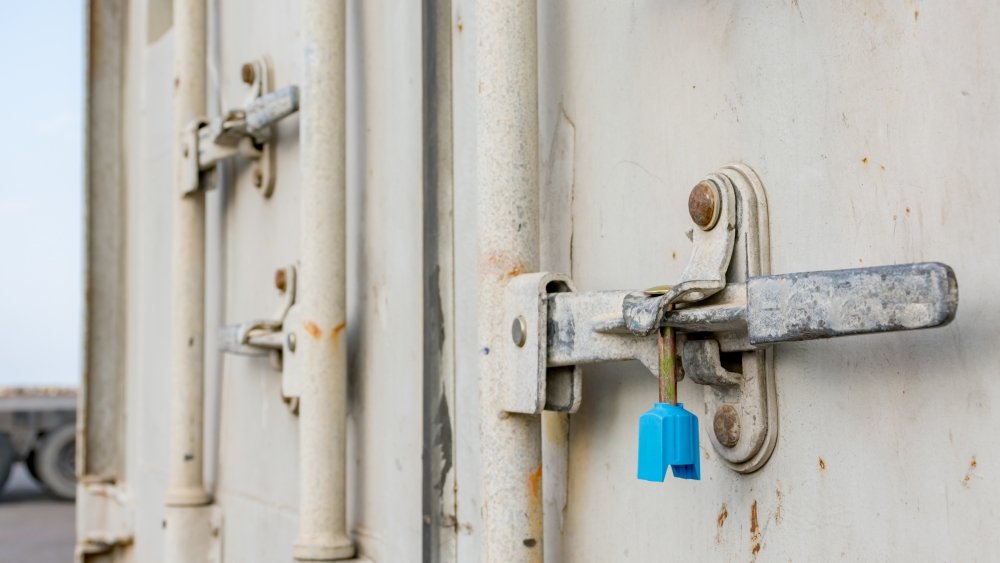
This is the top tier of risk management, reserved for assets where the consequences of compromise are severe. An ISO-certified high-security seal isn't just a product; it's a declaration that you are compliant with the highest standards of global trade security, such as the C-TPAT program.
The Mission: Maximum Resistance and Compliance
These seals, such as bolt seals, require specialized, high-leverage bolt cutters for removal. Their purpose is to offer a formidable physical barrier against determined, professional attacks.
The Standard: What ISO 17712 "H" Class Means
An "H" Class rating is not a marketing term. It means the seal has passed a battery of rigorous, third-party laboratory tests for:
- Tensile Strength: Resisting being pulled apart.
- Shear Strength: Resisting being cut by blades.
- Impact Resistance: Withstanding heavy blows at various temperatures.
How to Choose: A Risk Matrix for Your Cargo
Feeling uncertain about which security "guard" to hire for a specific job? Making this decision on a gut feeling creates dangerous gaps in your security.
Use a simple risk matrix. By mapping your cargo's value against the route's risk level, you can logically determine the appropriate security tier.
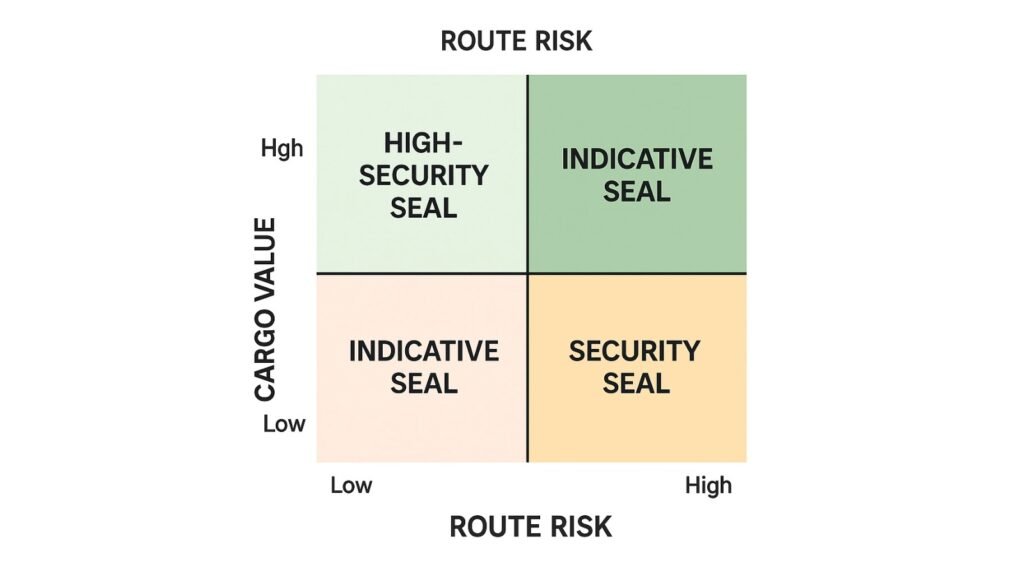
This is the framework I use to help clients architect their security protocols. It removes emotion and replaces it with logic, ensuring you never overspend on low-risk assets or under-protect your most valuable ones.
| Low-Risk Route | High-Risk Route | |
|---|---|---|
| Low-Value Cargo | Tier 1 (Indicative): The Witness. Ideal for internal process control. | Tier 1 or Tier 2: Witness or Patrolling Guard. Risk may warrant a visual deterrent. |
| High-Value Cargo | Tier 2 (Security): The Patrolling Guard. Value justifies a physical barrier. | Tier 3 (High-Security): The Armored Guard. High value + high risk = maximum certified protection. |
Beyond the Seal: The Protocol Multiplier
Do you think that simply buying the correct seal is the end of the story? The world's best seal is useless if it's not supported by a robust human process.
A security seal is a tool, not a solution. Its effectiveness is amplified by a strict seal protocol.
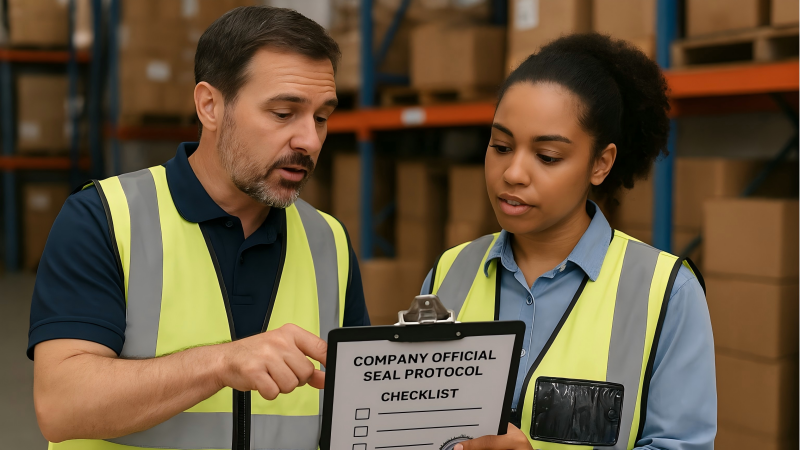
Pro Tip: I have seen companies invest in Tier 3 seals only to have them negated by sloppy procedures. Conversely, strict protocols can make Tier 1 seals incredibly effective.
Your protocol must, at a minimum, include:
- Secure Storage: Controlling access to unused seals to prevent theft.
- Application & Verification: Checking the seal's integrity immediately upon application.
- The Seal Log: Recording the serial number, date, time, and personnel signature. This logbook is your primary evidence.
- Inspection: A standardized procedure for inspecting the seal at the destination before removal.
Conclusion
Stop seeing security seals as "good, better, and best." Start deploying them as strategic assets: Witnesses for information, Guards for deterrence, and Armored Guards for high-risk protection.
Need help building the right security strategy for your cargo?
At ProtegoSeal, we offer a complete range of indicative, security, and high-security seals. More importantly, we help you align your security tier with your actual risk.
Contact us today to secure your supply chain.