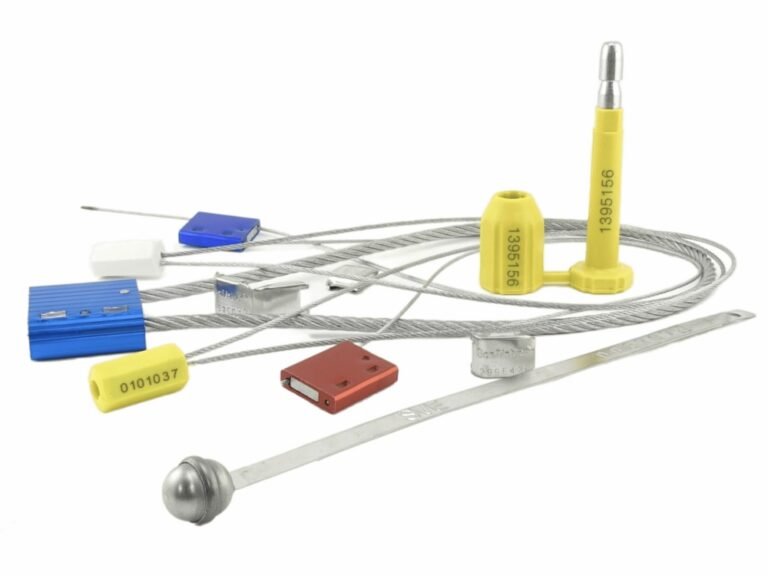
You're preparing a shipment and someone asks, "Is the seal compliant?" You think a strong seal is enough, but using one that doesn't meet the right standard can get your cargo flagged, delayed for days, or even rejected at the port.
The primary standard required for international cargo seals is ISO 17712, which classifies seals as "High Security Seals" (HSS). This standard is not just a technical specification; it's a global protocol that creates a chain of integrity, ensuring trust from the manufacturer to the final destination.
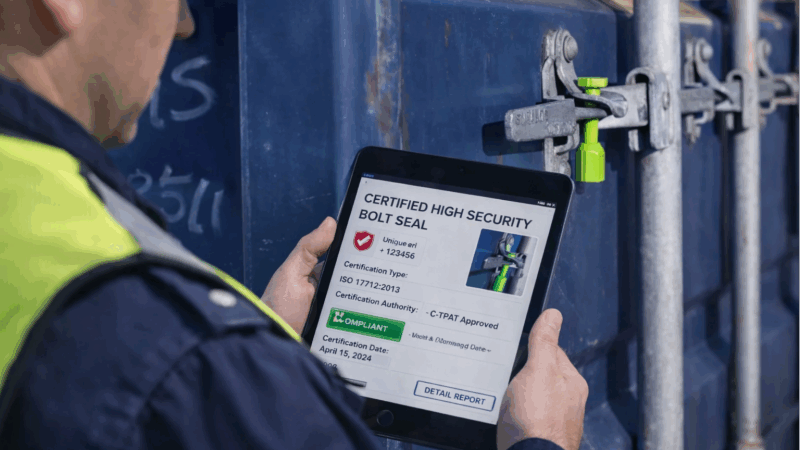
For a long time, I viewed standards as a simple pass/fail checkbox. But that's missing the point entirely. A cargo seal standard is a complete "System of Trust." It starts with the physical product, expands to include the manufacturer's secure processes, and ultimately acts as a "commercial passport" for your goods in international trade. It's a full value chain of integrity, and understanding how it works is key to a smooth supply chain.
Is There a Single, Universal Standard for Cargo Seals?
With so many countries and shipping lines, you might expect a confusing mess of different rules. You need to know which standard is the one that truly matters to avoid costly errors.
No, there isn't one single standard that covers every type of cargo, but for international container shipments, ISO 17712 is the globally recognized, universal benchmark for High Security Seals (HSS). It's the foundational layer of the trust system. While other specific standards exist, ISO 17712 is the one required by most customs authorities and security initiatives worldwide.
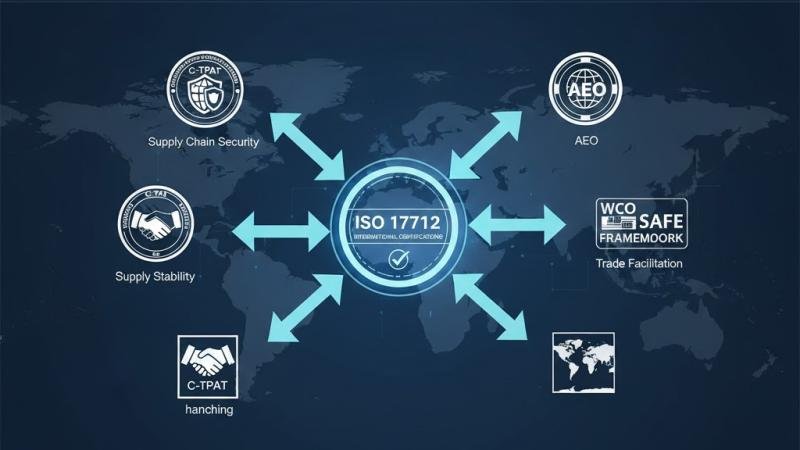
Think of ISO 17712 as the "gold standard." It's the common language that shippers, carriers, and customs agencies agree to speak. When a seal is certified to this standard, it signals that it has passed rigorous, independent testing for strength and tamper evidence. This isn't just about how hard the seal is to break; it's about creating a verifiable, trusted security tool that can be relied upon anywhere in the world. It’s the first and most important link in the chain of integrity.
Besides International Standards, Are There Other Industry-Specific Protocols?
You have an ISO 17712 compliant seal. Does that automatically mean you're compliant with every shipping program, like those in the United States?
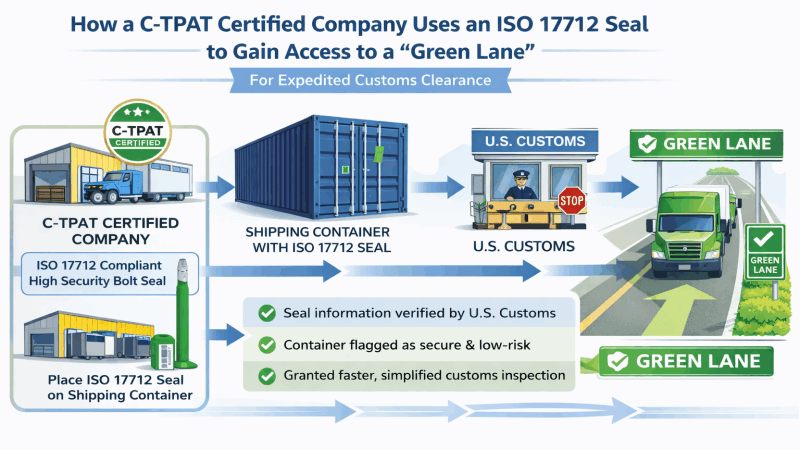
Yes, beyond the foundational ISO product standard, there are crucial industry and government protocols that dictate how and why these seals must be used. The most significant is the Customs Trade Partnership Against Terrorism (C-TPAT) program, primarily in the U.S.
C-TPAT is not a competing standard; it is a "management protocol" that requires the use of ISO 17712 High Security Seals as part of a broader set of supply chain security procedures.
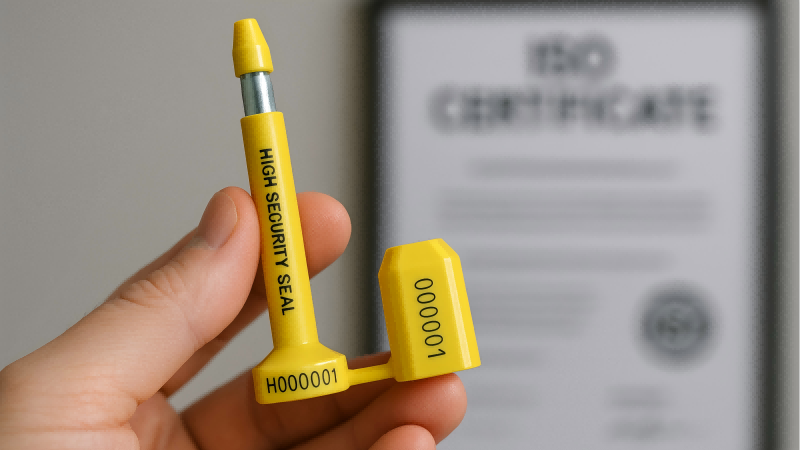
This is the second layer of the trust system. ISO 17712 certifies the seal itself, while programs like C-TPAT certify the company's security processes, which includes the mandatory use of those certified seals. Participating in C-TPAT offers tangible benefits like expedited customs processing, making compliance a powerful commercial advantage.
The Relationship Between Standards and Protocols
| Element | Role in the "System of Trust" | Example |
|---|---|---|
| Product Standard | Defines the physical and security features of the tool. | ISO 17712 |
| Management Protocol | Defines the rules and procedures for using the tool in the supply chain. | C-TPAT |
What Core Technical Requirements Do Cargo Seal Standards Typically Include?
What actually makes a seal "high security"? Just claiming it's strong isn't enough. You need to know what a standard like ISO 17712 specifically demands to be sure you're getting genuine security.
The core requirements of a high-security seal standard are designed to create that "chain of integrity." It's not just about one feature, but three interlinked pillars: physical strength, tamper evidence, and secure manufacturing processes.
ISO 17712 breaks this down clearly:
- Mechanical Strength (Clause 5): The seal must be incredibly strong. It is physically tested to withstand specific minimum forces, including 1,000 lbs of tensile pull, shear forces, and impact. This ensures it requires heavy-duty tools, like bolt cutters, for removal, preventing casual theft.
- Tamper-Evident Features (Clause 6): This is just as important as strength. The seal must be designed to reliably and irreversibly show evidence of any tampering attempt. This includes features that prevent picking, replication, or re-assembly. This is the seal's ability to "tell the story" of an attack.
- Manufacturer Security Audits (Annex A): This is the often-overlooked but critical pillar. The seal manufacturer themselves must have their security-related business processes audited and certified. This prevents criminals from obtaining legitimate, un-marked seals or duplicating serial numbers. It secures the chain of integrity right from the source.
How Are These Standards Enforced in International Trade?
Having a standard is one thing, but how does it actually work at a busy port? Knowing the enforcement mechanism helps you understand why compliance is non-negotiable.
Standards are enforced by customs and border protection agencies worldwide. They treat the seal and its number as a critical piece of data on the shipping manifest, like the container number itself. This transforms the seal from a simple lock into a "commercial passport" for your cargo.
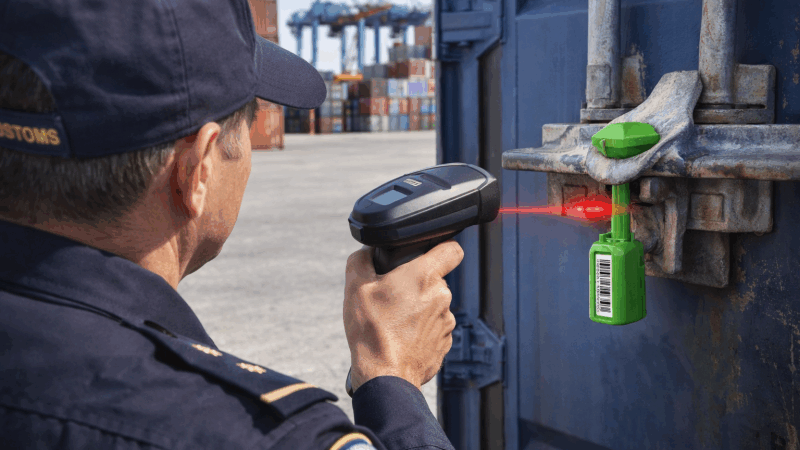
The enforcement process typically involves:
- Manifest Verification: The unique serial number of the ISO 17712 seal must be accurately recorded on the Bill of Lading or other shipping documents.
- Physical Inspection: Customs officers visually and physically inspect the seal upon arrival. They look for the "H" classification mark (for High Security) and check for any signs of tampering.
- Data Matching: In advanced systems, the seal number might be scanned and automatically checked against the manifest data. Any mismatch is an immediate red flag, triggering a full container inspection.
Non-compliance has severe consequences: massive delays, costly container inspection fees, fines, and potential loss of "trusted shipper" status. This is where the commercial benefit of using the right standard becomes crystal clear.
Key Considerations for Selecting the Right Standard Seal for Your Cargo
You now understand the system of trust. How do you apply it to make the right decision for your specific shipment and avoid any issues?
Selecting the right standard-compliant seal is a risk management decision. You must go beyond just buying an ISO-stamped product and consider the entire journey of your cargo.
Here are the key questions I always advise my clients to ask:
- What is my Route? Are you shipping domestically or internationally? International shipments almost always require an ISO 17712 HSS.
- What is my Destination's Requirement? Are you shipping to the USA? Then C-TPAT compliance is a major commercial advantage, and an HSS is mandatory.
- What is the Value of my Cargo? For high-value goods, you should not only use an HSS but also ensure you have strict chain of custody procedures for recording and verifying seal numbers at every step.
- Who is my Seal Supplier? Is your supplier themselves certified and their security processes audited, as required by Annex A of ISO 17712? A cheap seal from an unverified supplier can break the entire chain of integrity and put your cargo at risk.
Conclusion
The standard for cargo seals is a complete system of trust—a chain of integrity connecting a seal's physical strength, the manufacturer's secure processes, and your commercial success in global trade.
Don't let standards and compliance become a point of failure in your supply chain. We provide fully certified ISO 17712 High Security Seals that act as your cargo's passport. Contact us to ensure every shipment is secured by a trusted link in the chain of integrity.